Stereoisomeric Separation of Flavonoids by Two‐Dimensional Supercritical Fluid Chromatography: Identification of Adequate Chiral Columns and Application to Honey Analysis
Laurine Réset, Bibi Ousseni, Mélodie Degrelle, Clément De Saint Jores, Caroline West

TL;DR
The study identifies optimal methods to separate chiral flavonoid isomers using two-dimensional supercritical fluid chromatography, with application to analyzing honey samples.
Contribution
The paper introduces an effective two-dimensional SFC method for resolving chiral flavonoids in complex matrices like honey.
Findings
Optimal chiral stationary phases for flavonoid stereoseparation were identified using desirability functions.
An SFC-SFC system successfully resolved pinocembrin enantiomers and co-eluting isobaric species in honey.
The method enables accurate measurement of enantiomeric excess in complex natural samples.
Abstract
Chiral flavonoids are frequently encountered in natural products consumed as food or therapeutic products. However, the taste and other bioactivities of stereoisomers are known to differ. Hence, stereoseparation methods are necessary to resolve these isomers, whether to measure stereoisomeric ratios or to purify individual stereoisomers for activity testing. In this study, we looked for the best conditions to resolve different families of chiral flavonoids, including auronols, flavanonols, aglycon, and glycosylated flavanones. Furthermore, we aimed to include this stereoseparation as the second‐dimension method in a two‐dimensional supercritical fluid chromatography system (SFC‐SFC), to achieve the resolution of chiral flavonoids in complex samples. First, a set of 10 standards of chiral flavonoids was examined on 5 immobilized polysaccharide chiral stationary phases. With the help of…
Genes, proteins, chemicals, diseases, species, mutations and cell lines named across the full text — each resolved to its canonical identifier and authoritative record.
Click any figure to enlarge with its caption.
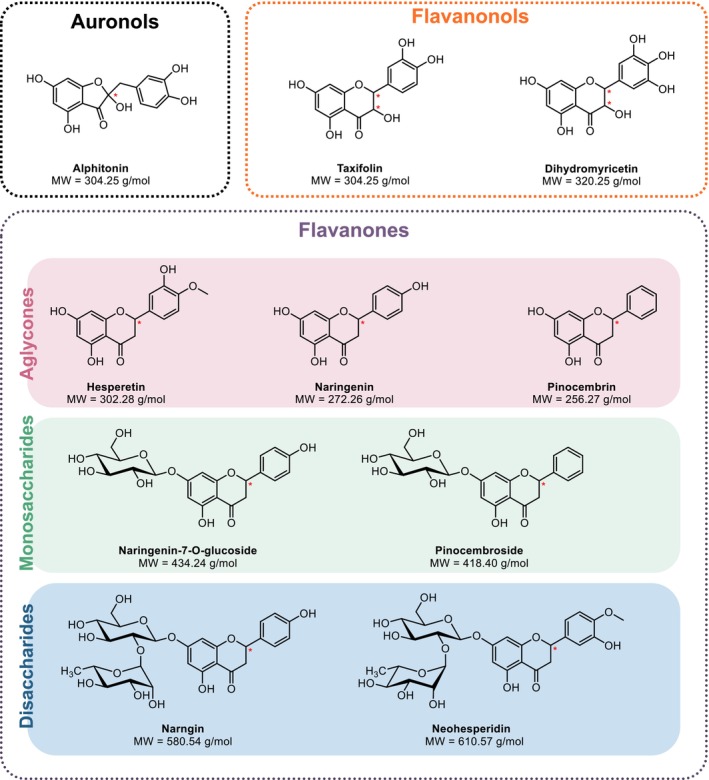 Figure 1
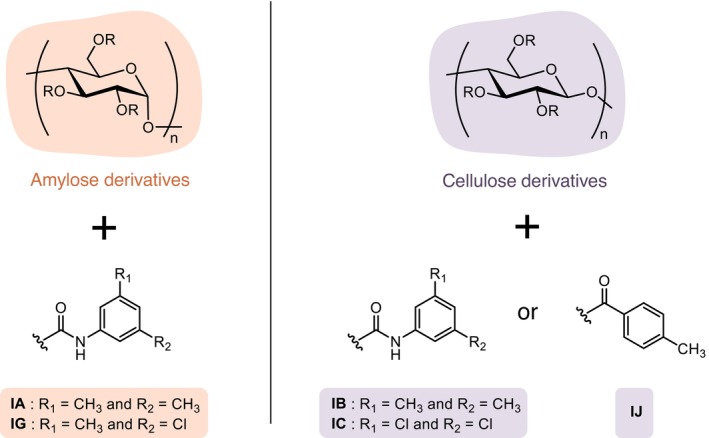 Figure 2
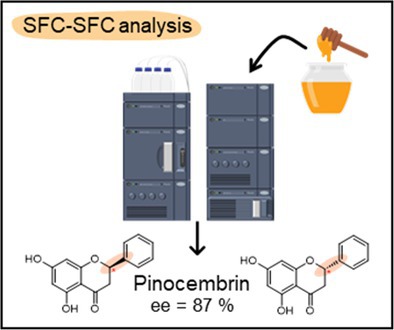 Figure 3
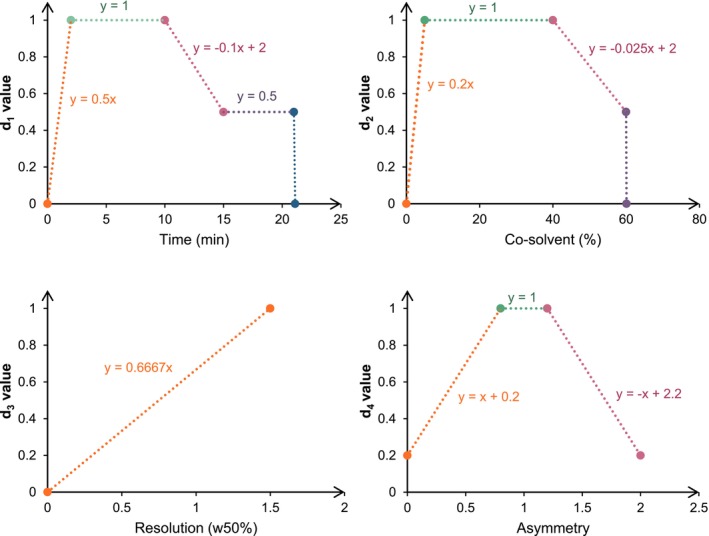 Figure 4
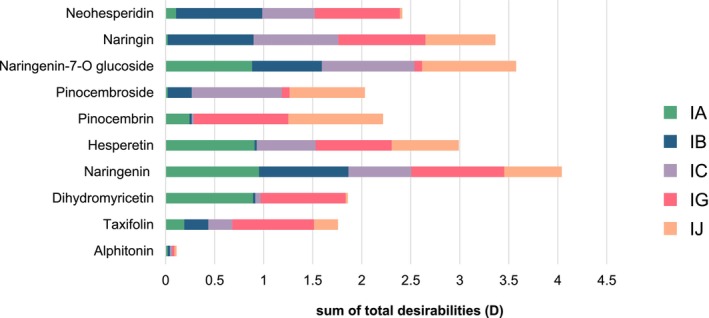 Figure 5
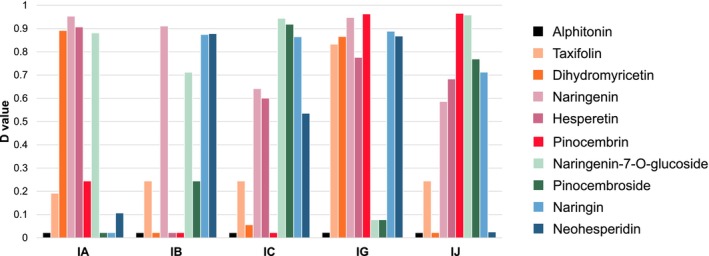 Figure 6
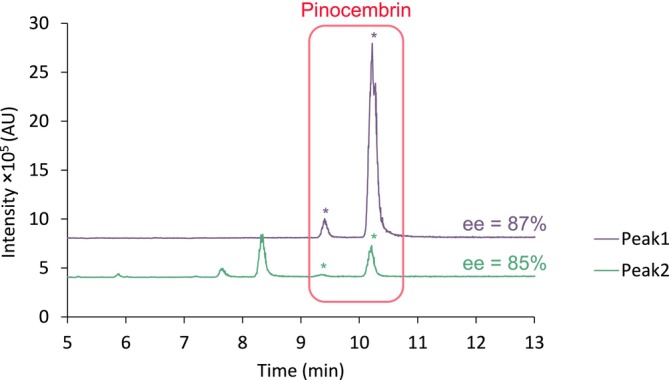 Figure 7
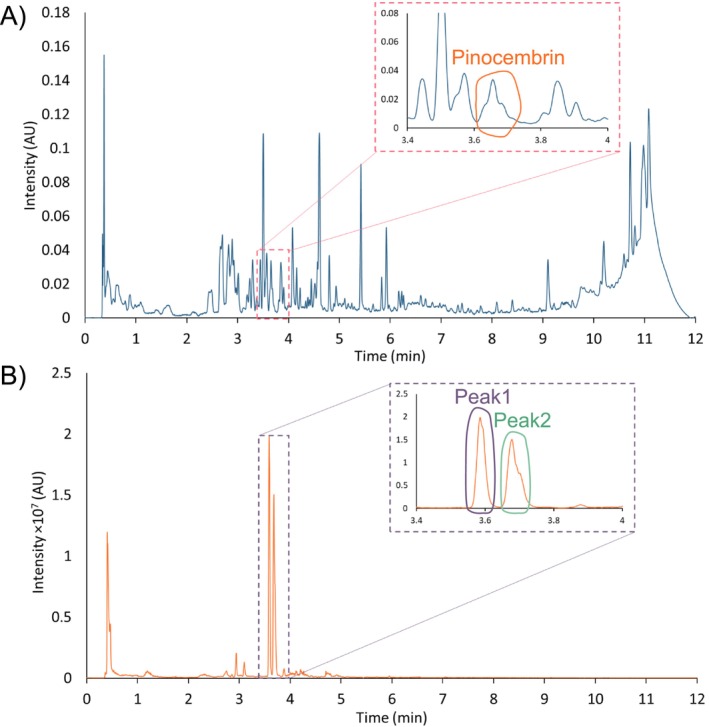 Figure 8
Peer Reviews
No public reviews on file for this paper yet. If you reviewed it on a platform where reviews are public (OpenReview, ICLR, NeurIPS, ICML), you can paste yours below so the community can read it here.
Videos
No videos yet. Explain this paper in a talk, walkthrough, or lecture? Add one.
Taxonomy
TopicsAnalytical Chemistry and Chromatography · Chromatography in Natural Products · Molecular spectroscopy and chirality