Controlling the Wake-Up Mechanism and Switching Kinetics of Ferroelectric Hf x Zr1 – x O2 through Hf Content Modulation
Athira Sunil, Ruben Alcala, Cláudia Silva, Thomas Mikolajick, Suzanne Lancaster

TL;DR
This paper explores how adjusting the hafnium content in Hf x Zr1 - x O2 thin films affects their switching behavior and wake-up mechanisms, which is important for memory and computing devices.
Contribution
The study reveals that increasing Hf content shifts the wake-up mechanism from phase transition to ferroelastic domain switching.
Findings
Multiple wake-up mechanisms coexist in Hf x Zr1 - x O2 thin films.
Higher Hf content leads to faster polarization switching and controllable partial polarization states.
Disorder-driven domain nucleation and nonlinear domain wall dynamics are influenced by Hf composition.
Abstract
The excellent scalability and compatibility to current CMOS manufacturing processes make ferroelectric Hf x Zr1 – x O2 thin films a promising candidate for embedded nonvolatile memories, as well as for synaptic devices in neuro-inspired computing. In order to achieve precise control over the polarization states and to ensure reliable operation in these thin films, a thorough understanding of the film’s domain switching kinetics and behavior under field cycling is necessary. The Hf composition in Hf x Zr1 – x O2 thin films plays a crucial role in determining the disorders, phase composition, and crystallographic texture within the film when integrated in a metal–ferroelectric–metal (MFM) device, all of which affect the evolution of its field cycling response and switching kinetics. In this work, the impact of Hf content on wake-up and domain switching kinetics in Hf x Zr1 – x O2 thin…
Genes, proteins, chemicals, diseases, species, mutations and cell lines named across the full text — each resolved to its canonical identifier and authoritative record.
Click any figure to enlarge with its caption.
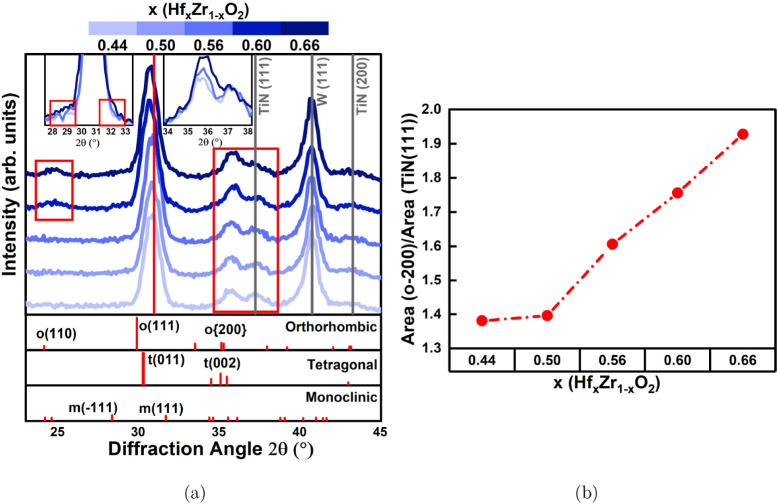 Figure 1
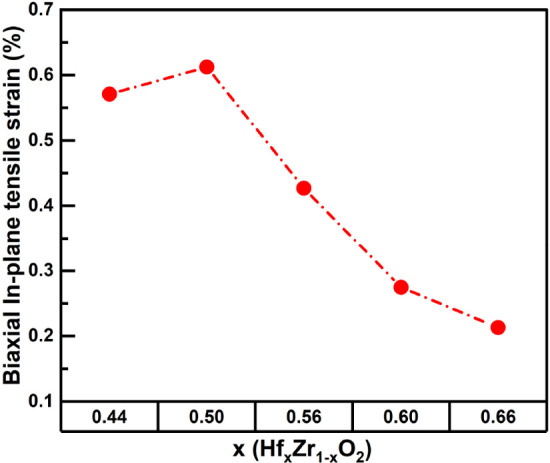 Figure 2
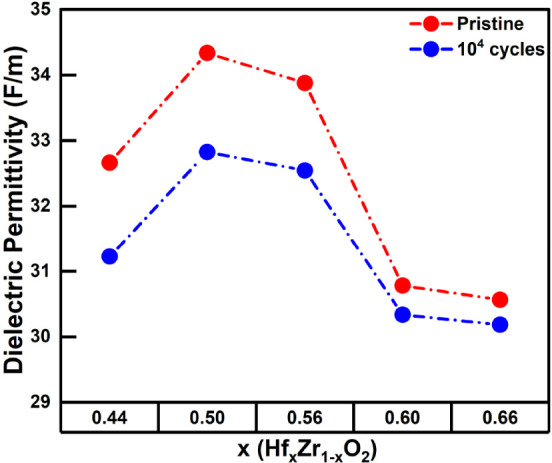 Figure 3
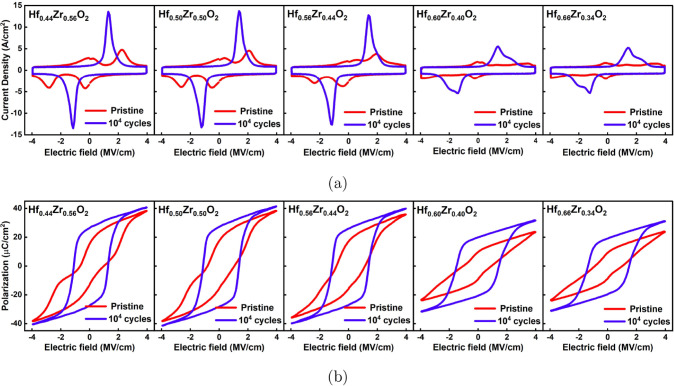 Figure 4
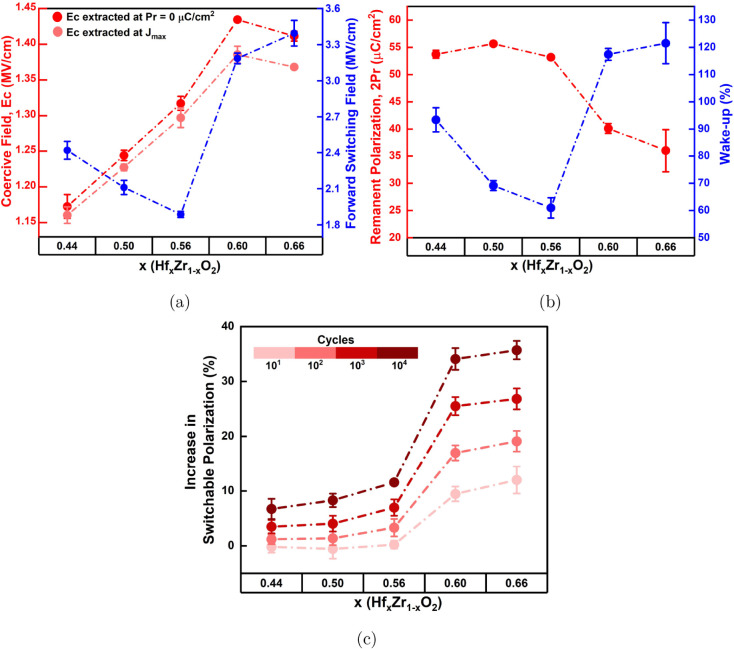 Figure 5
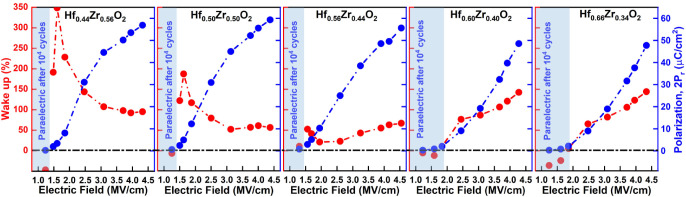 Figure 6
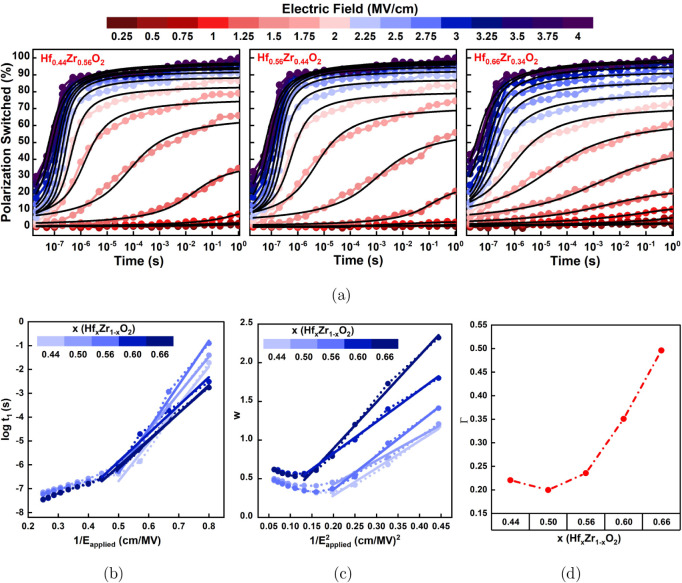 Figure 7
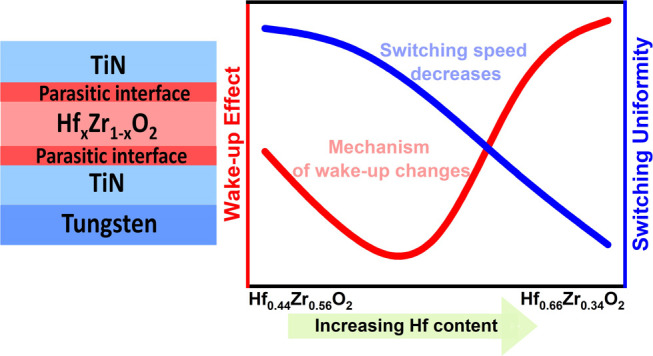 Figure 8
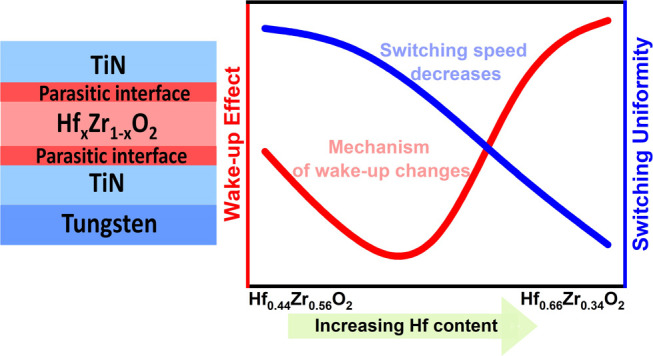 Figure 9
 Figure 10
 Figure 11
 Figure 12
 Figure 13
 Figure 14
 Figure 15
 Figure 16
 Figure 17
Peer Reviews
No public reviews on file for this paper yet. If you reviewed it on a platform where reviews are public (OpenReview, ICLR, NeurIPS, ICML), you can paste yours below so the community can read it here.
Videos
No videos yet. Explain this paper in a talk, walkthrough, or lecture? Add one.
Taxonomy
TopicsFerroelectric and Negative Capacitance Devices · Ferroelectric and Piezoelectric Materials · Advanced Memory and Neural Computing