Characteristics differentiating near-term multiple, distal multiple, and single suicide attempters during the 12-months post-discharge from the emergency department
Anne C. Knorr, Gemma T. Wallace, Heather T. Schatten, Mark A. Prince, Edwin D. Boudreaux, Ivan W. Miller, Carlos A. Camargo, Bradley T. Conner, Sarah A. Arias

TL;DR
This study compares people who make multiple suicide attempts shortly after an emergency department visit to those with spaced attempts or a single attempt.
Contribution
The study identifies unique clinical and demographic characteristics of individuals making multiple suicide attempts within 30 days of an ED visit.
Findings
Near-term attempters had more prior suicide attempts and higher rates of nonsuicidal self-injury before baseline.
They were more likely to have a depressive disorder and a primary care provider, but less likely to consider reasons for living.
Near-term attempters made earlier and more frequent attempts after the ED visit compared to others.
Abstract
A history of repeated suicide attempts increases risk for subsequent attempts. Further, individuals with multiple prior attempts exhibit higher suicidal intent and make more lethal recent attempts than those with single attempt histories. However, prior research has not studied whether individuals who make multiple suicide attempts within a short time frame, ≤30-day period (“near-term attempters”), differ clinically from those who make multiple suicide attempts occurring more than 30 days apart (“distal attempters”) or a single attempt in the period following an emergency department (ED) visit. Exploratory secondary analyses were conducted using data from the Emergency Department Safety Assessment and Follow-up Evaluation (ED-SAFE) study. Clinical telephone interviews were administered at 6, 12, 24, 36, and 52 weeks after the index ED visit, supplemented by chart reviews at 6 and 12…
Genes, proteins, chemicals, diseases, species, mutations and cell lines named across the full text — each resolved to its canonical identifier and authoritative record.
Click any figure to enlarge with its caption.
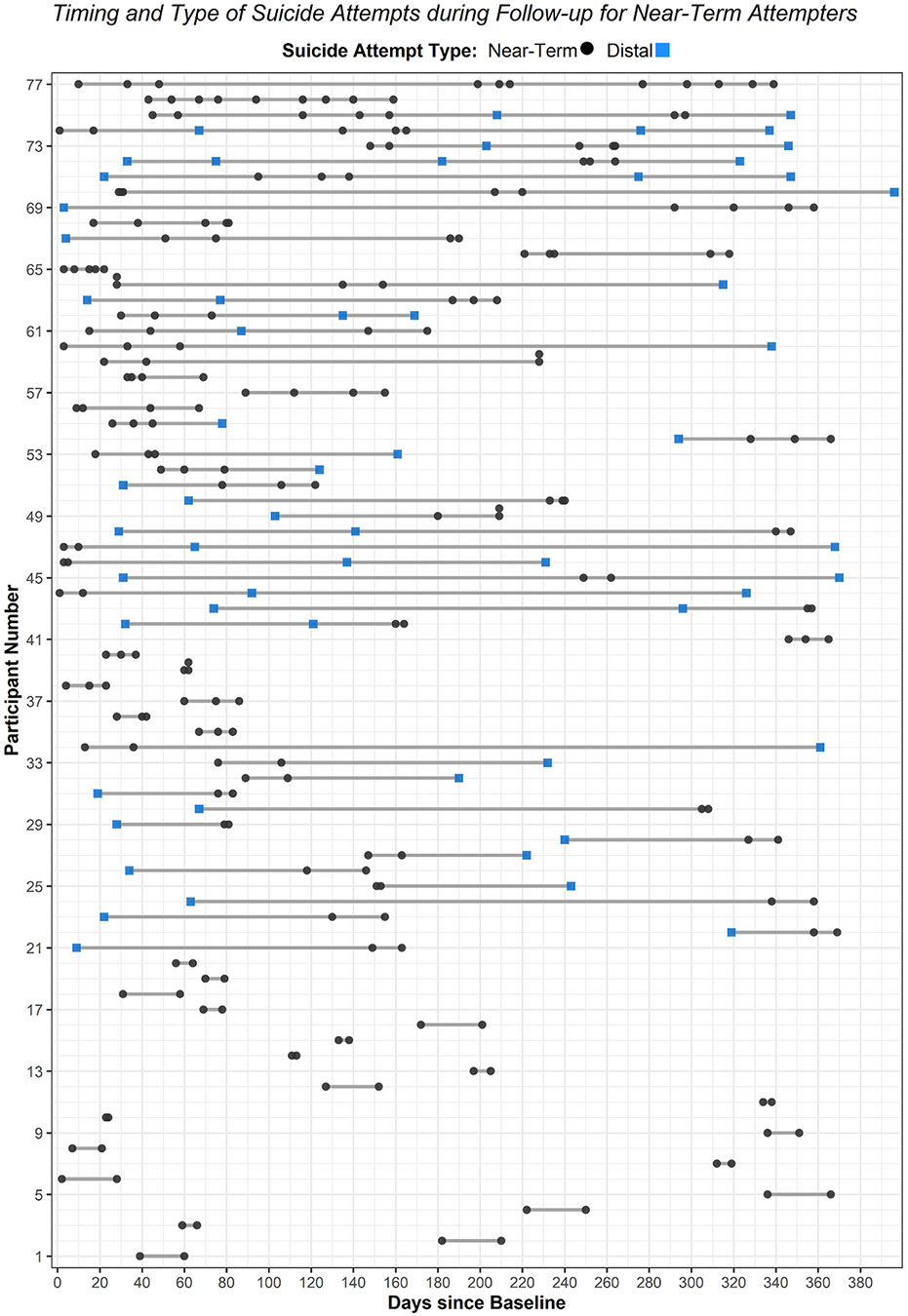 Figure 1
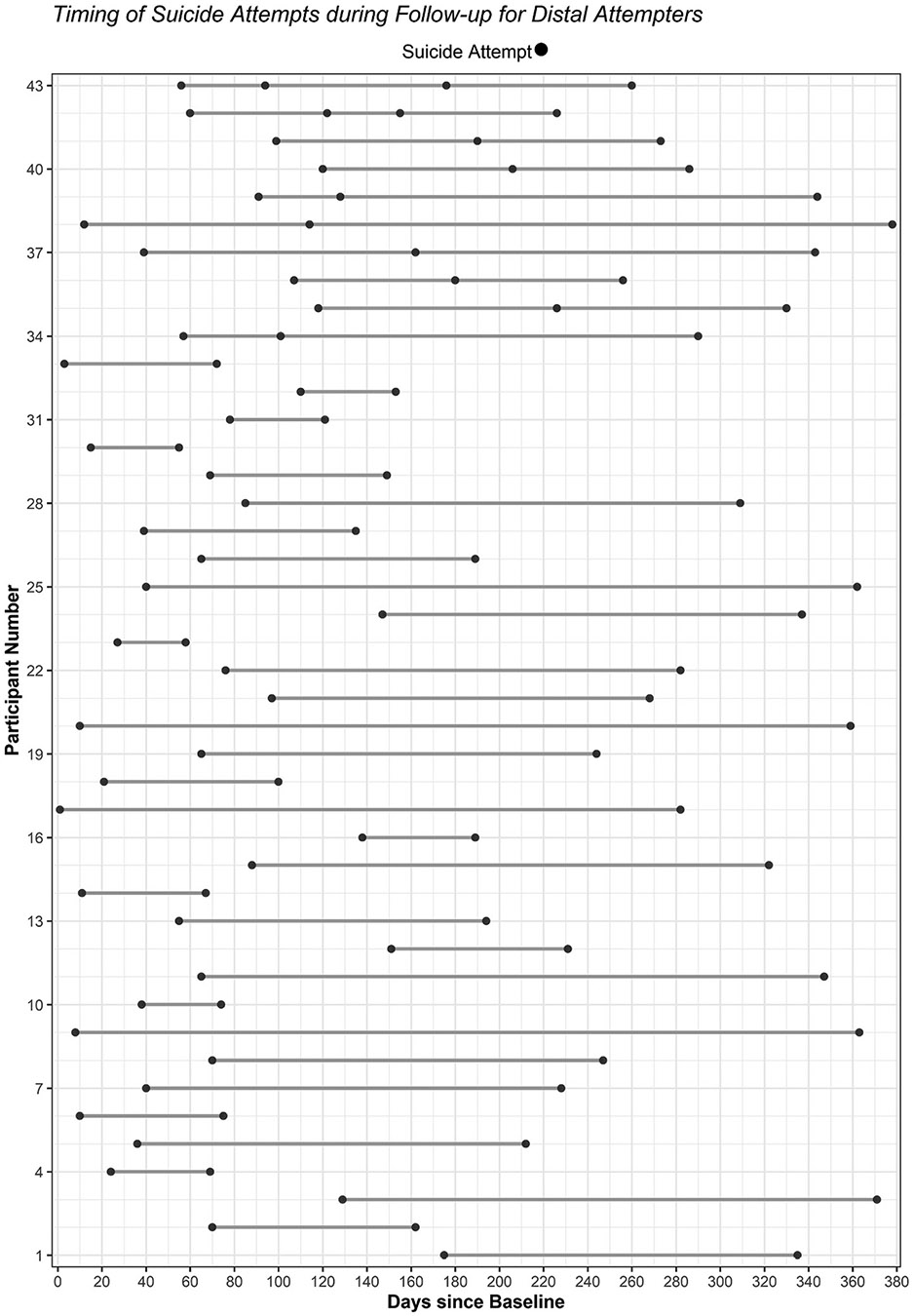 Figure 2
Peer Reviews
No public reviews on file for this paper yet. If you reviewed it on a platform where reviews are public (OpenReview, ICLR, NeurIPS, ICML), you can paste yours below so the community can read it here.
Videos
No videos yet. Explain this paper in a talk, walkthrough, or lecture? Add one.
Taxonomy
TopicsSuicide and Self-Harm Studies · Homicide, Infanticide, and Child Abuse · Mental Health Treatment and Access