Effectiveness of the GI Genius Computer-Aided Detection System Versus Standard Colonoscopy: A Systematic Review and Meta-Analysis of Randomized Controlled Trials
Aliya Sattar, Arifa Sattar, Muhammad Haris Khan, Maheen Zahid, Simahir Tariq, Neha Choudhary, Muneeba Shaukat, Shermeen Usman, Shakeeba Zubair, Yeman Ahmed, Sarah Aijaz

TL;DR
A computer-aided detection system called GI Genius improves the detection of colorectal lesions during colonoscopies compared to standard methods.
Contribution
This study provides the first meta-analysis of randomized trials showing GI Genius increases adenoma detection rates in colonoscopies.
Findings
GI Genius increased adenoma detection rate (ADR) compared to standard colonoscopy (RR 1.12).
The system also improved detection of sessile serrated lesions and overall polyp detection rates.
No significant difference was found in advanced adenoma detection rates.
Abstract
Colorectal cancer prevention relies on high-quality colonoscopy, yet clinically relevant lesions are still missed. GI Genius is an FDA-cleared computer-aided detection (CADe) system that flags suspected polyps in real time. We conducted a Preferred Reporting Items for Systematic reviews and Meta-Analyses (PRISMA)-aligned systematic review and meta-analysis of randomized controlled trials in adults comparing GI Genius-assisted versus standard colonoscopy. PubMed, Ovid Embase, and Cochrane Central Register of Controlled Trials (CENTRAL) were searched from the earliest available records in each database through August 25, 2025, with citation chasing. Seven trials (n = 9,639) met the eligibility criteria. Random-effects meta-analyses showed that GI Genius increased the adenoma detection rate (ADR) compared with standard colonoscopy (RR 1.12, 95% CI 1.03-1.22; I²=64%). Secondary outcomes…
Genes, proteins, chemicals, diseases, species, mutations and cell lines named across the full text — each resolved to its canonical identifier and authoritative record.
Click any figure to enlarge with its caption.
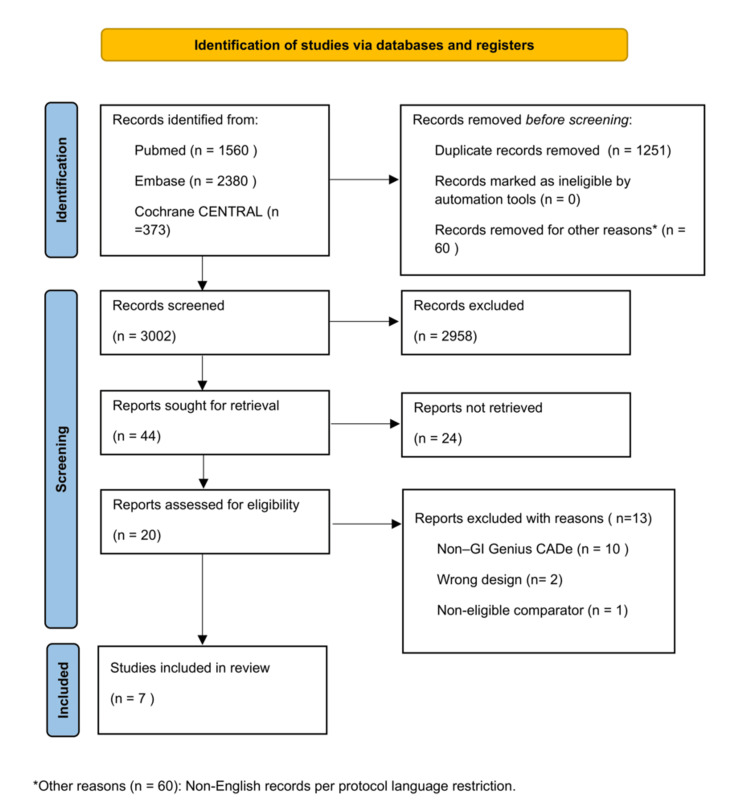 Figure 1
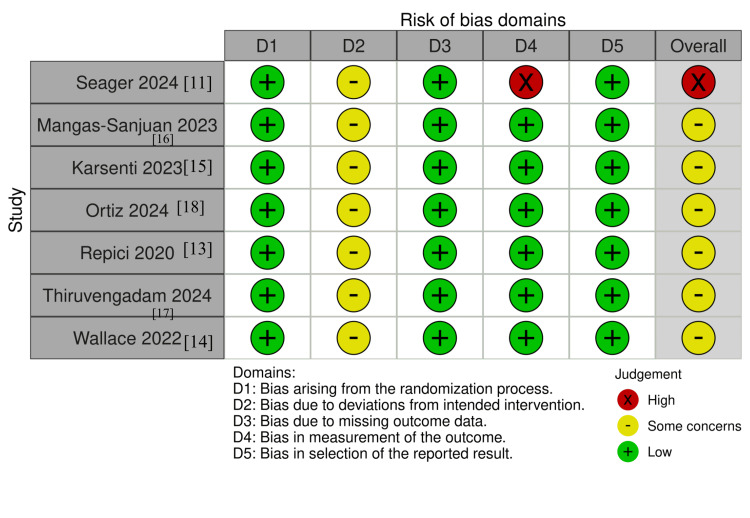 Figure 2
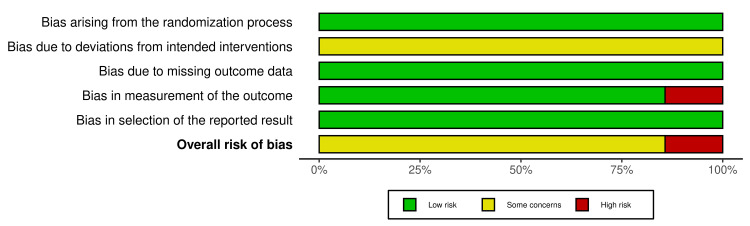 Figure 3
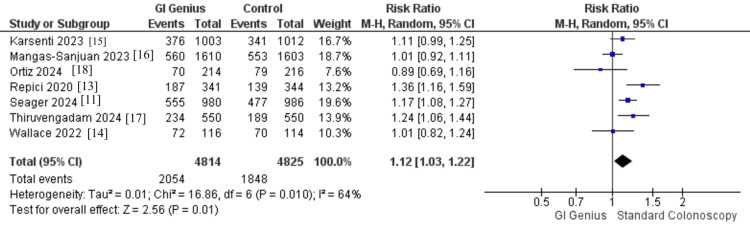 Figure 4
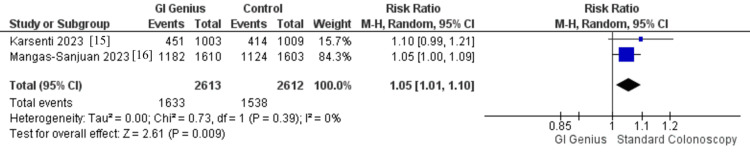 Figure 5
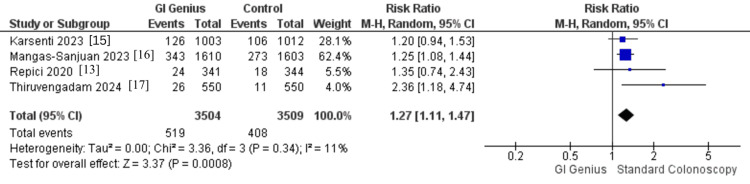 Figure 6
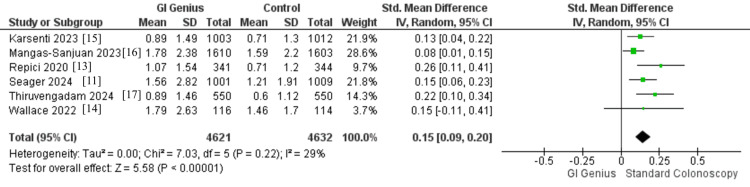 Figure 7
 Figure 8
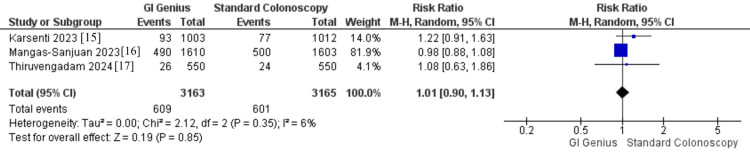 Figure 9
Peer Reviews
No public reviews on file for this paper yet. If you reviewed it on a platform where reviews are public (OpenReview, ICLR, NeurIPS, ICML), you can paste yours below so the community can read it here.
Videos
No videos yet. Explain this paper in a talk, walkthrough, or lecture? Add one.
Taxonomy
TopicsColorectal Cancer Screening and Detection · Gastric Cancer Management and Outcomes · Esophageal Cancer Research and Treatment