Engineering Hydroxyl Functionalization Enables Atomically Precise ZnO Nucleation on Defective Graphene
Gaddiel Sandoval, Carlos Antonio Corona-Garcia, Jonathan Efrain Rodriguez Hueso, Mario Humberto Farías, Hugo Tiznado, Sergio Andres Aguila, H. A. Borbon-Nuñez, Jonathan Guerrero-Sanchez

TL;DR
Researchers found that adding hydroxyl groups to graphene helps grow ZnO more efficiently at the atomic level.
Contribution
This study reveals how hydroxyl groups on graphene enhance ZnO nucleation through noncovalent interactions.
Findings
Hydroxyl groups stabilize DEZ adsorption and lower activation energy for ZnO growth.
Increasing hydroxyl groups makes ZnO nucleation more thermodynamically and kinetically favorable.
Noncovalent interactions like hydrogen bonds play a key role in facilitating the initial reaction.
Abstract
The synergy between graphene and ZnO in creating hybrid nanomaterials with novel properties of interest for the technological industry requires the development of processes and techniques that enable their precise production at the nanoscale. Therefore, understanding the atomic and molecular mechanisms that lead to their creation is imperative for controlling each involved step in their formation, enhancing their efficiency. This work sheds light on the first atomic layer half-cycle for the growth of ZnO on graphene with a hydroxyl-functionalized monovacancy. We performed quantum mechanical calculations, considering a trapping-mediated mechanism and diethylzinc (DEZ) as the precursor. The results suggest that neighboring hydroxyl groups facilitate DEZ adsorption and minimize the activation energy. This is linked to the role of hydroxyl groups in the formation of noncovalent interactions…
Genes, proteins, chemicals, diseases, species, mutations and cell lines named across the full text — each resolved to its canonical identifier and authoritative record.
Click any figure to enlarge with its caption.
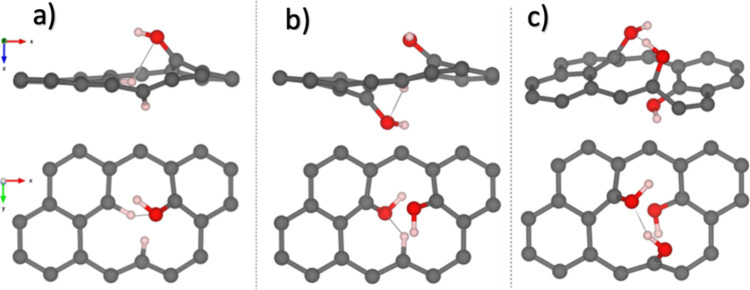 Figure 1
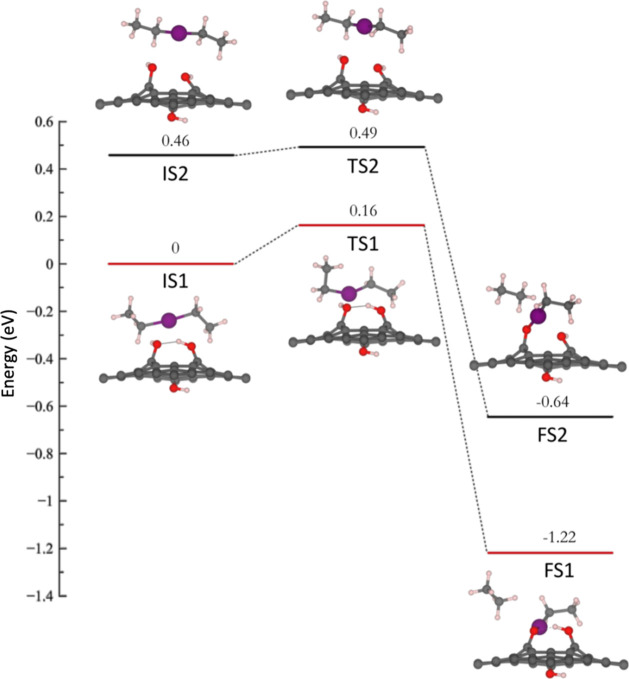 Figure 2
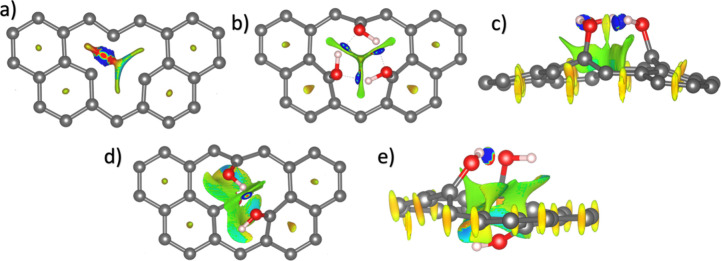 Figure 3
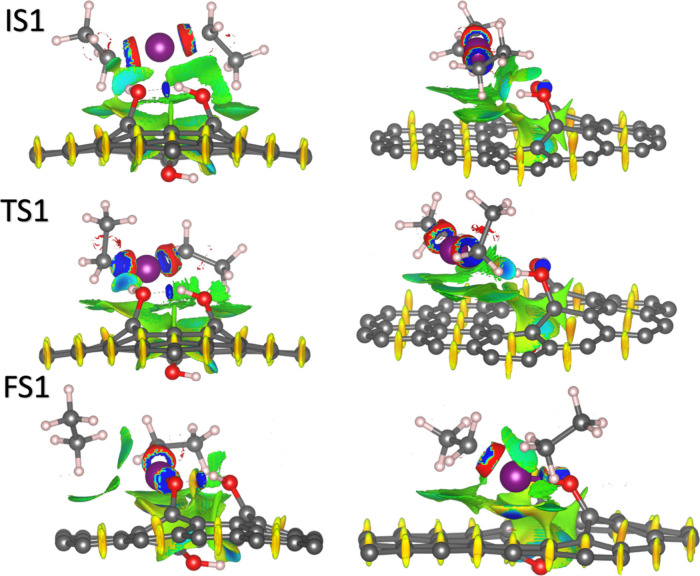 Figure 4
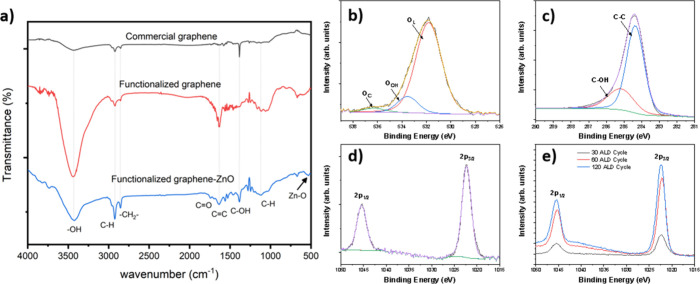 Figure 5
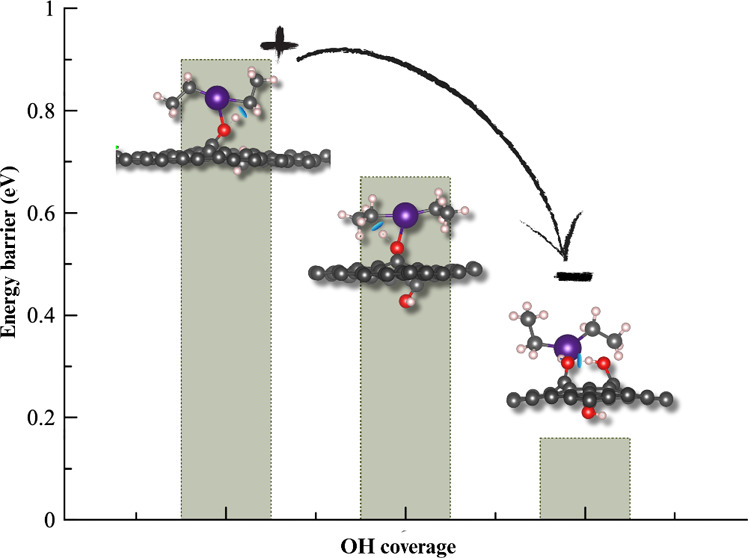 Figure 6
 Figure 7
 Figure 8
 Figure 9
 Figure 10
Peer Reviews
No public reviews on file for this paper yet. If you reviewed it on a platform where reviews are public (OpenReview, ICLR, NeurIPS, ICML), you can paste yours below so the community can read it here.
Videos
No videos yet. Explain this paper in a talk, walkthrough, or lecture? Add one.
Taxonomy
TopicsGraphene research and applications · Graphene and Nanomaterials Applications · ZnO doping and properties