Exploring the significance of GNG11, LPAR1, and AGTR1 in early diagnosis and prognosis of cervical cancer: A correlative analysis with clinical characteristics
Xiaojuan Wang, Fang Wang, Wenjing Yang, Yunxia Li

TL;DR
This study explores how GNG11, LPAR1, and AGTR1 expression levels relate to cervical cancer diagnosis and prognosis, finding that GNG11 is particularly significant.
Contribution
The study identifies GNG11 as a potential diagnostic and prognostic biomarker for cervical cancer.
Findings
Low GNG11 expression correlates with larger tumor size, advanced FIGO stage, and lymph node metastasis.
High GNG11 expression is associated with longer overall and recurrence-free survival in cervical cancer patients.
GNG11 expression is an independent prognostic indicator for overall survival.
Abstract
To investigate the significance of G-protein gamma subunit 11 (GNG11) expression in the diagnosis and prognosis of cervical cancer (CC). This was a retrospective study. Differentially expressed genes in CC were retrieved from the Gene Expression Omnibus (GEO). A cohort of 68 CC patients from General Hospital of Ningxia Medical University Cancer Hospital was enrolled in the study from March 2021 to March 2024. Immunohistochemistry was employed to evaluate the expression levels of G-protein subunit γ 11 (GNG11), lysophospholipid receptor 1 (LPAR1), and angiotensin II receptor 1 (AGTR1) in cancerous and pericancerous tissues of CC patients. The correlations between the positive expressions of GNG11, LPAR1, or AGTR1 and the clinicopathological parameters of CC patients were analyzed. A significant correlation was observed between low positive expression of GNG11 and tumor size (P=0.0068),…
Genes, proteins, chemicals, diseases, species, mutations and cell lines named across the full text — each resolved to its canonical identifier and authoritative record.
Click any figure to enlarge with its caption.
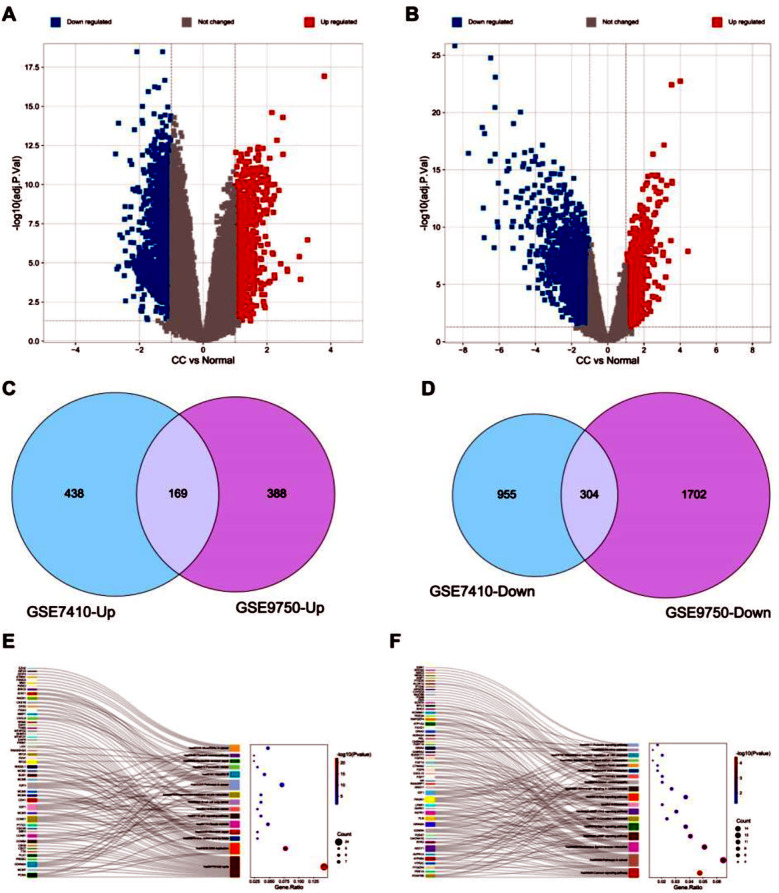 Figure 1
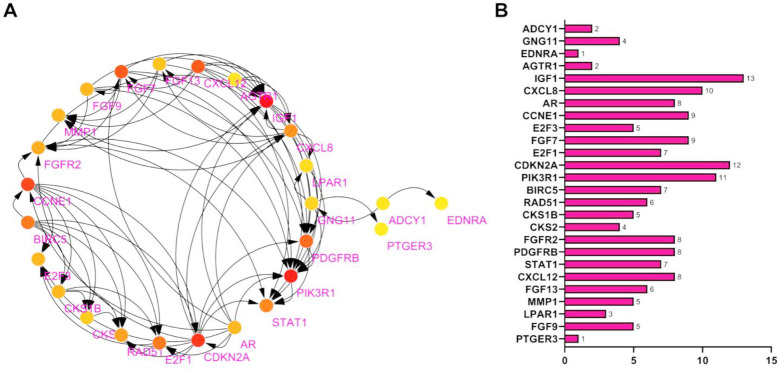 Figure 2
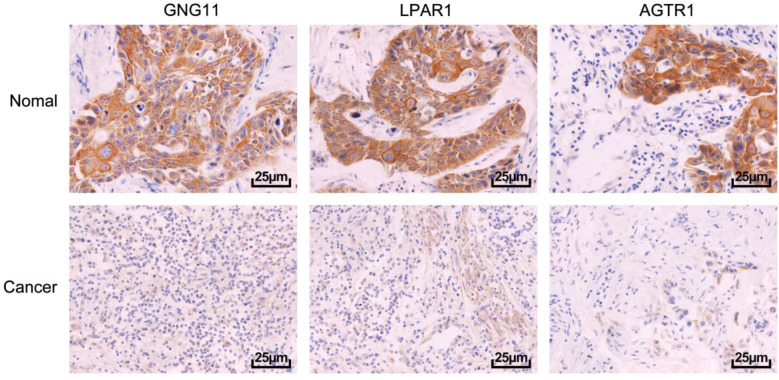 Figure 3
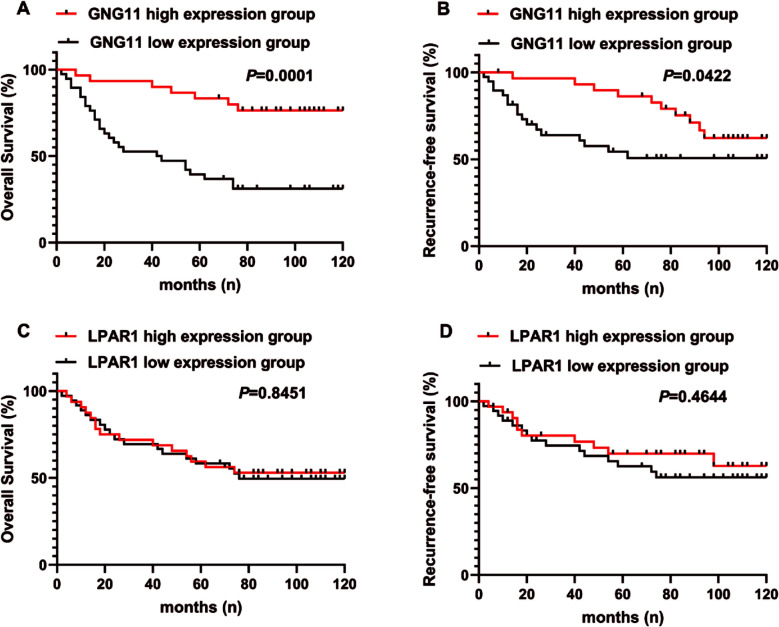 Figure 4
Peer Reviews
No public reviews on file for this paper yet. If you reviewed it on a platform where reviews are public (OpenReview, ICLR, NeurIPS, ICML), you can paste yours below so the community can read it here.
Videos
No videos yet. Explain this paper in a talk, walkthrough, or lecture? Add one.
Taxonomy
TopicsCancer-related molecular mechanisms research · Cancer-related gene regulation