MELD 3.0 score in prediction of varices and comparison with its previous versions in patients undergoing esophago-gastro-duodenoscopy for variceal screening or band ligation
Faiza Sadaqat Ali, Bader Faiyaz Zuberi, Tazeen Rasheed, Niaha, Amanullah Abbasi

TL;DR
The study compares MELD score versions in predicting esophageal varices in patients undergoing endoscopy, finding MELDNa has the highest accuracy.
Contribution
The study evaluates and compares the predictive accuracy of MELD, MELDNa, and MELD 3.0 scores for esophageal varices in endoscopy patients.
Findings
MELD 3.0 had the highest scores for presence of varices (19.21).
MELDNa showed the highest area under the curve (AUC) for predicting varices.
MELD 3.0 gives equal scores to males and females, unlike MELD and MELDNa.
Abstract
To compare MELD, MELDNa & MELD 3.0 score values with presence of varices in patients undergoing esophago-gastro-duodenoscopy for variceal screening or band ligation. The other objective was to estimate cut-off values of various MELD variants in prediction of varices using Area Under Receiver Operator Curve (AUROC). This cross-sectional study was conducted in Department of Medicine/Gastroenterology at Dow Medical College, Karachi during the period 20th November 2022 to 19th September 2024. All patients of either gender of age between 18 to 65 years undergoing screening endoscopy were included in the study after informed consent. MELD, MELDNa & MELD 3.0 scores were calculated, grades of oesophageal varices were recorded. Total of 321 patients were included. Highest scores for presence of varices were reported by MELD 3.0 (19.21). No difference was found for variceal presence on gender…
Genes, proteins, chemicals, diseases, species, mutations and cell lines named across the full text — each resolved to its canonical identifier and authoritative record.
Click any figure to enlarge with its caption.
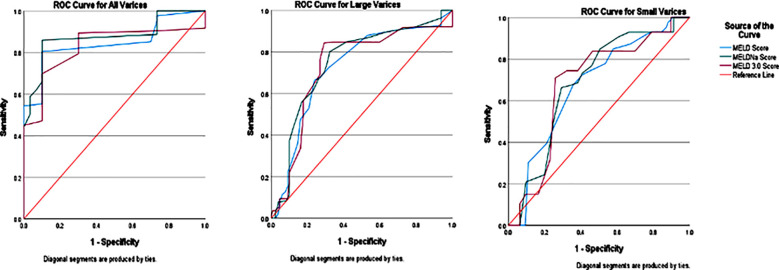 Figure 1
Peer Reviews
No public reviews on file for this paper yet. If you reviewed it on a platform where reviews are public (OpenReview, ICLR, NeurIPS, ICML), you can paste yours below so the community can read it here.
Videos
No videos yet. Explain this paper in a talk, walkthrough, or lecture? Add one.
Taxonomy
TopicsLiver Disease and Transplantation