Kinematic alignment without femoral cartilage‐wear compensation for apex‐distal joint line obliquity: Effects on component alignment
Tsutomu Maeda, Theodore Derek Vernon Cooke, Mitsuhiko Kubo, Kazutaka So, Shinji Imai

TL;DR
A modified knee replacement technique called JLO-KA improves joint alignment in patients with a specific knee deformity, leading to better outcomes compared to traditional methods.
Contribution
The study introduces JLO-KA, a modified kinematic alignment technique that reallocates correction to the tibial side, improving alignment in apex-distal joint line obliquity.
Findings
JLO-KA significantly increased lateral distal femoral angle (LDFA) and medial proximal tibial angle (MPTA) compared to true KA.
JLO-KA resulted in increased femoral component rotation and a more neutral joint line obliquity.
JLO-KA achieved neutral joint line obliquity in 80% of cases versus 13% with true KA.
Abstract
Pronounced apex‐distal joint line obliquity (JLO) complicates total knee arthroplasty (TKA) by challenging patellofemoral tracking and medial tibial bone support. Joint line obliquity–modified kinematic alignment (JLO‐KA)—a selective modification of kinematic alignment (KA) that omits femoral cartilage‐wear compensation and reallocates correction to the tibial side—was developed. This study quantified postoperative component and limb alignment with JLO‐KA versus true KA. Retrospective comparison of 20 JLO‐KA knees and 15 true‐KA knees with preoperative apex‐distal JLO (CPAK I–III). Pre‐/postoperative computed tomography (CT) measured lateral distal femoral angle (LDFA), medial proximal tibial angle (MPTA), femoral component rotation (FCR), arithmetic hip–knee–ankle angle (aHKA), and JLO; postoperative Coronal Plane Alignment of the Knee (CPAK) distribution was analysed (Δ = JLO‐KA…
Genes, proteins, chemicals, diseases, species, mutations and cell lines named across the full text — each resolved to its canonical identifier and authoritative record.
Click any figure to enlarge with its caption.
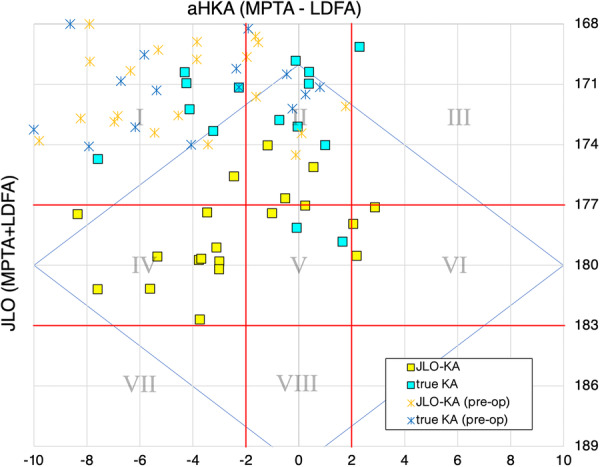 Figure 1
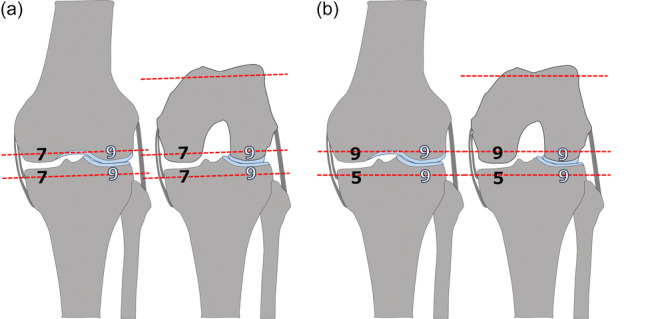 Figure 2
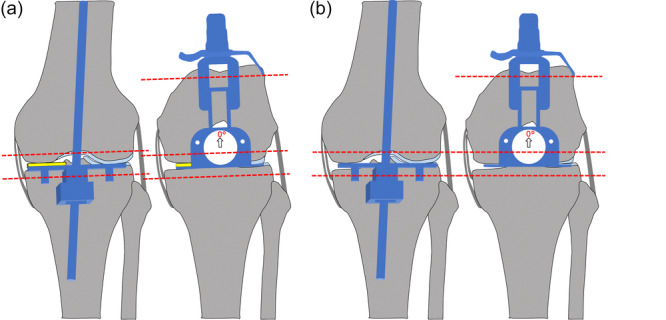 Figure 3
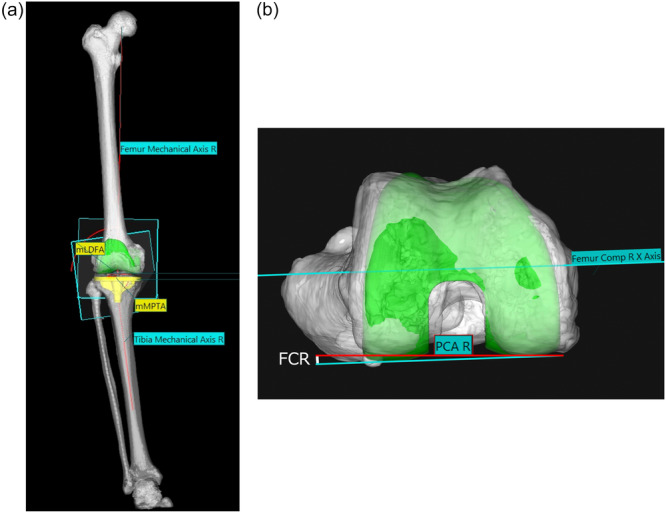 Figure 4
Peer Reviews
No public reviews on file for this paper yet. If you reviewed it on a platform where reviews are public (OpenReview, ICLR, NeurIPS, ICML), you can paste yours below so the community can read it here.
Videos
No videos yet. Explain this paper in a talk, walkthrough, or lecture? Add one.
Taxonomy
TopicsKnee injuries and reconstruction techniques · Total Knee Arthroplasty Outcomes · Shoulder Injury and Treatment