Assessing and Enhancing Adherence to the Standard Aseptic Non-touch Technique in Peripheral Intravenous Cannulation: A Quality Improvement Project in a Resource-Constrained Neonatal Intensive Care Unit
Aaisha Shahbaz, Asad Maqbool, Fahad Imami, Waiza Batool, Ahmad S Asad, Rohma Shahbaz

TL;DR
This study shows that training and education significantly improve adherence to aseptic techniques during IV cannulation in a neonatal ICU in Pakistan.
Contribution
The study demonstrates the effectiveness of structured educational interventions in improving aseptic technique compliance in a resource-limited setting.
Findings
Compliance with aseptic non-touch technique increased from 66% to 94% after two educational intervention cycles.
Hand hygiene adherence improved from 50% to 84%, and tray cleaning practices increased from 64% to 87%.
Targeted training and frequent assessments led to a substantial and sustained improvement in aseptic practices.
Abstract
Background Neonatal sepsis remains a critical concern in neonatal care, contributing significantly to morbidity and mortality. Aseptic techniques prevent infections during invasive procedures such as peripheral intravenous (IV) cannulation, particularly the aseptic non-touch technique (ANTT). The purpose of this study was to assess the baseline level of ANTT adherence among medical personnel and to analyze the effect of a structured educational intervention on compliance rates. The implementation of ANTT is based on the premise that having a standard framework and ensuring its compliance will decrease infection rates and consequently improve health care, especially in the resource-constrained setups of low- and middle-income countries (LMICs) Objectives The primary goal of this quality improvement project (QIP) is to assess baseline adherence to the ANTT during peripheral IV…
Genes, proteins, chemicals, diseases, species, mutations and cell lines named across the full text — each resolved to its canonical identifier and authoritative record.
Click any figure to enlarge with its caption.
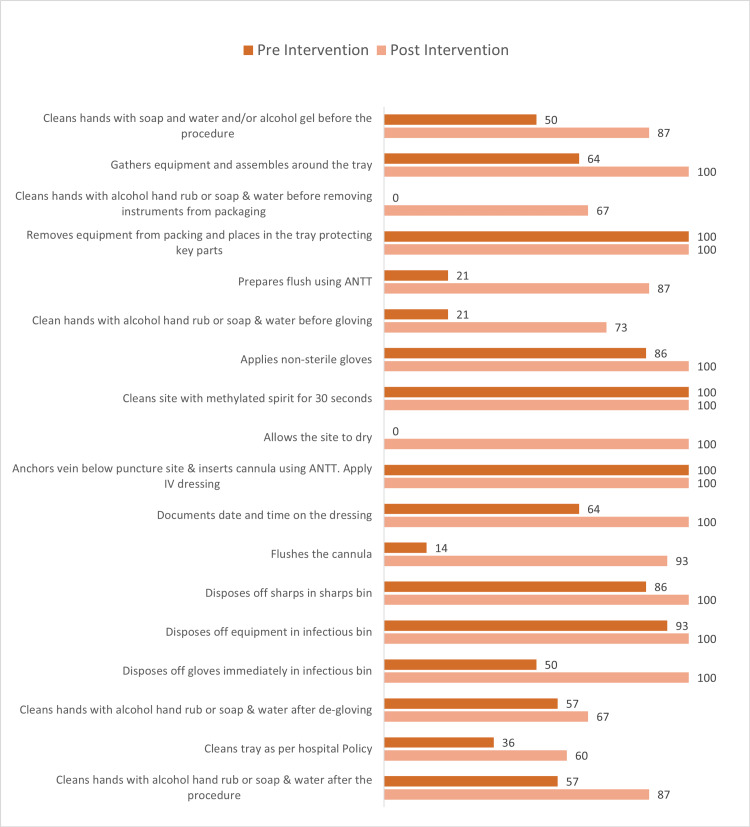 Figure 1
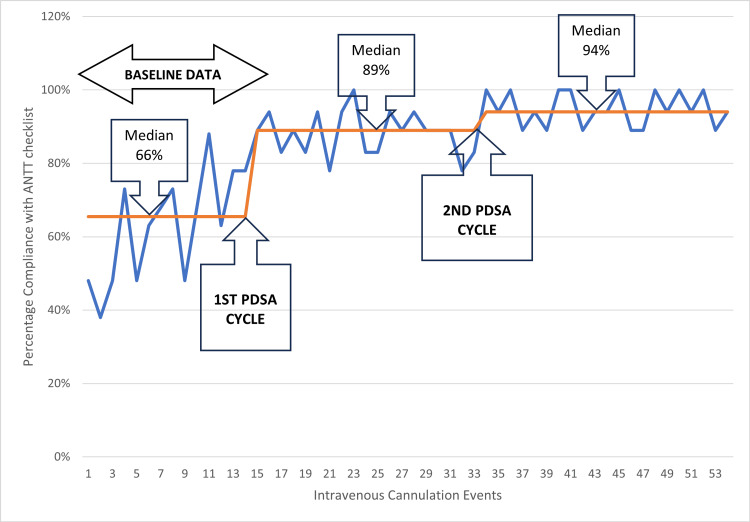 Figure 2
Peer Reviews
No public reviews on file for this paper yet. If you reviewed it on a platform where reviews are public (OpenReview, ICLR, NeurIPS, ICML), you can paste yours below so the community can read it here.
Videos
No videos yet. Explain this paper in a talk, walkthrough, or lecture? Add one.
Taxonomy
TopicsCentral Venous Catheters and Hemodialysis · Infection Control in Healthcare · Neonatal and Maternal Infections