Brain age prediction and early neurodegeneration detection using contrastive learning on brain biomechanics: a retrospective, multicentre study
Jakob Träuble, Lucy V. Hiscox, Curtis L. Johnson, Angelica Aviles-Rivero, Carola B. Schönlieb, Gabriele S. Kaminski Schierle

TL;DR
This study uses a new AI method on brain scans to predict brain age and detect early signs of neurodegenerative diseases like Alzheimer's more accurately than traditional methods.
Contribution
A self-supervised contrastive regression framework using MRE data to predict brain age and detect early neurodegeneration with higher accuracy than MRI.
Findings
MRE-based models outperformed MRI in brain age prediction with a 3.51-year MAE.
MRE identified distinct biomechanical signatures for Alzheimer's and MCI.
Some cognitively normal individuals showed biomechanical profiles similar to MCI or AD patients.
Abstract
One of the main reasons why drugs for neurodegenerative diseases often fail is that treatment typically begins only after symptoms have appeared—by which point significant, and possibly irreversible, damage may have already occurred. Non-invasive imaging techniques, such as Magnetic Resonance Imaging (MRI), have previously been explored for presymptomatic diagnosis, but with limited success. More recently, Magnetic Resonance Elastography (MRE)—a technique capable of mapping the brain's biomechanical properties, including stiffness and damping ratio—has shown promise in detecting early changes. However, current studies have been limited by small sample sizes, and a lack of robust algorithms capable of accurately interpreting data under such constraints. We developed a self-supervised contrastive regression framework trained on 3D MRE-derived stiffness and damping ratio maps from 311…
Genes, proteins, chemicals, diseases, species, mutations and cell lines named across the full text — each resolved to its canonical identifier and authoritative record.
Click any figure to enlarge with its caption.
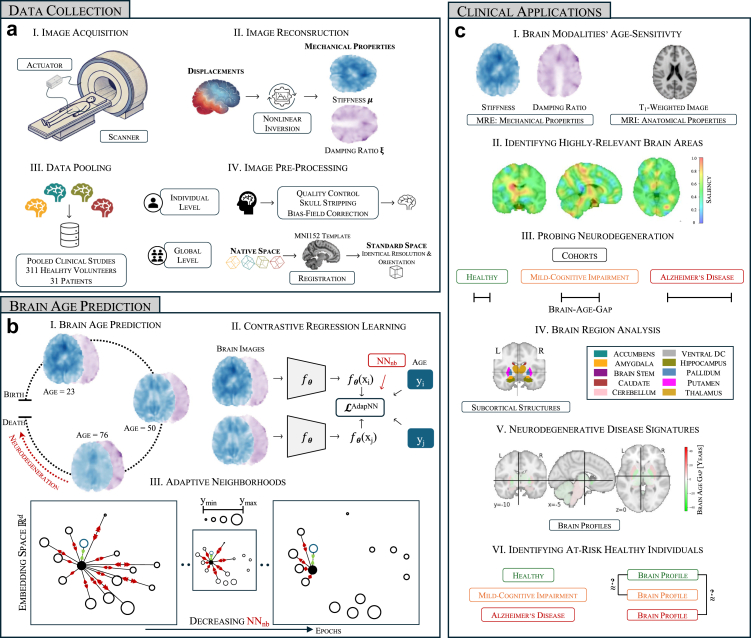 Figure 1
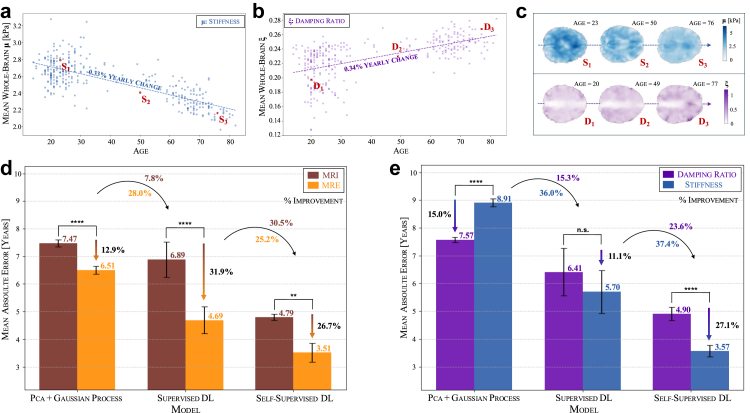 Figure 2
 Figure 3
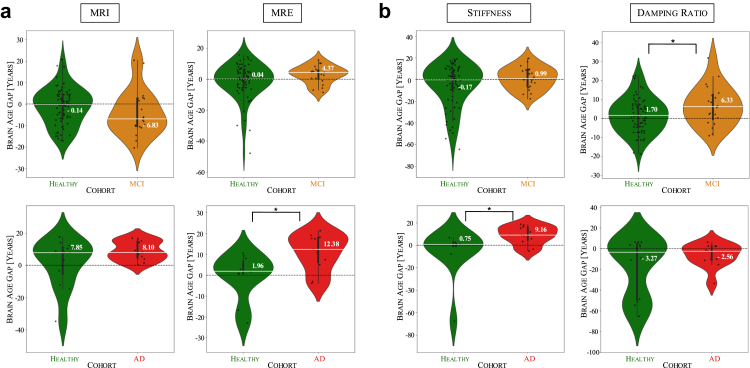 Figure 4
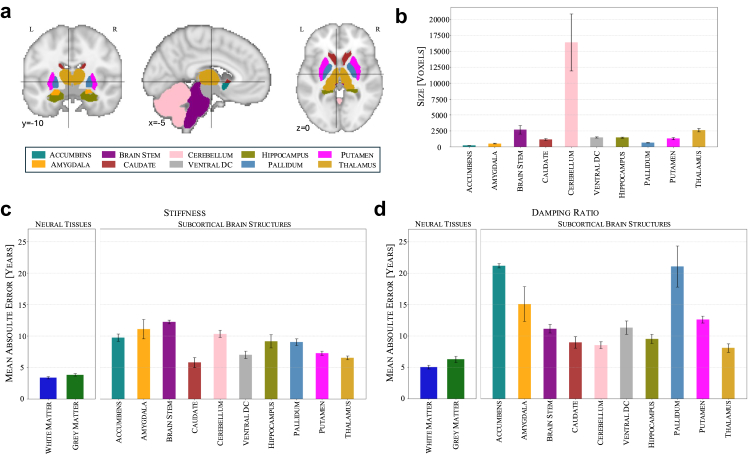 Figure 5
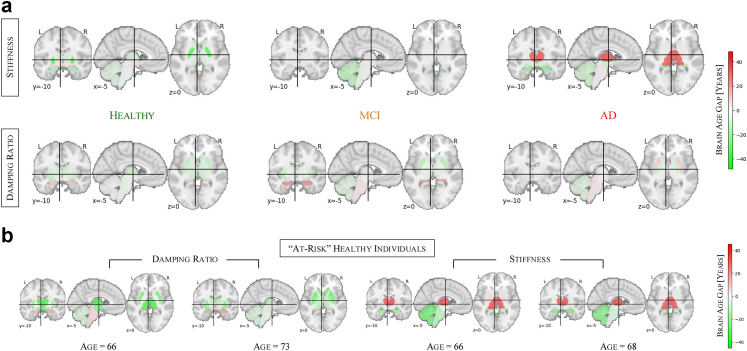 Figure 6
Peer Reviews
No public reviews on file for this paper yet. If you reviewed it on a platform where reviews are public (OpenReview, ICLR, NeurIPS, ICML), you can paste yours below so the community can read it here.
Videos
No videos yet. Explain this paper in a talk, walkthrough, or lecture? Add one.
Taxonomy
TopicsFunctional Brain Connectivity Studies · EEG and Brain-Computer Interfaces · Automotive and Human Injury Biomechanics