Detection and genetic diversity of Cryptosporidium in yaks in Xinjiang, China
Zhenjie Zhang, Huigang Zhao, Bowen Zhang, Fuchang Yu, Aiyun Zhao, Junqiang Li, Meng Qi, Rongjun Wang

TL;DR
This study found a low infection rate of Cryptosporidium in yaks in Xinjiang, China, with multiple species and genetic diversity observed.
Contribution
The study reports the genetic diversity and subtypes of Cryptosporidium in yaks from Xinjiang, China.
Findings
The overall infection rate of Cryptosporidium in yaks was 2.4%.
Five different Cryptosporidium species and one genotype were identified.
Subtypes clustered with global references, suggesting cross-species transmission.
Abstract
Cryptosporidium spp. is an important protozoan parasite that can cause diarrhea in both humans and animals worldwide. In the present study, a total of 826 yak fecal samples were collected from six counties in Xinjiang and tested for Cryptosporidium using PCR. Based on the SSU rRNA gene, 20 samples tested positive for Cryptosporidium, resulting in an overall infection rate of 2.4 % (20/826). Hejing County exhibited the highest infection rate at 5.6 % (16/288), with significant ``Cryptosporidium species and one genotype were identified: C. bovis (n = 12), C. parvum (n = 3), C. ryanae (n = 3), C. occultus (n = 1), and Cryptosporidium sp. rat genotype IV (n = 1). Subtyping via the gp60 gene revealed two subtypes for C. bovis (XXVIb, n = 4; XXVIc, n = 4), one subtype for C. ryanae (XXIa, n = 1), and one subtype for C. parvum (IIdA19G1, n = 1). Phylogenetic analysis indicated that these…
Genes, proteins, chemicals, diseases, species, mutations and cell lines named across the full text — each resolved to its canonical identifier and authoritative record.
Click any figure to enlarge with its caption.
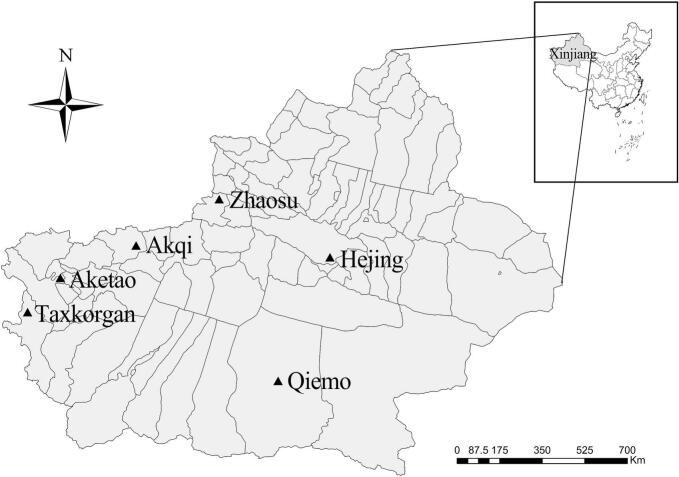 Figure 1
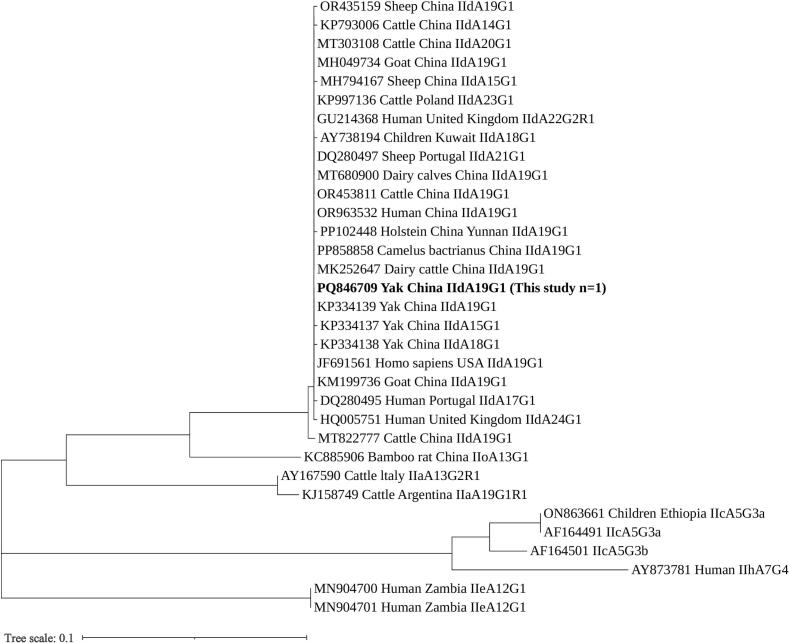 Figure 2
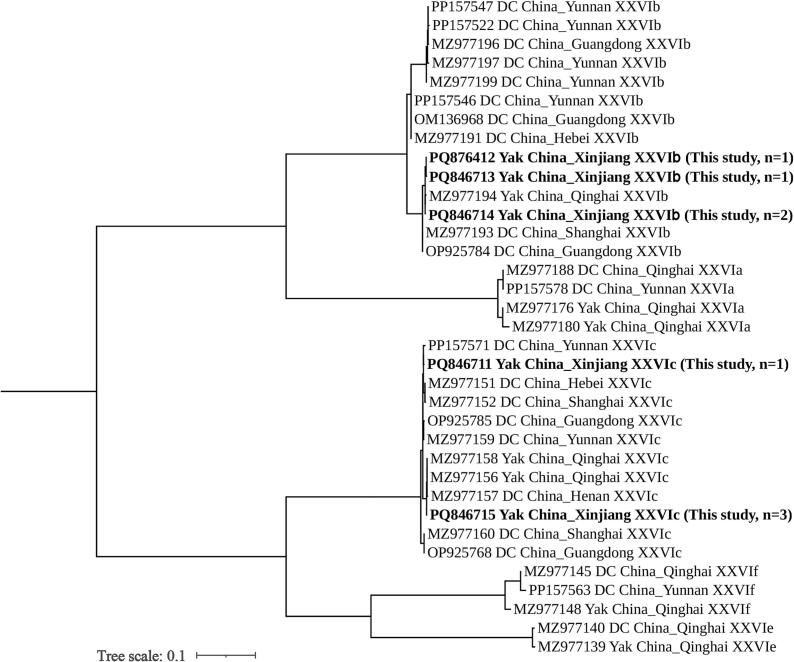 Figure 3
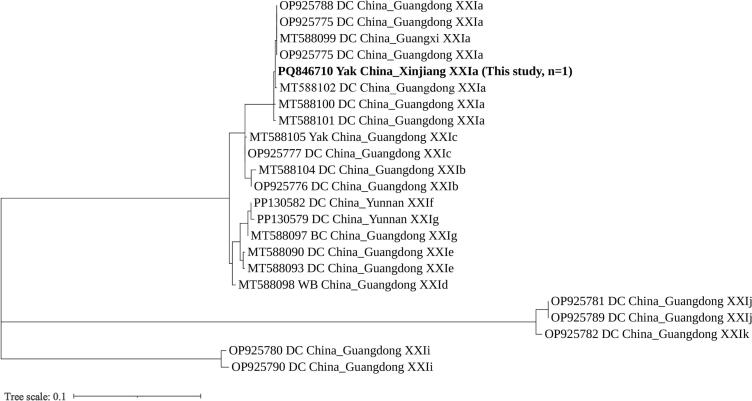 Figure 4
Peer Reviews
No public reviews on file for this paper yet. If you reviewed it on a platform where reviews are public (OpenReview, ICLR, NeurIPS, ICML), you can paste yours below so the community can read it here.
Videos
No videos yet. Explain this paper in a talk, walkthrough, or lecture? Add one.
Taxonomy
TopicsParasitic Infections and Diagnostics · Parasites and Host Interactions · Amoebic Infections and Treatments