Establishing a best practice for the freeze-thaw cycle of cryopreservation to approximate living muscle, joint, and associated soft tissue properties in cadaveric upper limbs
Cade R McGarvey, Summer M Drees, Austin Lawrence, Noah D Miller, Sahil Kapur, Vihan De Silva, Martin Skie, Ahmed Suparno Bahar Moni

TL;DR
This study determines the optimal thawing time for fresh-frozen cadaveric upper limbs to simulate living tissue properties for surgical training.
Contribution
The study establishes a best practice for thawing cadaveric limbs to approximate live tissue properties without damage.
Findings
Limbs thawed for 2 hours achieved a flexibility score of 3/5, similar to healthy live limbs.
Muscle biopsies showed no tissue damage in most samples taken up to 6 hours of thawing.
Thawing for 2 hours after refrigeration allows 4 hours of effective surgical simulation.
Abstract
Fresh-frozen cadavers are useful for surgical simulation and experimentation since they preserve many properties of live specimens, but achieving realistic physiological properties requires thawing that risks tissue damage. Ten fresh-frozen cadaveric upper limbs were frozen at −17 °C, refrigerated at 4 °C for 48 h, then thawed at room temperature for 8 h. The core temperature of the limbs was measured hourly. Joint flexibility, durometric hardness, and shore hardness were measured every two hours. Four limbs had muscle biopsies acquired every 2 h. The limbs were above freezing after about 1 h of thawing. The upper limbs achieved a flexibility score of 3/5 after 2 h of thawing, mimicking healthy live limbs. The limbs became softer and more pliable with more time thawing. Muscle biopsies showed no tissue damage in any samples taken at h 2 and 4 of thawing. Three limbs showed no tissue…
Genes, proteins, chemicals, diseases, species, mutations and cell lines named across the full text — each resolved to its canonical identifier and authoritative record.
Click any figure to enlarge with its caption.
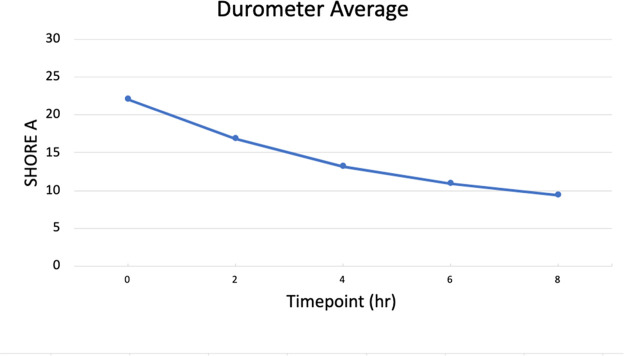 Figure 1
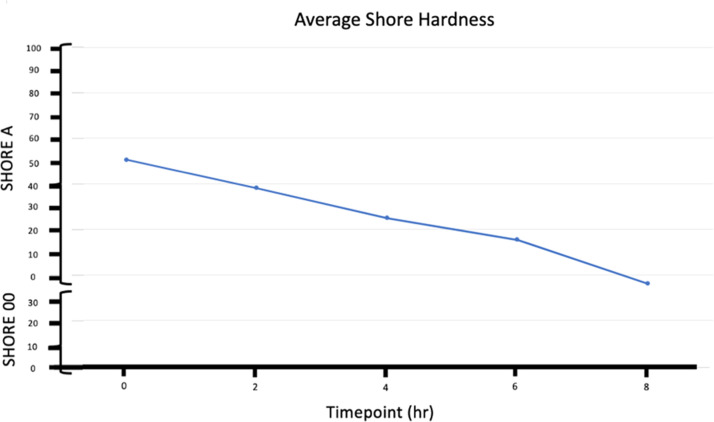 Figure 2
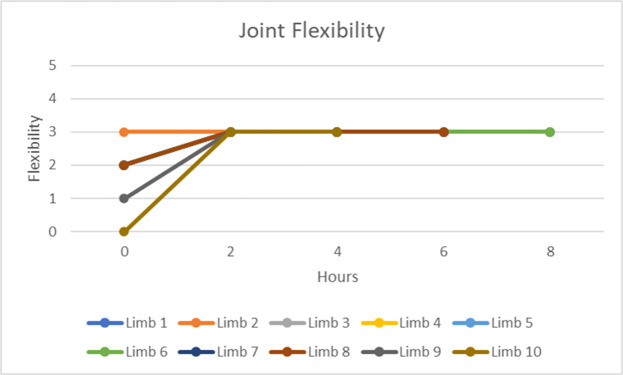 Figure 3
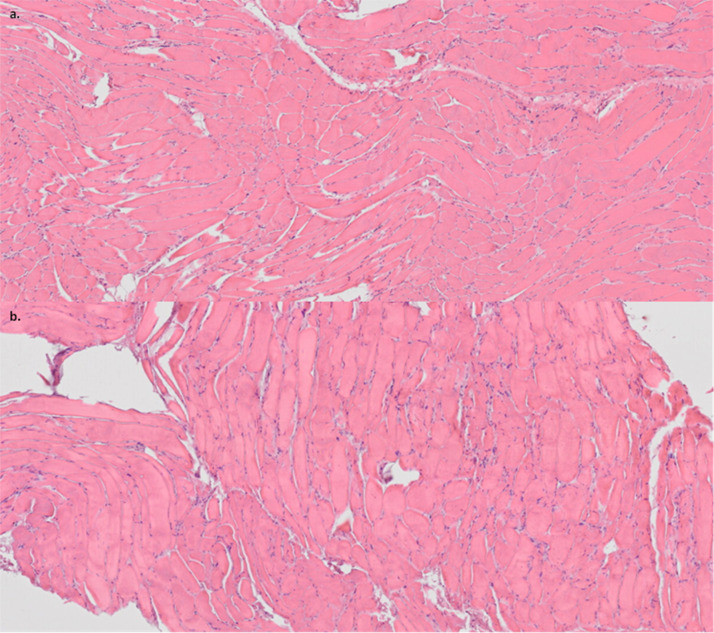 Figure 4
Peer Reviews
No public reviews on file for this paper yet. If you reviewed it on a platform where reviews are public (OpenReview, ICLR, NeurIPS, ICML), you can paste yours below so the community can read it here.
Videos
No videos yet. Explain this paper in a talk, walkthrough, or lecture? Add one.
Taxonomy
TopicsAnatomy and Medical Technology · Surgical Sutures and Adhesives · Reconstructive Surgery and Microvascular Techniques