Left atrial functional remodeling following percutaneous closure of atrial septal defect secundum in adult patients
Pramadya Vardhani Mustafiza, Lucia Kris Dinarti, Real Kusumanjaya Marsam, Hasanah Mumpuni, Dyah Wulan Anggrahini

TL;DR
This study examines how the left atrium functions in adults after a heart defect is closed with a device, finding temporary functional declines followed by partial recovery.
Contribution
The study provides new insights into left atrial functional changes following percutaneous closure of atrial septal defects in adults.
Findings
Left atrial reservoir strain significantly decreased in the first semester after closure and partially recovered by the second semester.
Left atrial conduit and contraction strains also declined initially but showed no significant improvement at one year.
Left atrial geometry remained unchanged despite functional impairments observed in strain measurements.
Abstract
Atrial septal defect secundum (ASDs) is one of the congenital heart diseases that is common in adults and frequently associated with volume overload and functional impairment of the right heart. Percutaneous device closure has become the preferred treatment because of its efficacy and lower complication rates. While right heart remodeling post-closure is well established, the effects on left atrial (LA) function, especially phasic components involving reservoir, conduit, and contraction strain, remain less understood. Two-dimensional speckle tracking echocardiography (2D STE) enables early and sensitive detection of LA functional changes. This retrospective cohort study included adult patients (aged 18–65 years) with ASDs who underwent percutaneous device closure between December 2022 and October 2023 at Dr. Sardjito Hospital, Yogyakarta, Indonesia. Echocardiographic evaluations,…
Genes, proteins, chemicals, diseases, species, mutations and cell lines named across the full text — each resolved to its canonical identifier and authoritative record.
Click any figure to enlarge with its caption.
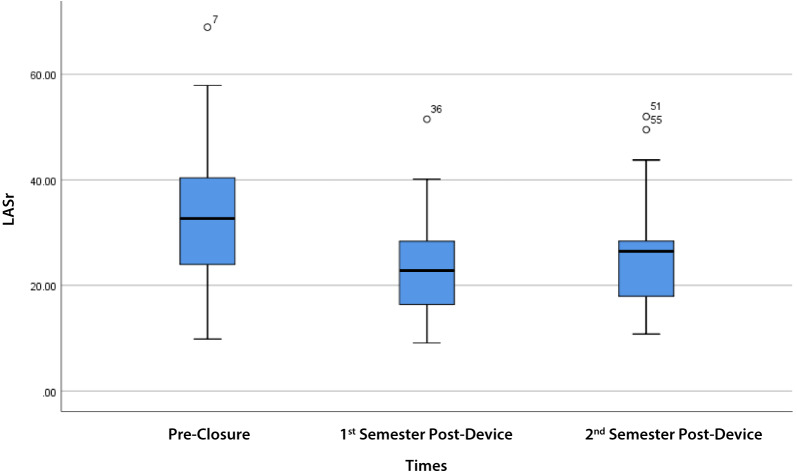 Figure 1
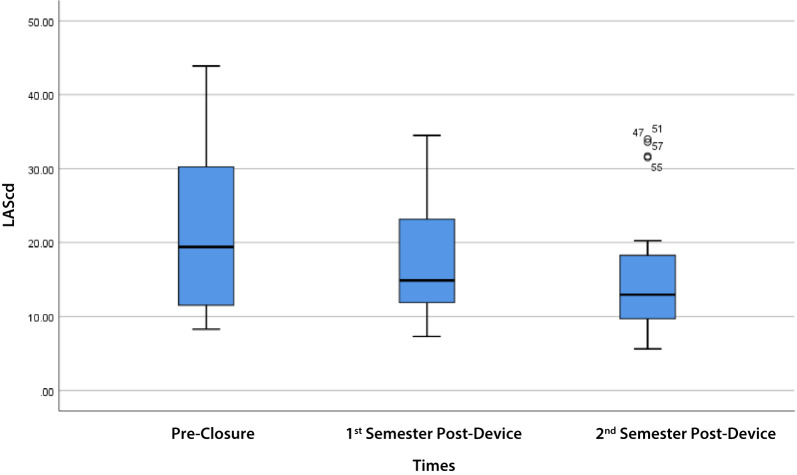 Figure 2
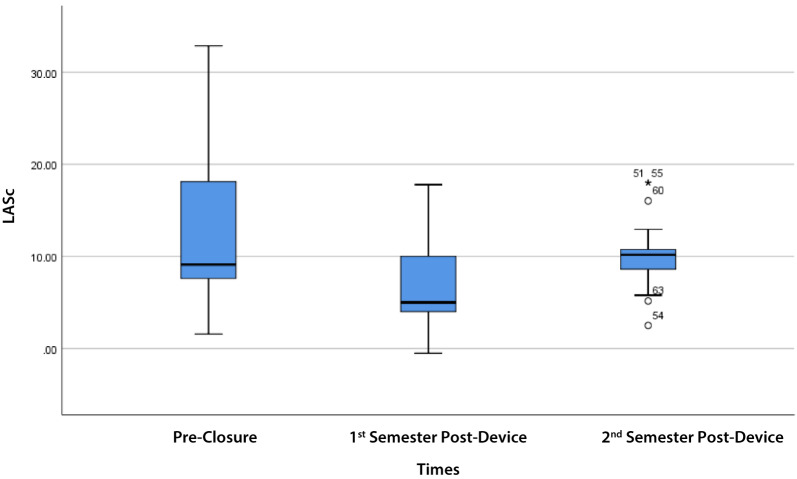 Figure 3
Peer Reviews
No public reviews on file for this paper yet. If you reviewed it on a platform where reviews are public (OpenReview, ICLR, NeurIPS, ICML), you can paste yours below so the community can read it here.
Videos
No videos yet. Explain this paper in a talk, walkthrough, or lecture? Add one.
Taxonomy
TopicsCardiovascular and Diving-Related Complications · Cardiovascular Function and Risk Factors · Cardiac Valve Diseases and Treatments