Glutathione as a taste modulator: molecular mechanisms of interaction with umami and sweet taste receptors
Clémence Cornut, Adeline Karolkowski, Maxence Lalis, Antoine Thomas, Rudy Menin, Jérémie Topin, Loïc Briand, Christine Belloir

TL;DR
This study shows how glutathione interacts with taste receptors to enhance umami and sweet flavors, revealing new molecular mechanisms.
Contribution
The paper identifies glutathione as a partial agonist of umami and sweet taste receptors and maps its binding sites.
Findings
GSH is a partial agonist of the umami taste receptor hTAS1R1/rTAS1R3 and synergizes with L-glutamic acid.
GSH binds to the Venus Flytrap domain of hTAS1R1 near the L-Glu binding site.
GSH is a weak agonist of the sweet taste receptor and synergizes with sucralose via the rTAS1R3 subunit.
Abstract
Reduced L-glutathione (GSH) is a kokumi active tripeptide that enhances umami, salty, and sweet taste perceptions, probably via the calcium-sensing receptor (CaSR). In this study, we report that GSH is a partial agonist of the umami taste receptor (hTAS1R1/rTAS1R3). Using cellular assays, we revealed synergistic effects of GSH with L-glutamic acid (L-Glu) but not with 5′-ribonucleotides. Combining molecular modeling and mutagenesis studies, we mapped the GSH binding site located between the two lobes of the Venus Flytrap domain (VFT) of hTAS1R1. Interestingly, GSH is a weak agonist of the sweet taste receptor (hTAS1R2/hTAS1R3) and synergizes with sucralose via the rTAS1R3 subunit. Using the chimeric TAS1R3 receptor and site-directed mutagenesis, we showed that GSH binds to TAS1R3-VFT. This research provides increased understanding of the molecular interactions between GSH and TAS1Rs and…
Genes, proteins, chemicals, diseases, species, mutations and cell lines named across the full text — each resolved to its canonical identifier and authoritative record.
Click any figure to enlarge with its caption.
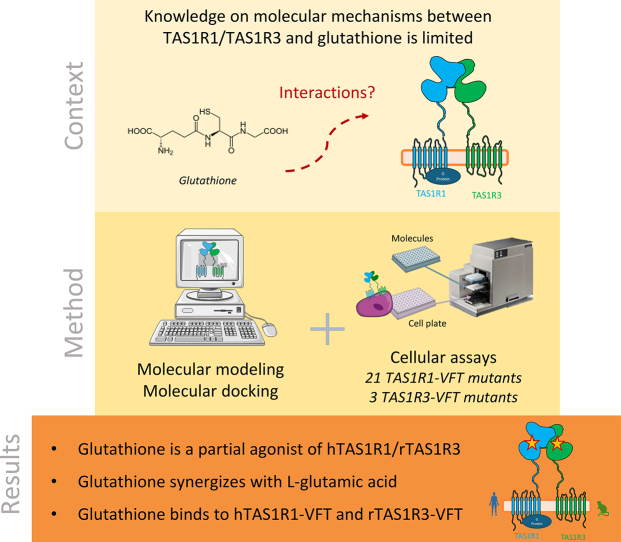 Figure 1
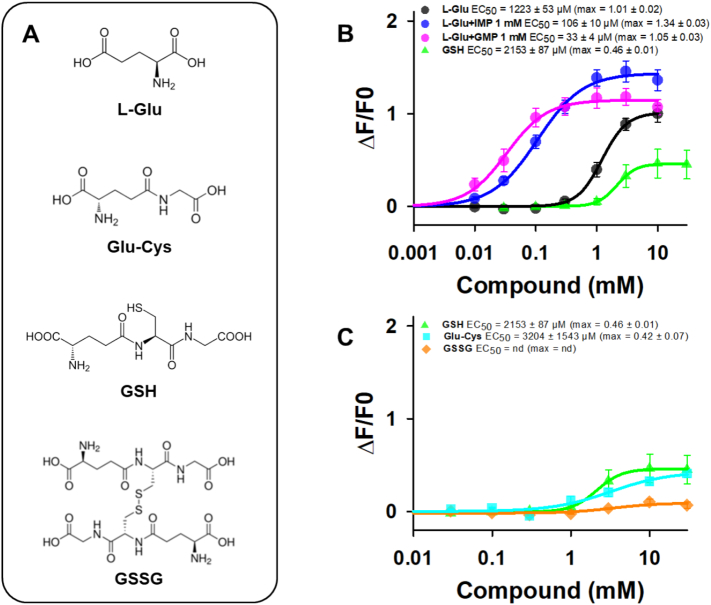 Figure 2
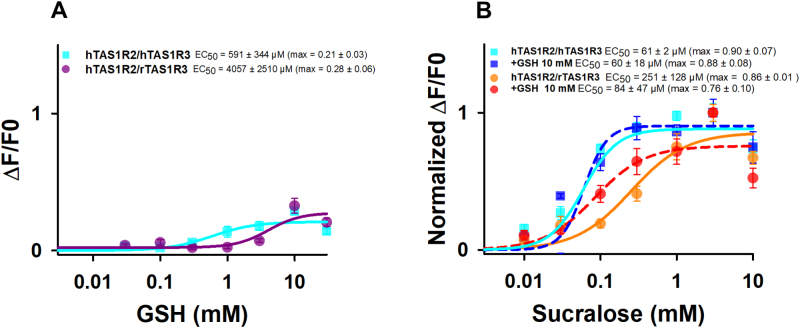 Figure 3
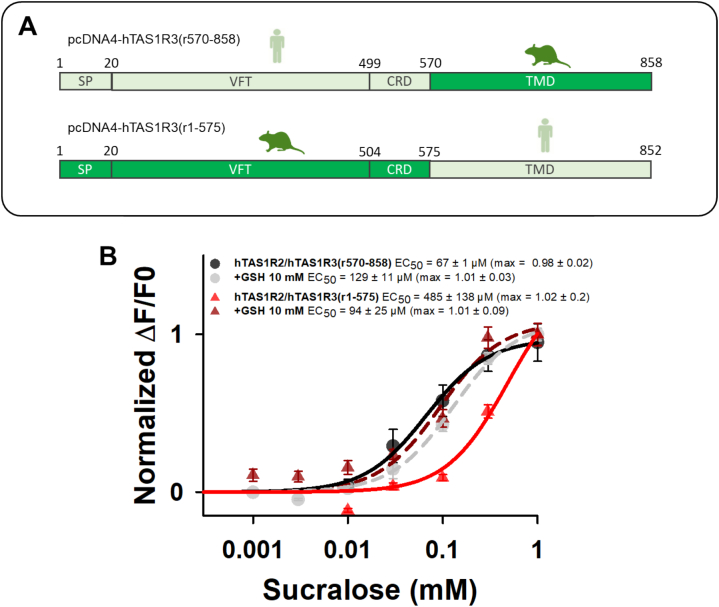 Figure 4
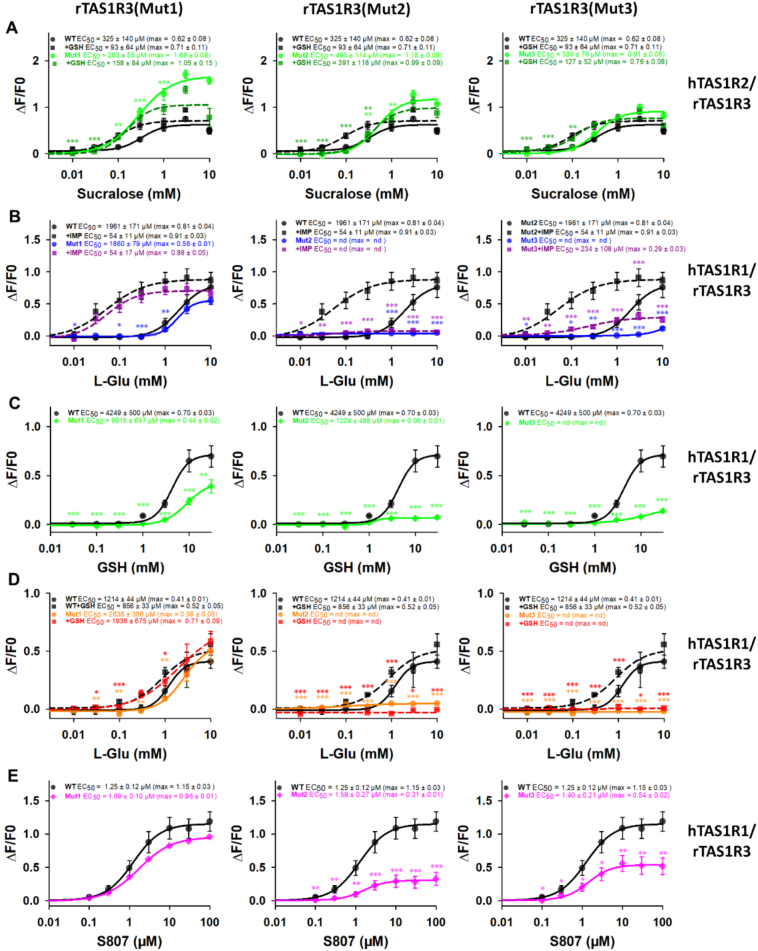 Figure 5
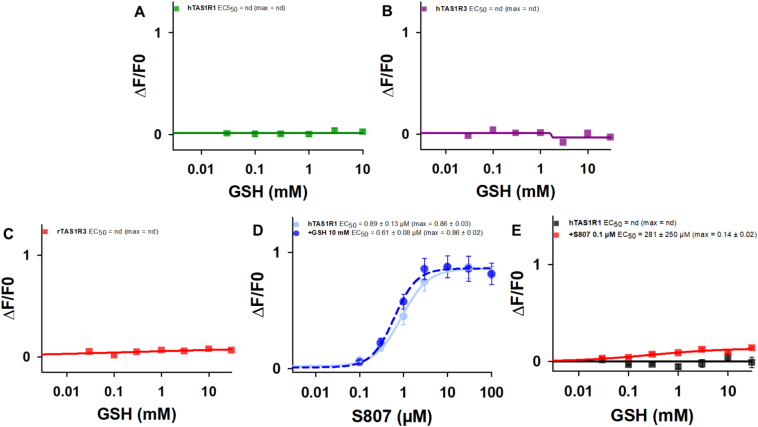 Figure 6
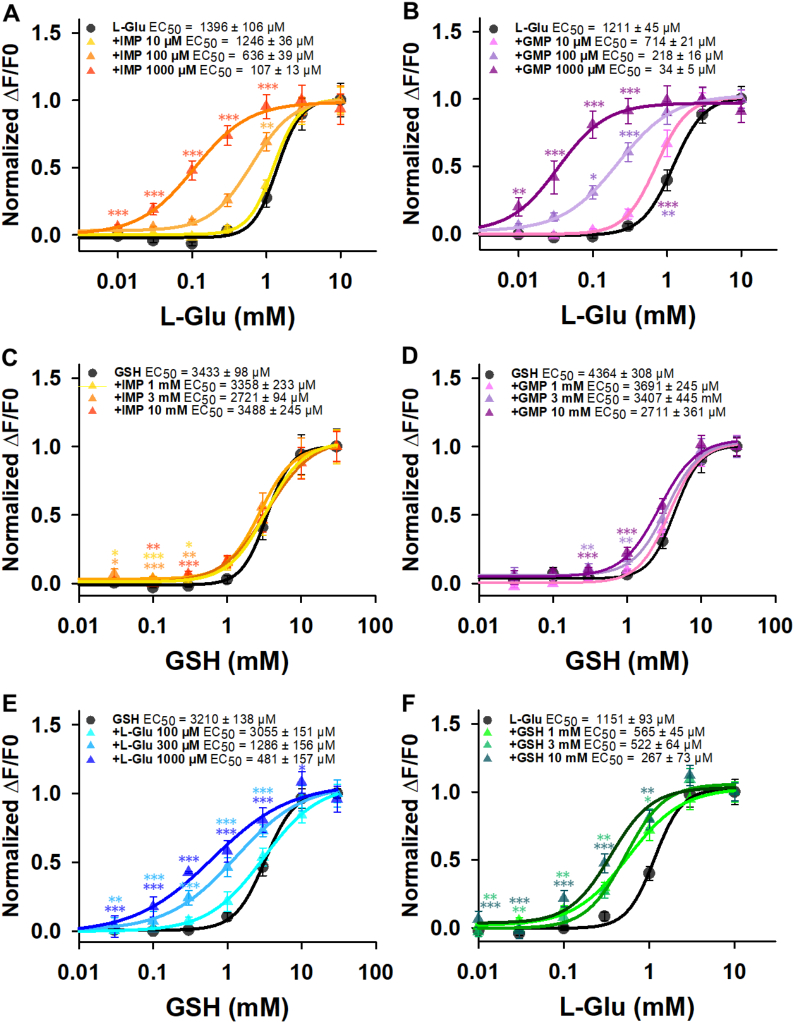 Figure 7
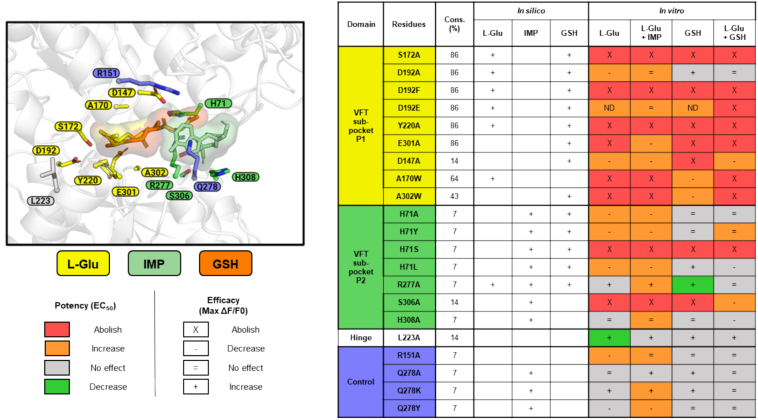 Figure 8
Peer Reviews
No public reviews on file for this paper yet. If you reviewed it on a platform where reviews are public (OpenReview, ICLR, NeurIPS, ICML), you can paste yours below so the community can read it here.
Videos
No videos yet. Explain this paper in a talk, walkthrough, or lecture? Add one.
Taxonomy
TopicsBiochemical Analysis and Sensing Techniques · Olfactory and Sensory Function Studies · Advanced Chemical Sensor Technologies