Retrospective review of spinal magnetic resonance images to determine the margin of safety for epidural analgesia in pediatric patients
Noah Letofsky, Dana Archibald, Anthony M.-H. Ho, Lais Helena N. e Lima, Rodrigo M. e Lima, Vinicius C. Quintão, Fernando B. Cançado, Ricardo V. Carlos, Leopoldo M. da Silva, Fernando N. Bellicieri, Saullo Q. Silveira, Arvin Haghighat, Rachel Phelan, Glenio B. Mizubuti

TL;DR
This study uses MRI scans to determine safe distances for epidural needle placement in children, aiming to prevent spinal cord injury.
Contribution
The study provides novel pediatric-specific measurements of spinal cord safety margins for epidural analgesia.
Findings
The largest median distances from the dura mater and ligamentum flavum to the spinal cord were observed at the T5/T6 level.
Measured distances varied widely across patients, indicating the need for individualized assessments.
The mid-thoracic region appears to offer the greatest margin of safety for epidural needle placement in children.
Abstract
Deeply sedated children cannot provide feedback if an epidural needle traumatizes the Spinal Cord (SC). Knowing relevant structure depths may, therefore, improve safety. We aimed to determine the epidural margin of safety, i.e., distances from the Ligamentum Flavum (LF) and from the dura mater to the SC in pediatric patients measured (i) Perpendicular to the SC and (ii) Parallel to the spinous process (to approximate needle trajectory). Retrospective review of pediatric (0‒12 years-old) T2-weighted sagittal MRI spine scans without spinal pathology. Three investigators independently measured distances from the ventral edge of the LF, and from the ventral edge of the dura mater to the SC at T5/T6, T9/T10, and L1/L2. All measurements were taken perpendicular to the SC and parallel to the angle of the spinous process of the inferior vertebra. 111 MRI scans [52 females, 0.08‒12 (median 7)…
Genes, proteins, chemicals, diseases, species, mutations and cell lines named across the full text — each resolved to its canonical identifier and authoritative record.
Click any figure to enlarge with its caption.
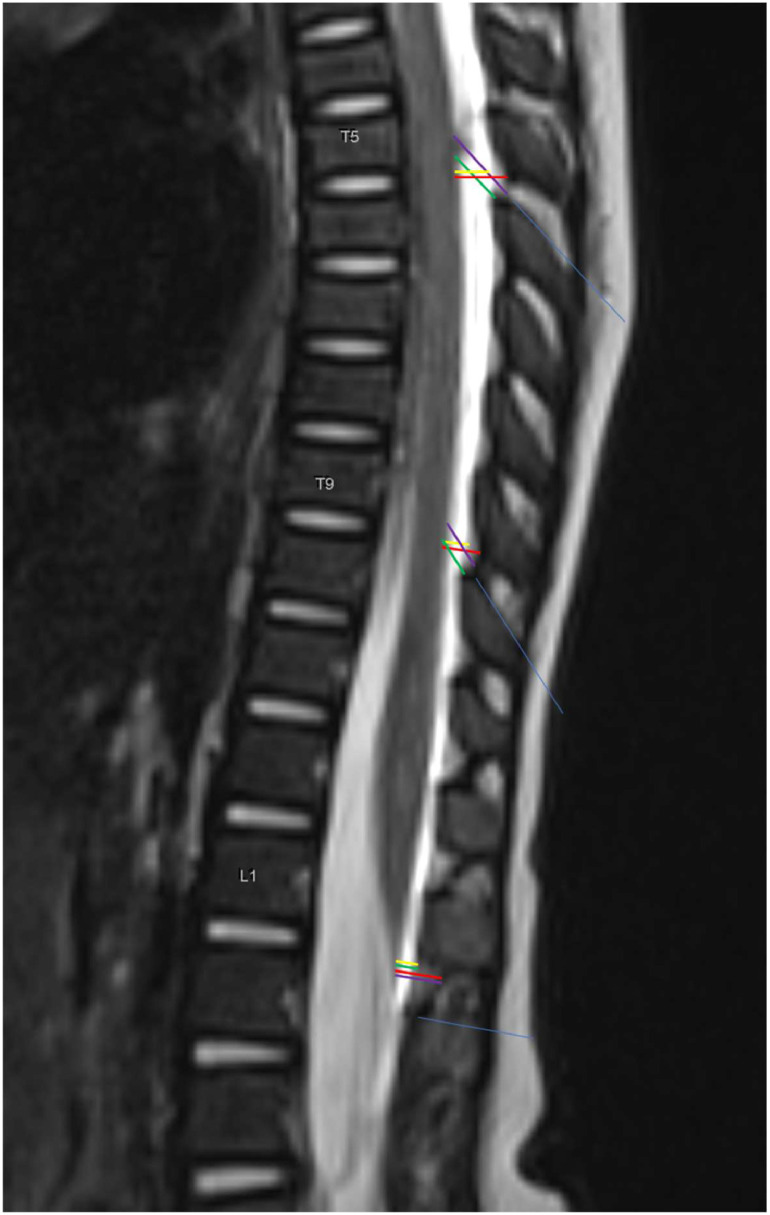 Figure 1
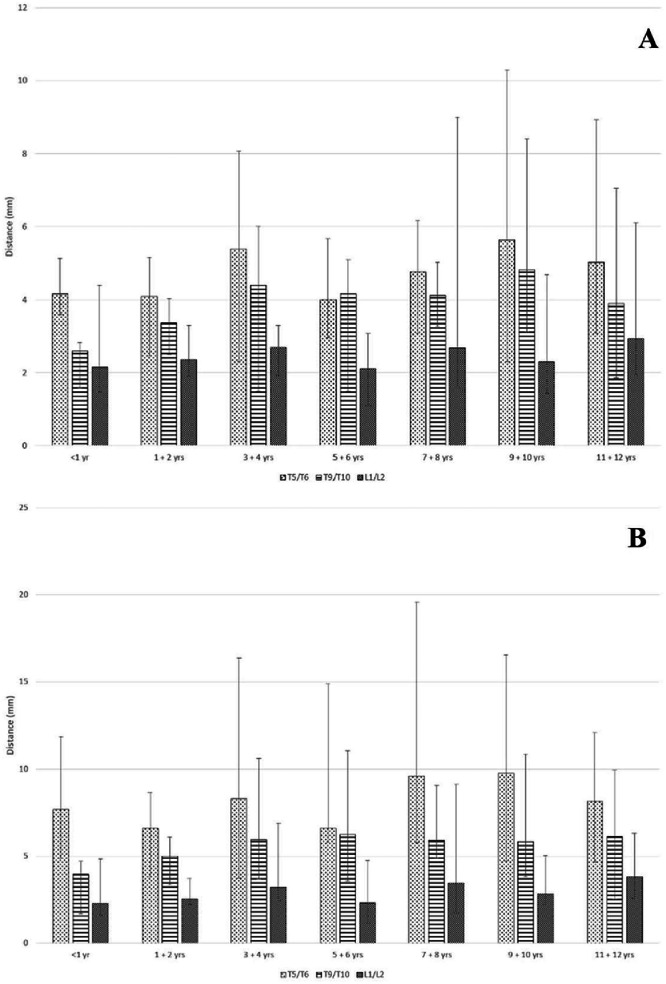 Figure 2
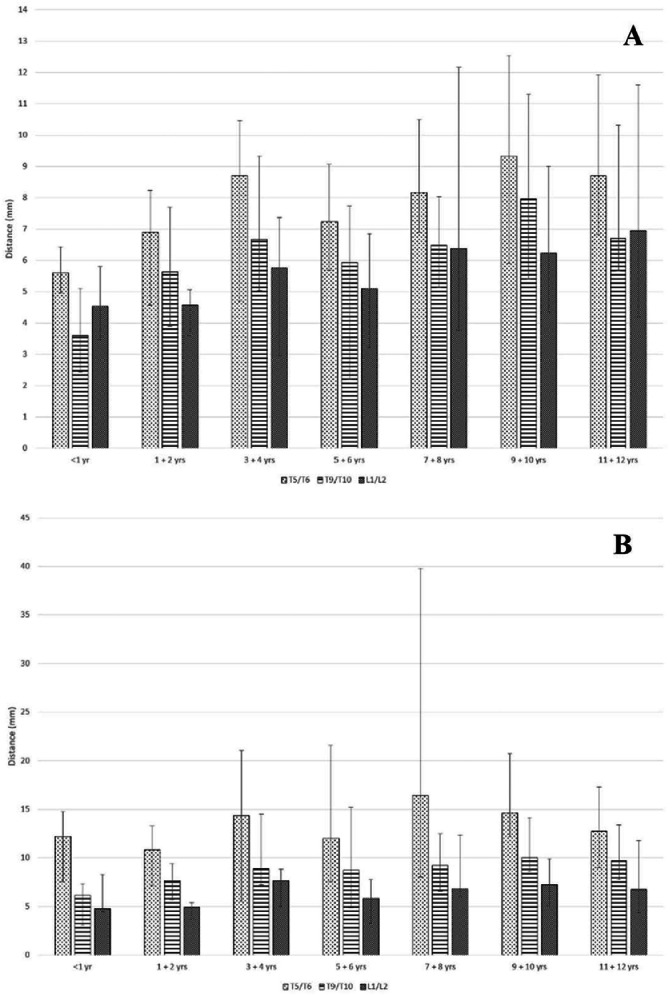 Figure 3
Peer Reviews
No public reviews on file for this paper yet. If you reviewed it on a platform where reviews are public (OpenReview, ICLR, NeurIPS, ICML), you can paste yours below so the community can read it here.
Videos
No videos yet. Explain this paper in a talk, walkthrough, or lecture? Add one.
Taxonomy
TopicsAnesthesia and Pain Management · Spine and Intervertebral Disc Pathology · Cardiac, Anesthesia and Surgical Outcomes