Proteomic sensors for quantitative multiplexed and spatial monitoring of kinase signaling
William J. Comstock, Marcos V. A. S. Navarro, Deanna V. Maybee, Yiseo Rho, Mateusz Wagner, Khoula Jaber, Yingzheng Wang, Marcus B. Smolka

TL;DR
The paper introduces ProKAS, a new method to measure and track kinase activity in cells with high precision and spatial detail.
Contribution
ProKAS enables multiplexed and spatial monitoring of kinase activity using proteomic sensors and mass spectrometry.
Findings
ProKAS can simultaneously monitor ATR, ATM, and CHK1 kinase activities in response to genotoxic drugs.
The method reveals spatial differences in kinase signaling in the nucleus, cytosol, and replication factories.
An in silico approach allows designing specific substrate peptides for other kinases.
Abstract
Understanding kinase action requires precise quantitative measurements of their activity in vivo. In addition, the ability to capture spatial information of kinase activity is crucial to deconvolute complex signaling networks, interrogate multifaceted kinase actions, and assess drug effects or genetic perturbations. Here we develop a proteomic kinase activity sensor technique (ProKAS) for the analysis of kinase signaling using mass spectrometry. ProKAS is based on a tandem array of peptide sensors with amino acid barcodes that allow multiplexed analysis for spatial, kinetic, and screening applications. We engineered a ProKAS module to simultaneously monitor the activities of the DNA damage response kinases ATR, ATM, and CHK1 in response to genotoxic drugs, while also uncovering differences between these signaling responses in the nucleus, cytosol, and replication factories. Furthermore,…
Genes, proteins, chemicals, diseases, species, mutations and cell lines named across the full text — each resolved to its canonical identifier and authoritative record.
Click any figure to enlarge with its caption.
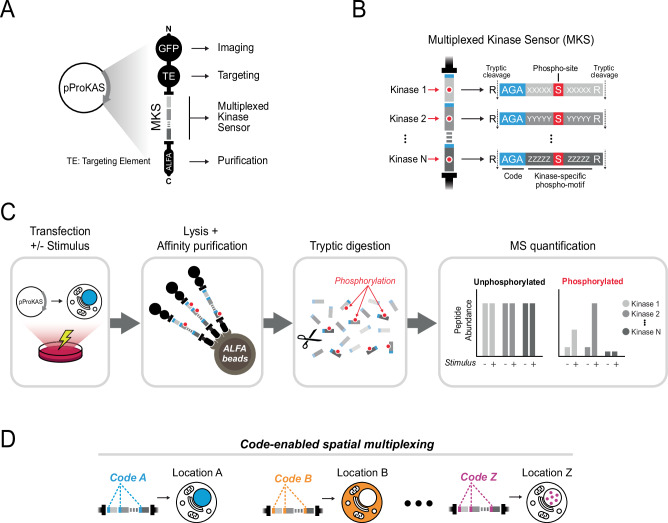 Figure 1
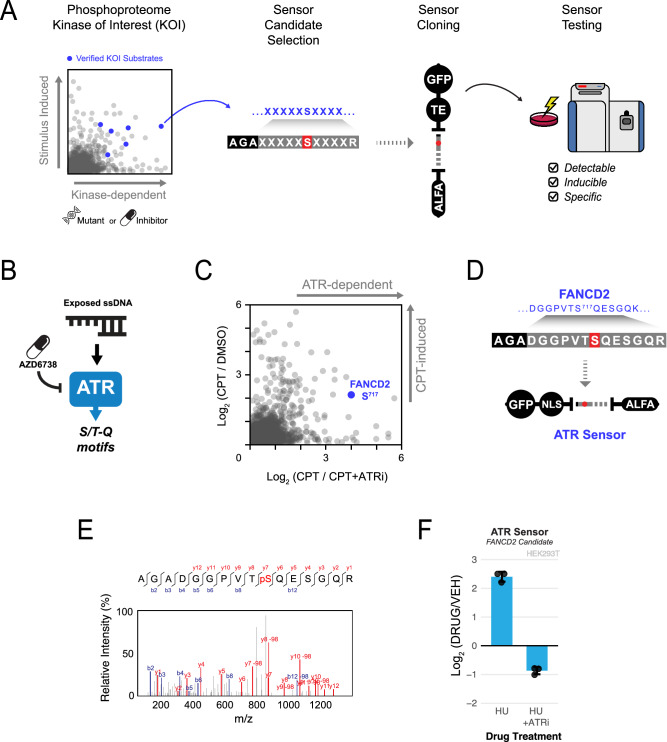 Figure 2
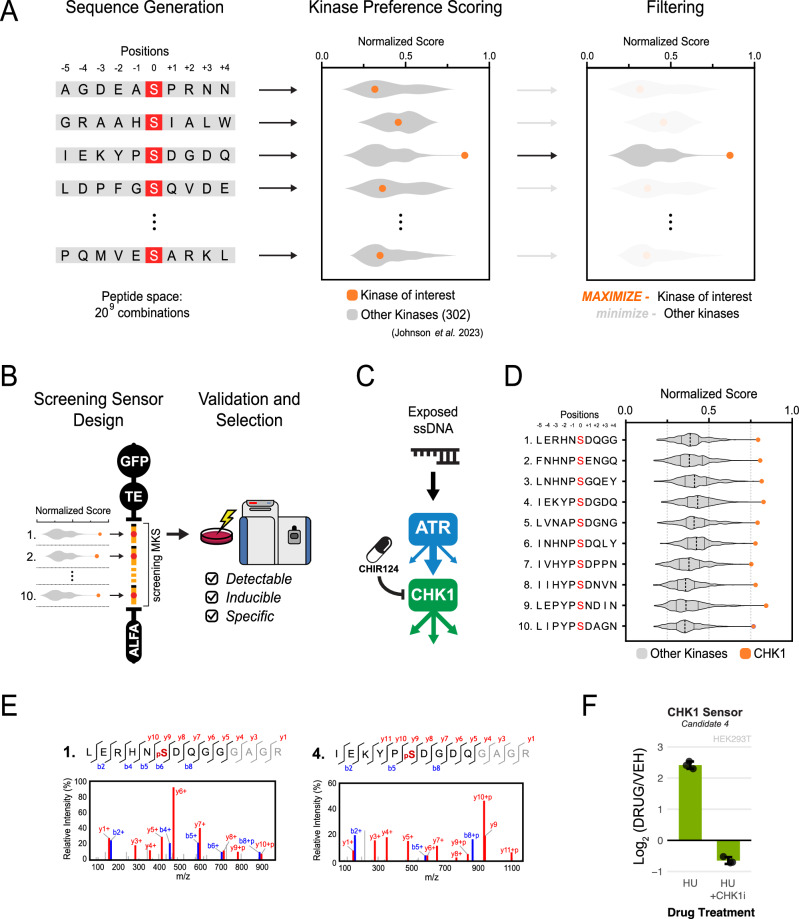 Figure 3
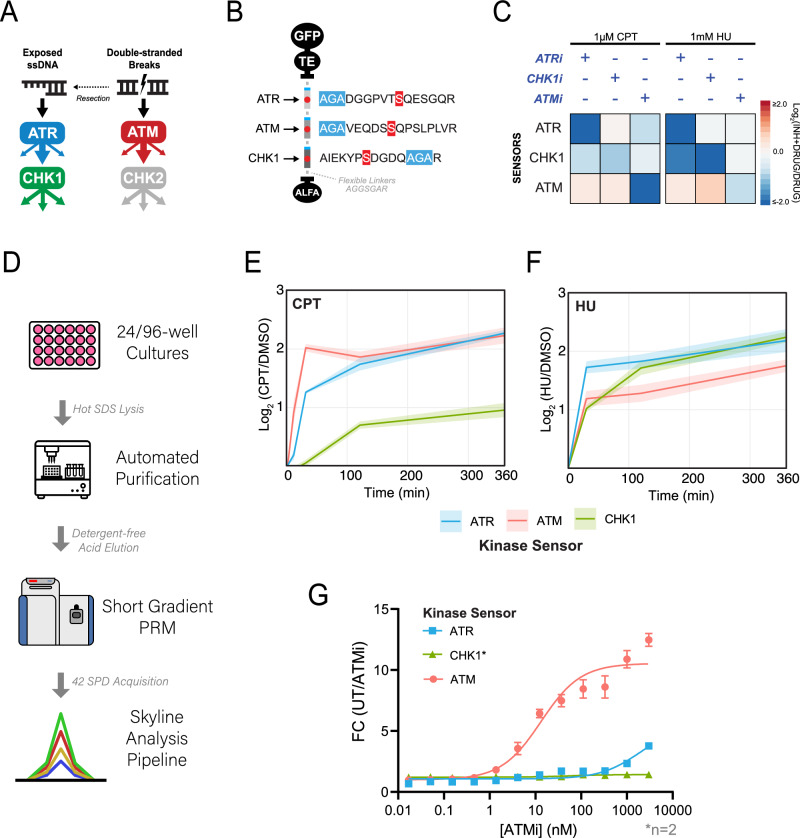 Figure 4
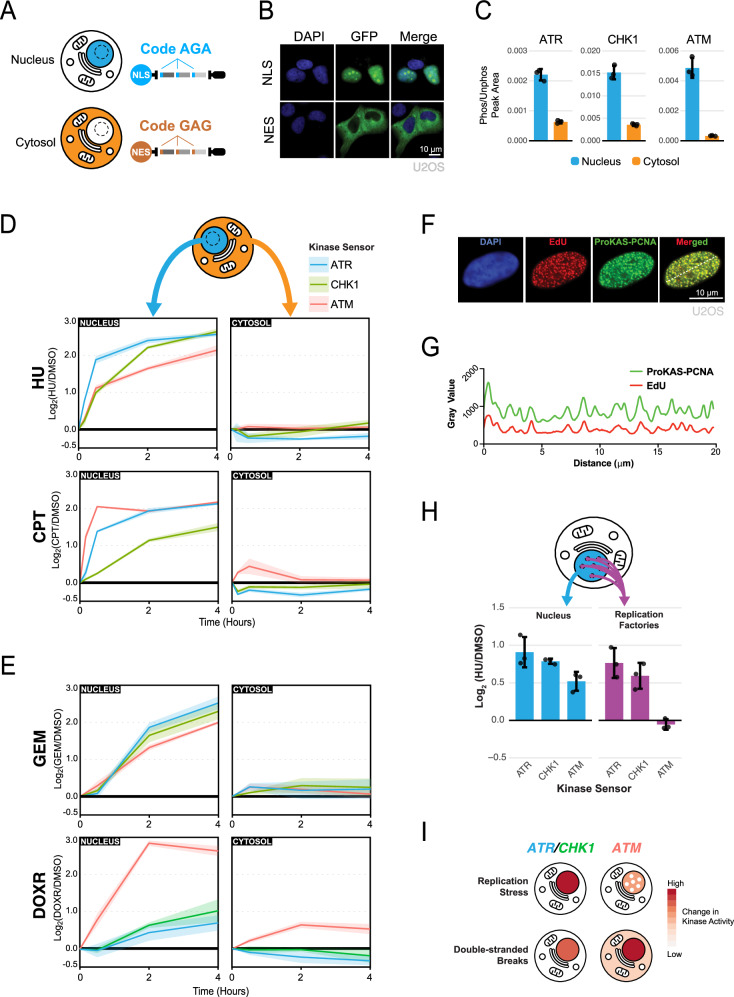 Figure 5
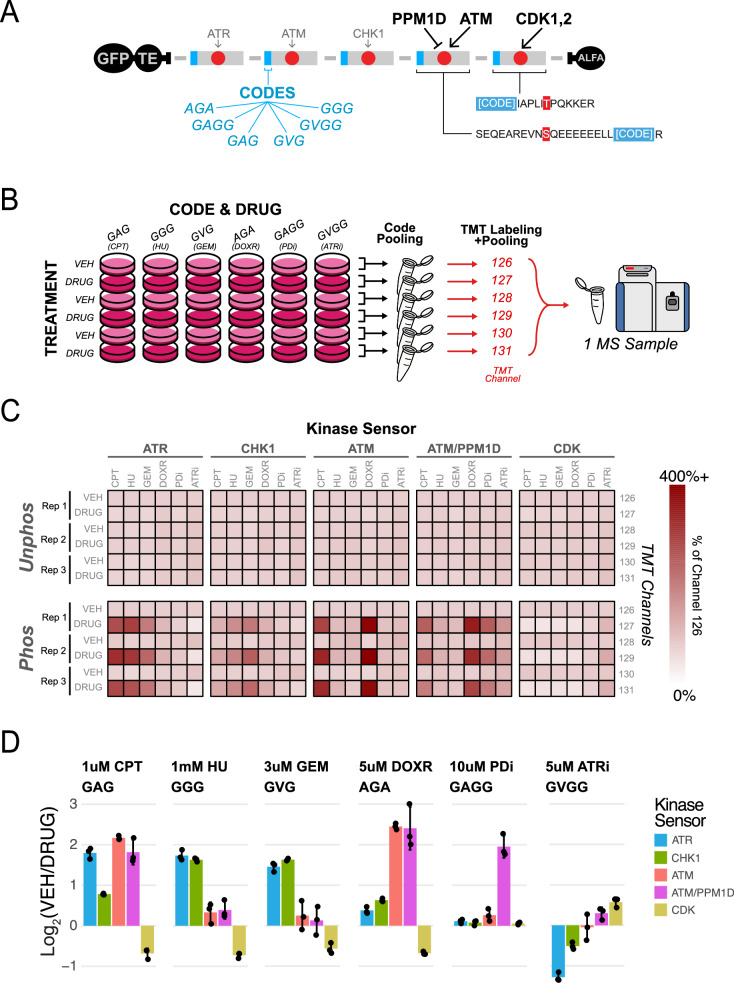 Figure 6
Peer Reviews
No public reviews on file for this paper yet. If you reviewed it on a platform where reviews are public (OpenReview, ICLR, NeurIPS, ICML), you can paste yours below so the community can read it here.
Videos
No videos yet. Explain this paper in a talk, walkthrough, or lecture? Add one.
Taxonomy
TopicsAdvanced Proteomics Techniques and Applications · Protein Degradation and Inhibitors · Advanced Biosensing Techniques and Applications