c-Jun inhibition mitigates chemotherapy-induced neurotoxicity in iPSC-derived sensory neurons
Lois Hew, Smilla K. Maierhof, Andranik Ivanov, Dieter Beule, Valeria Fernandez Vallone, Harald Stachelscheid, Silke Frahm, Narasimha Swamy Telugu, Matthias Endres, Wolfgang Boehmerle, Petra Huehnchen, Christian Schinke

TL;DR
This study shows that blocking c-Jun can reduce nerve damage caused by chemotherapy in lab-grown human neurons.
Contribution
The study identifies c-Jun as a key mediator of chemotherapy-induced neurotoxicity and suggests its inhibition as a potential treatment.
Findings
Chemotherapy drugs caused reduced cell viability, axonal degeneration, and increased phosphorylated c-Jun in iPSC-derived sensory neurons.
c-Jun inhibition preserved cell viability, axonal integrity, and electrophysiological function in neurons exposed to chemotherapy.
Transcriptomic analysis linked c-Jun upregulation to neuronal injury, apoptosis, and inflammation genes.
Abstract
Chemotherapy-induced peripheral neuropathy (CIPN) affects up to two-thirds of cancer patients undergoing cytotoxic chemotherapy. Here, we used human iPSC-derived sensory neurons (iPSC-DSN) to model CIPN in vitro. Administration of various chemotherapeutic agents (i.e., paclitaxel, vincristine, bortezomib and cisplatin) at clinically applicable concentrations resulted in reduced cell viability, axonal degeneration, electrophysiological dysfunction and increased levels of phosphorylated c-Jun in iPSC-DSN. Transcriptomic analyses revealed that the upregulation of c-Jun strongly correlated with the expression of genes of neuronal injury, apoptosis and inflammatory signatures. To test whether c-Jun plays a central role in the development of CIPN, we applied the small molecule inhibitor of the Jun N-terminal kinase, SP600125, to iPSC-DSN treated with neurotoxic chemotherapy. c-Jun inhibition…
Genes, proteins, chemicals, diseases, species, mutations and cell lines named across the full text — each resolved to its canonical identifier and authoritative record.
Click any figure to enlarge with its caption.
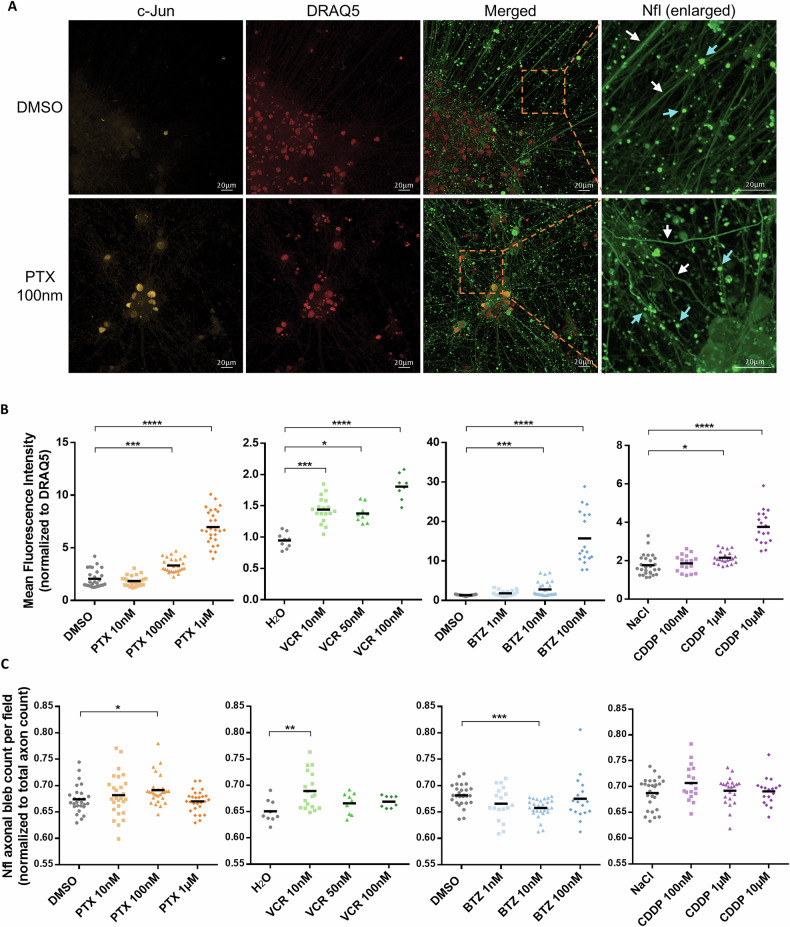 Figure 1
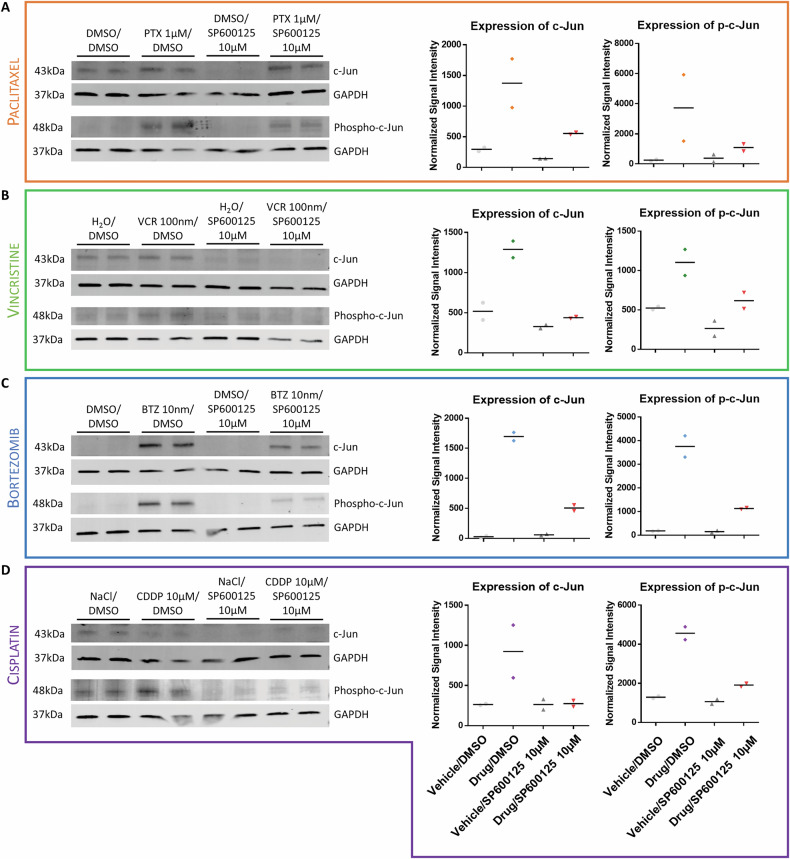 Figure 2
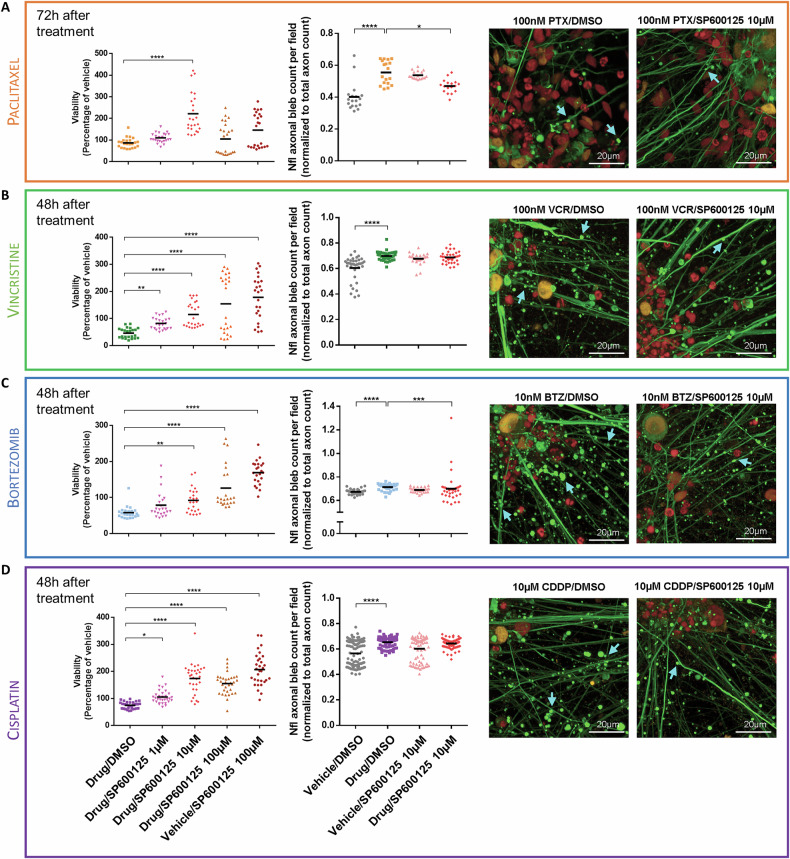 Figure 3
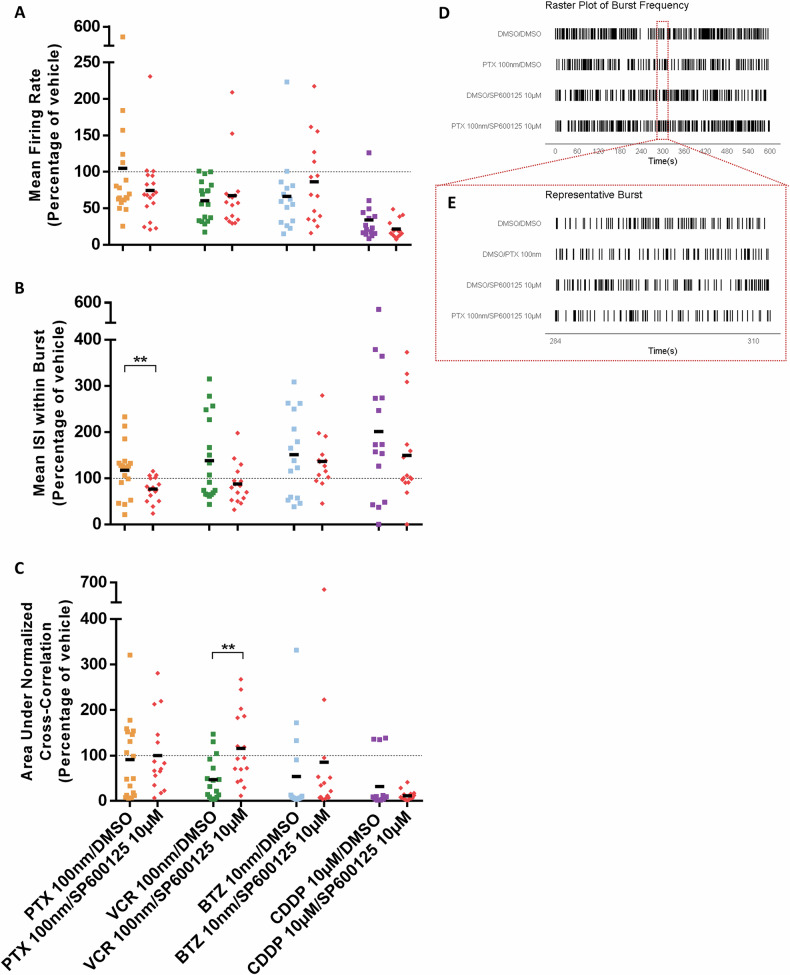 Figure 4
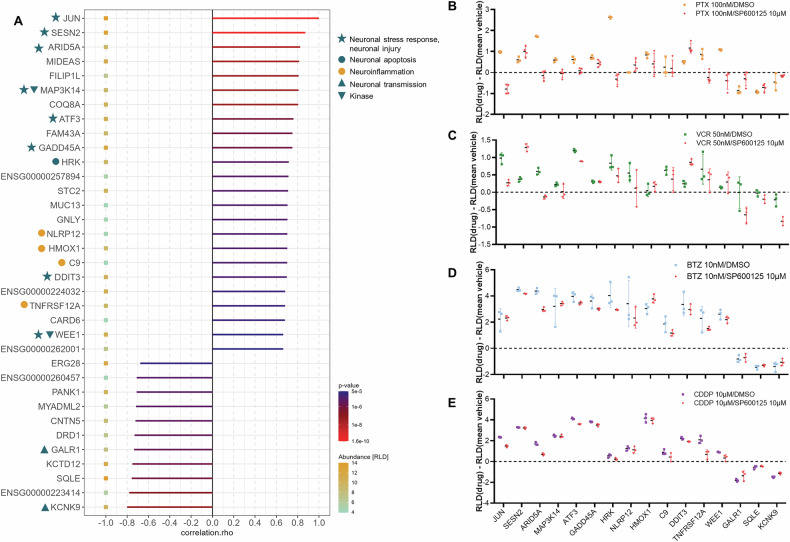 Figure 5
Peer Reviews
No public reviews on file for this paper yet. If you reviewed it on a platform where reviews are public (OpenReview, ICLR, NeurIPS, ICML), you can paste yours below so the community can read it here.
Videos
No videos yet. Explain this paper in a talk, walkthrough, or lecture? Add one.
Taxonomy
TopicsCancer Treatment and Pharmacology · Cancer-related cognitive impairment studies · Pain Mechanisms and Treatments