Comparison of basophil activation testing and component-resolved diagnosis in patients with cross-reactive intradermal results after anaphylactic reactions to hymenoptera venom
Mohammad Hasan Bemanian, Negin Jafariaghdam, Faezeh Shahba, Mohammad Nabavi, Morteza Fallahpour, Sima Shokri, Fatemeh Faraji, Mohammad-Ali Assarehzadegan, Mehrnaz Mesdaghi, Hamideh Nodehi, Majid Khoshmirsafa

TL;DR
This study compares two diagnostic tests for Hymenoptera venom allergy to determine their effectiveness in identifying the specific venom causing allergic reactions.
Contribution
The study demonstrates that combining basophil activation testing and component-resolved diagnostics improves diagnostic accuracy in patients with multiple venom sensitizations.
Findings
Intradermal testing showed 83.3% triple-positive and 16.7% double-positive reactions.
CRD identified 58.4% triple-positive and 41.6% double-positive cases.
BAT results showed 50% double-positive and 25% single-positive patients.
Abstract
Hymenoptera venom allergy (HVA) is a significant cause of anaphylaxis, with a broad spectrum of symptoms. Accurate diagnosis is critical for selecting appropriate venom immunotherapy (VIT), yet multiple sensitizations complicate the identification of the culprit Hymenoptera. Component-resolved diagnostics (CRD) and the basophil activation test (BAT) are emerging approaches that may enhance the precision of HVA diagnosis. This study aimed to compare the outcomes of the BAT and CRD tests in patients with reaction to more than one type of Hymenoptera in intradermal test. Following 12 patient’s report-based determination of the Hymenoptera types, Intradermal testing with venom extracts from honey bees, paper wasps, and yellow jackets was performed. CRD was conducted using recombinant allergens for each venom, and BAT was performed to assess basophil activation using venom extracts. The…
Genes, proteins, chemicals, diseases, species, mutations and cell lines named across the full text — each resolved to its canonical identifier and authoritative record.
Click any figure to enlarge with its caption.
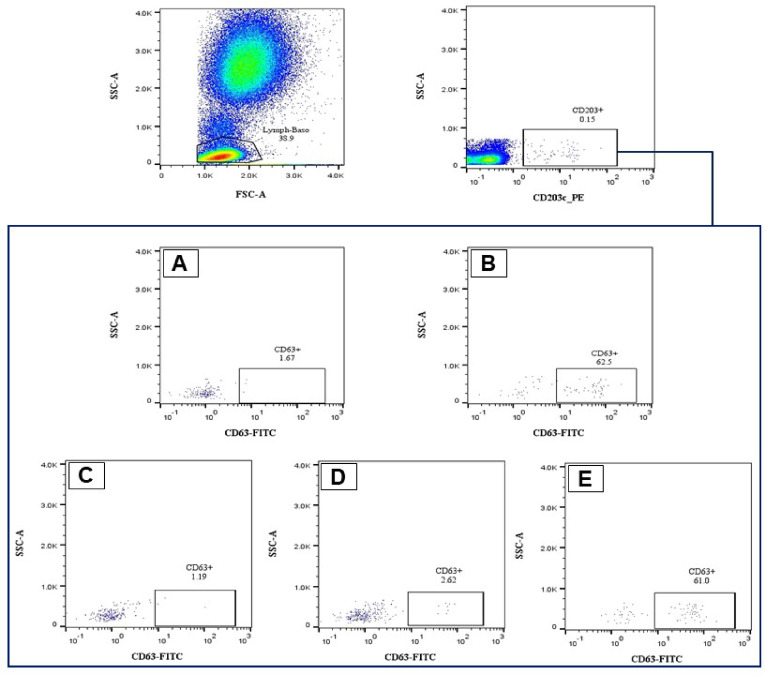 Figure 1
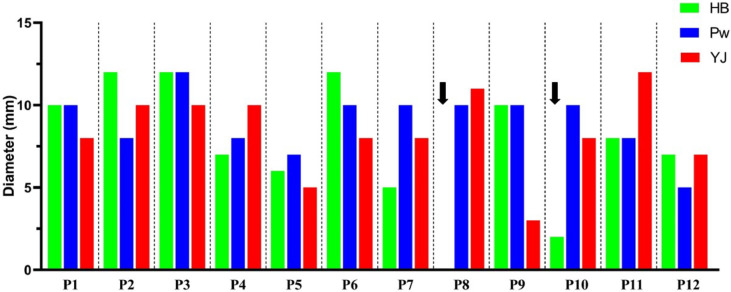 Figure 2
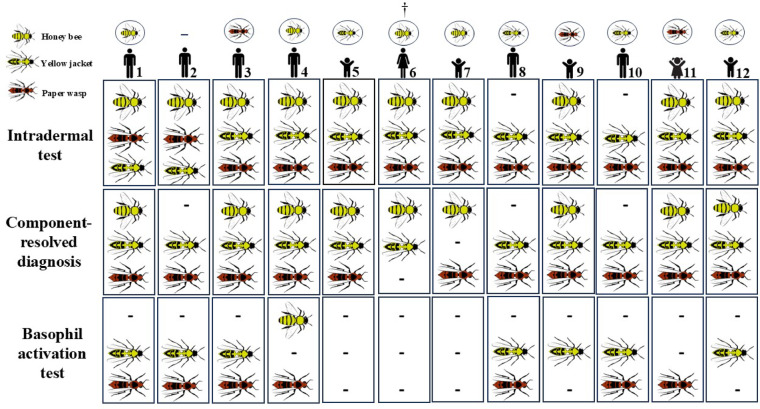 Figure 3
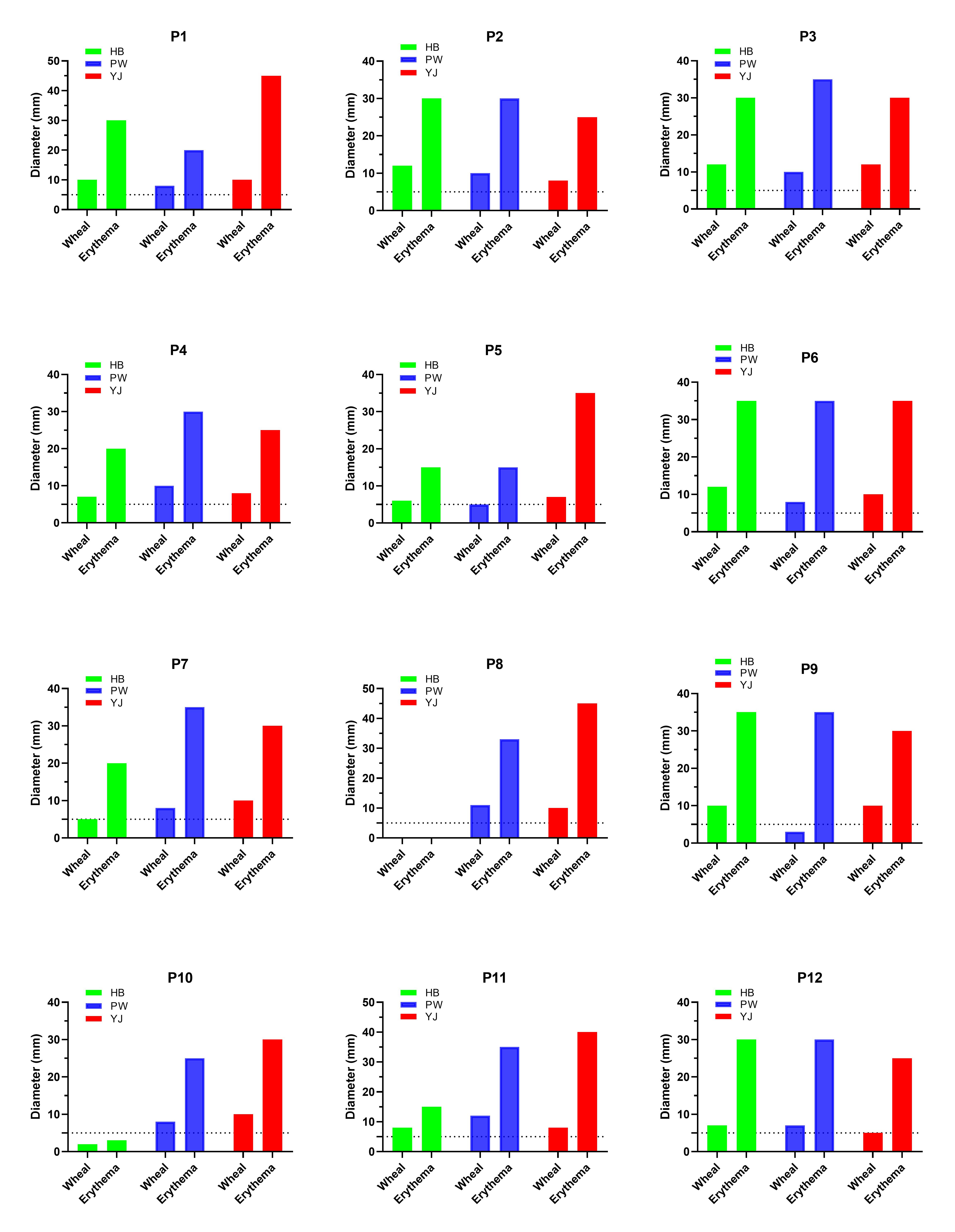 Figure 4
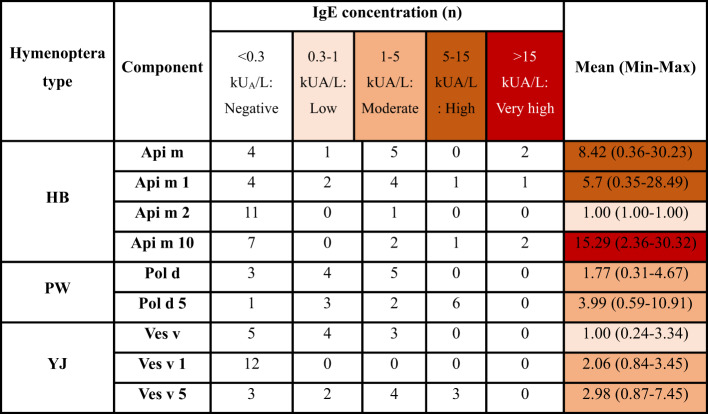 Figure 5
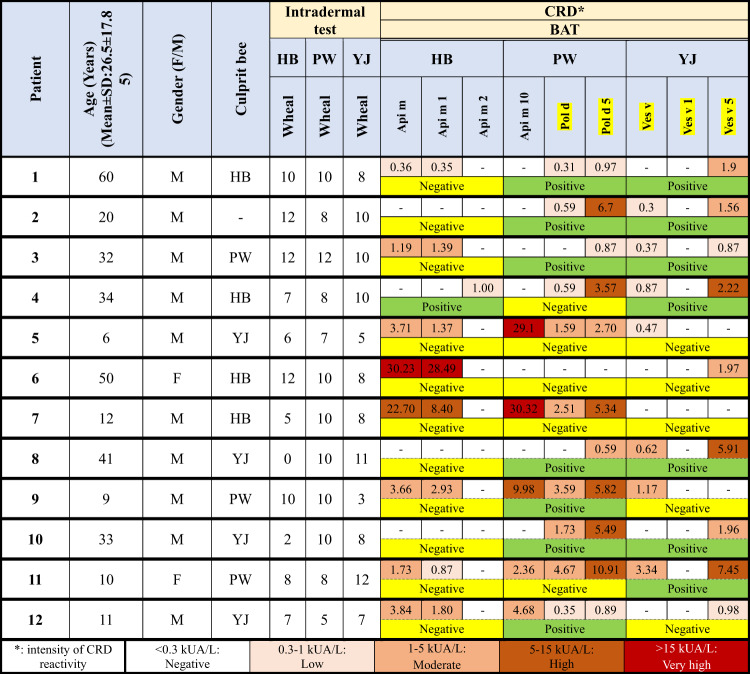 Figure 6
Peer Reviews
No public reviews on file for this paper yet. If you reviewed it on a platform where reviews are public (OpenReview, ICLR, NeurIPS, ICML), you can paste yours below so the community can read it here.
Videos
No videos yet. Explain this paper in a talk, walkthrough, or lecture? Add one.
Taxonomy
TopicsFood Allergy and Anaphylaxis Research · Healthcare and Venom Research · Allergic Rhinitis and Sensitization