Patient-reported oral adverse events during cancer chemotherapy: longitudinal evaluation using patient-reported outcomes version of the common terminology criteria for adverse events (PRO-CTCAE) and concordance with clinician assessments
Yuki Sakai, Kouji Katsura, Yoshitomi Kanemitsu, Masaaki Kotake, Akira Toyama

TL;DR
This study tracks how cancer patients report oral side effects during chemotherapy and finds that mild symptoms often persist, affecting quality of life, with patient reports differing from clinician assessments.
Contribution
The study provides new insights into longitudinal patient-reported oral adverse events and highlights discrepancies between patient and clinician assessments during chemotherapy.
Findings
Over 85% of patients experienced at least one oral adverse event, with dry mouth being the most common.
Persistent mild symptoms, like dry mouth, were reported by more than half of patients throughout treatment.
Only 31.1% concordance was found between patient-reported and clinician-assessed dry mouth severity.
Abstract
This study aimed to (1) describe longitudinal trends in patient-reported oral adverse events using the patient-reported outcomes version of the common terminology criteria for adverse events (PRO-CTCAE) in patients receiving multidisciplinary oral care during outpatient cancer drug therapy, and (2) evaluate concordance between PRO-CTCAE and clinician-reported CTCAE scores. Conducted at the Outpatient Cancer Chemotherapy Center, Niigata University Medical and Dental Hospital (June–December 2023), oral adverse events were assessed using PRO-CTCAE and CTCAE at baseline and every 3 weeks up to 24 weeks. Concordance for dry mouth and oral mucositis was evaluated using paired same-day scores. Among patients receiving multidisciplinary oral care, 85.2% experienced at least one oral adverse event, most commonly dry mouth. Based on PRO-CTCAE, symptoms rated as moderate or higher were reported…
Genes, proteins, chemicals, diseases, species, mutations and cell lines named across the full text — each resolved to its canonical identifier and authoritative record.
Click any figure to enlarge with its caption.
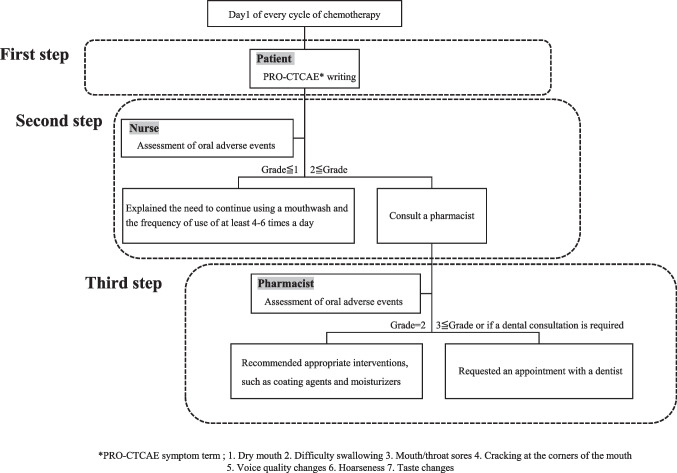 Figure 1
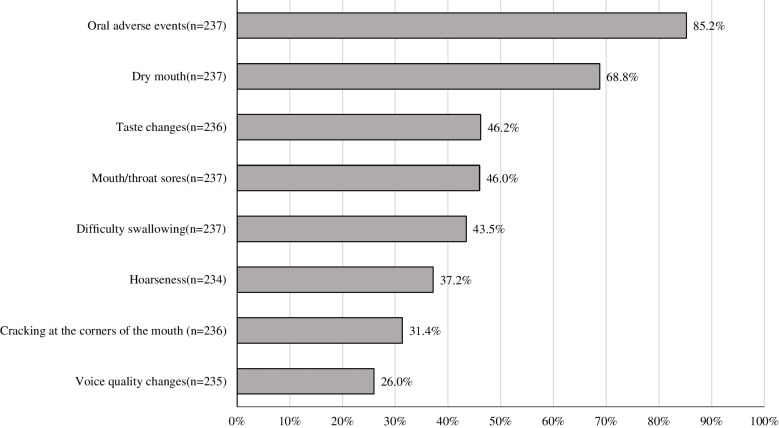 Figure 2
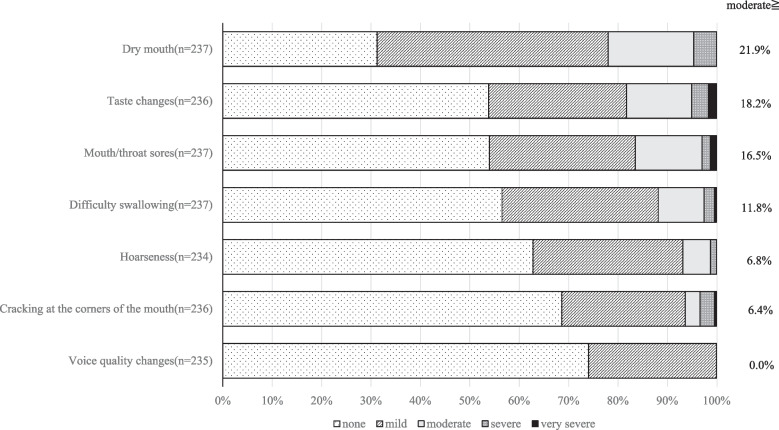 Figure 3
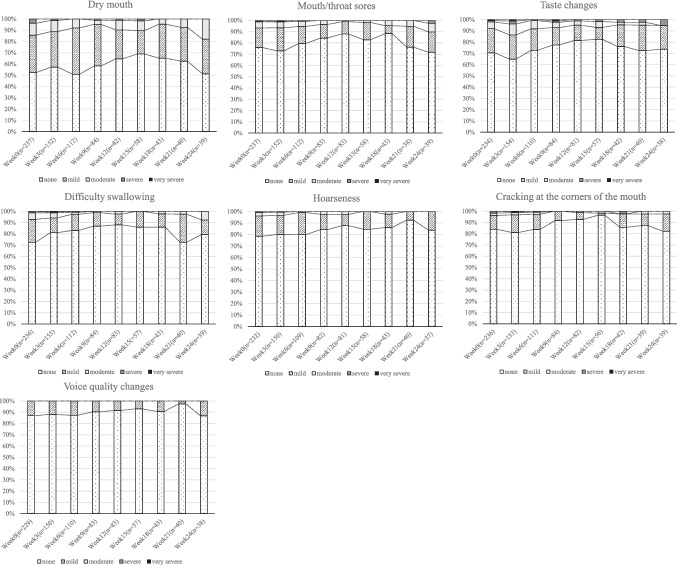 Figure 4
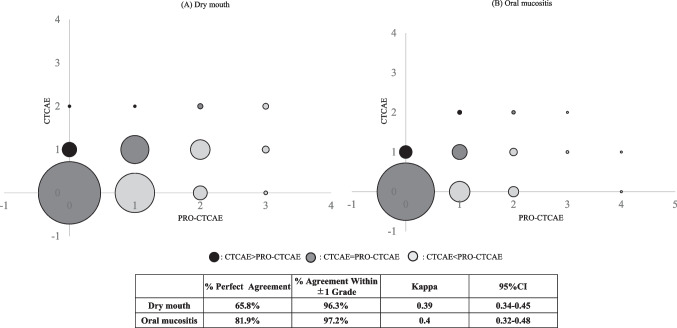 Figure 5
Peer Reviews
No public reviews on file for this paper yet. If you reviewed it on a platform where reviews are public (OpenReview, ICLR, NeurIPS, ICML), you can paste yours below so the community can read it here.
Videos
No videos yet. Explain this paper in a talk, walkthrough, or lecture? Add one.
Taxonomy
TopicsOral health in cancer treatment · Salivary Gland Disorders and Functions · Oral Health Pathology and Treatment