Role of left lateral prefrontal cortex in positive emotion regulation: Insights from dyslexia
Eleanor R. Palser, Nathaniel A. Morris, Christina R. Veziris, Sarah R. Holley, Amie Wallman-Jones, Ashlin R. K. Roy, Abigail E. Licata, Mieke Voges, Christa Watson Pereira, Maria Luisa Mandelli, Maria Luisa Gorno-Tempini, Virginia E. Sturm

TL;DR
The study explores how the left prefrontal cortex in children's brains relates to regulating positive emotions, using children with and without dyslexia.
Contribution
The study reveals that left prefrontal gray matter volume is linked to positive emotion regulation in children, offering new insights into neurodevelopmental mechanisms.
Findings
Children with smaller left prefrontal gray matter volumes showed worse facial behavior during positive emotion regulation.
Smaller left prefrontal volumes were associated with more positive self-reported emotion regulation success during amusement trials.
Positive self-evaluation of emotion regulation was linked to better everyday emotion regulation reported by parents.
Abstract
Emotion regulation emerges during childhood and engages prefrontal brain systems. While most developmental studies focus on the neural underpinnings of negative emotion regulation, less is known about the neuroanatomical correlates of positive emotion regulation. In adults, prefrontal areas in the left hemisphere are critical for positive emotion regulation, but whether this association is present in children is unknown. We investigated whether smaller gray matter volume in left prefrontal regions related to worse positive emotion regulation in children with and without dyslexia. Because dyslexia is a neurodevelopmental disorder of reading in which there may be greater variability in left prefrontal structures, it offers a unique window into the neural basis of positive emotion regulation. Sixty-nine children (ages 7–13) were asked to hide their feelings while watching film clips that…
Genes, proteins, chemicals, diseases, species, mutations and cell lines named across the full text — each resolved to its canonical identifier and authoritative record.
Click any figure to enlarge with its caption.
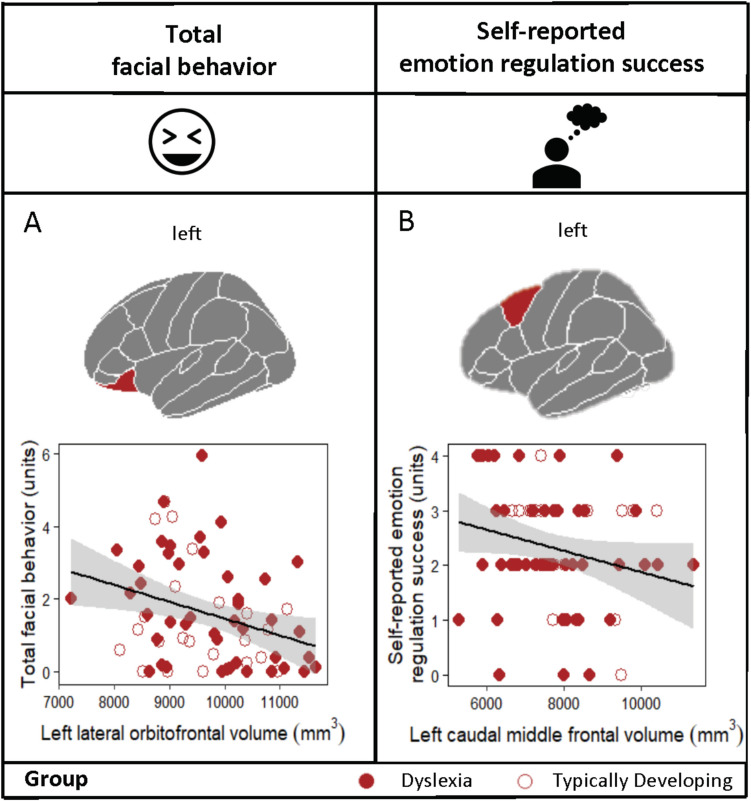 Figure 1
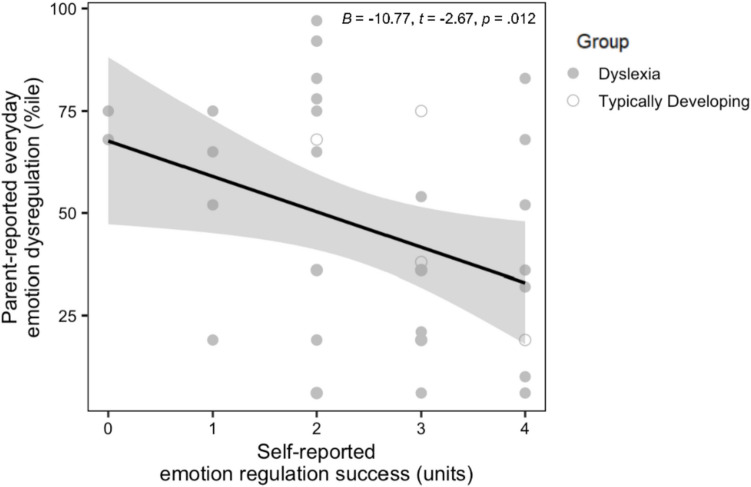 Figure 2
Peer Reviews
No public reviews on file for this paper yet. If you reviewed it on a platform where reviews are public (OpenReview, ICLR, NeurIPS, ICML), you can paste yours below so the community can read it here.
Videos
No videos yet. Explain this paper in a talk, walkthrough, or lecture? Add one.
Taxonomy
TopicsNeuroscience, Education and Cognitive Function · Neural and Behavioral Psychology Studies · Cognitive Abilities and Testing