Peptide halogenation biochemistry: interfacing pharmaceutical deliverables with chemical innovation
Vinayak Agarwal

TL;DR
This paper reviews recent advances in using enzymes to add halogens to peptides, which could lead to new drug development methods.
Contribution
The paper provides a concise review of recent discoveries in biocatalytic halogenation of peptides and proteins.
Findings
Halogenation occurs in ribosomal peptides and non-ribosomal peptides.
Peptide halogenases have potential as biocatalysts for modifying peptides and proteins.
Mechanistic insights into halogenation are discussed for biocatalytic applications.
Abstract
The biosynthetic schemes for the production of halogenated peptidic natural products offer avenues for the discovery of peptide halogenases, and opportunities for development of biocatalysts for derivatization of peptides and proteins. Here, a short review of recent discoveries regarding biocatalytic protein and peptide halogenation is provided. Halogenation in two major classes of peptidic natural products is discussed, those that are produced as ribosomal peptides and post translationally modified, and those that are produced by assembly line-like non ribosomal peptide synthetases. Mechanistic considerations and biocatalytic applications of peptide halogenases are briefly discussed.
Genes, proteins, chemicals, diseases, species, mutations and cell lines named across the full text — each resolved to its canonical identifier and authoritative record.
Click any figure to enlarge with its caption.
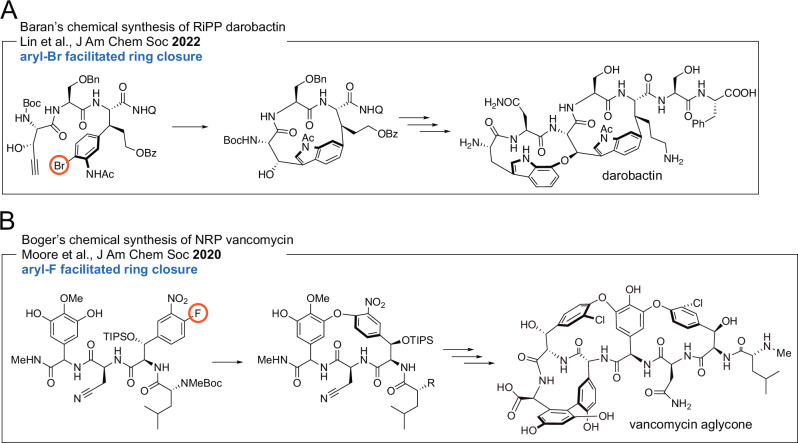 Figure 1
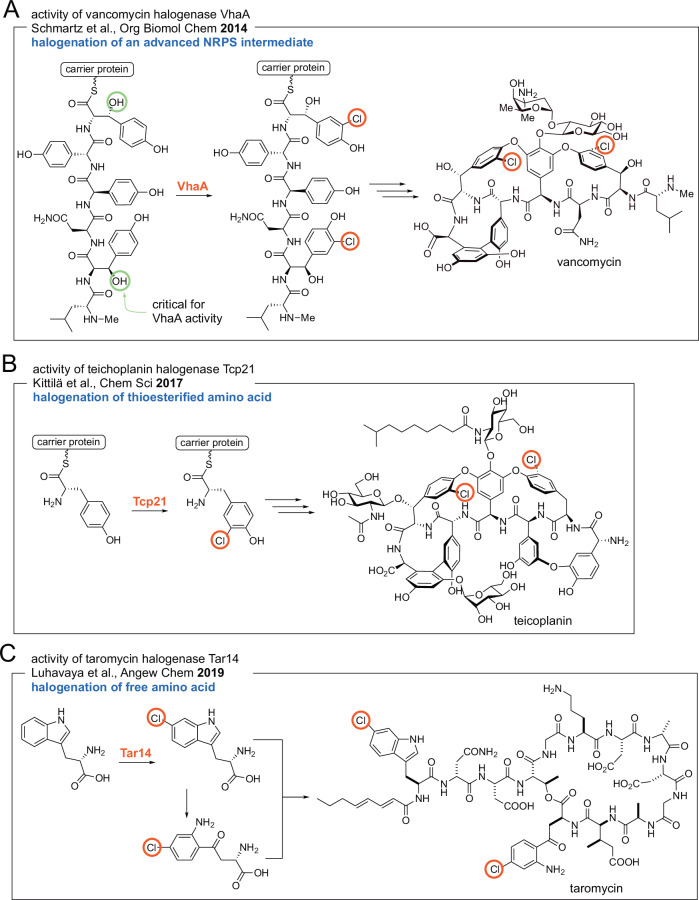 Figure 2
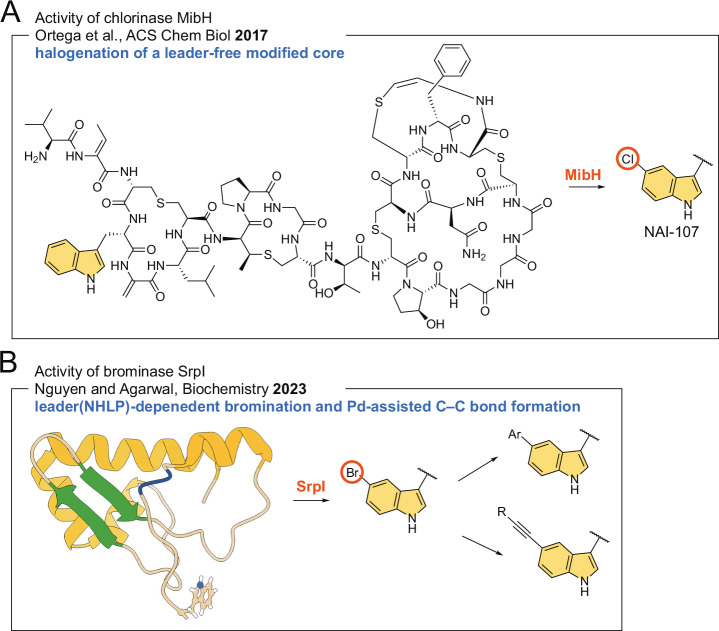 Figure 3
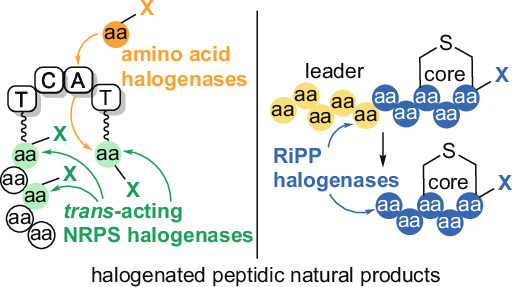 Figure 4
Peer Reviews
No public reviews on file for this paper yet. If you reviewed it on a platform where reviews are public (OpenReview, ICLR, NeurIPS, ICML), you can paste yours below so the community can read it here.
Videos
No videos yet. Explain this paper in a talk, walkthrough, or lecture? Add one.
Taxonomy
TopicsComputational Drug Discovery Methods · Chemical Synthesis and Analysis · Steroid Chemistry and Biochemistry