Pre-crastination and path planning: Evidence for cognitive frontloading, a new sibling for cognitive offloading
Sophia Angleton, Simran Bhatia, Arineh Moradian, David A. Rosenbaum

TL;DR
People tend to speed up task completion by making decisions early, even if it requires more initial effort, a phenomenon called cognitive frontloading.
Contribution
The paper introduces cognitive frontloading as a new concept alongside cognitive offloading, showing how people plan ahead to reduce later cognitive effort.
Findings
Participants spent more time on the first task step to set up subsequent actions, even when unnecessary.
The delay in the first response was due to resolving uncertainty about upcoming actions.
Cognitive frontloading is a general tendency observed across multiple experimental contexts.
Abstract
Pre-crastination is the tendency to hasten task completion, even at the expense of extra effort. Discovered in 2014, it is a widespread phenomenon hypothesized to reduce cognitive effort. We sought to determine whether pre-crastination holds for multi-step path planning. In Experiments 1 and 2, our university-student participants saw all but one of the numbers from 1 to 6 on a computer screen and, when ready, hit the spacebar (Experiment 1) or touched the trackpad (Experiment 2) to reveal the missing number. In both experiments, they then clicked on the targets sequentially as quickly as possible. The time for the first target was longer than for any other target even when noninitial targets were withheld from the preview. A third experiment confirmed that the lengthening of the first response was due to resolution of response uncertainty. The results as a whole confirmed that…
Genes, proteins, chemicals, diseases, species, mutations and cell lines named across the full text — each resolved to its canonical identifier and authoritative record.
Click any figure to enlarge with its caption.
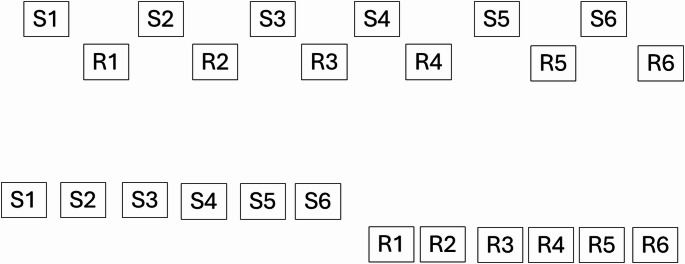 Figure 1
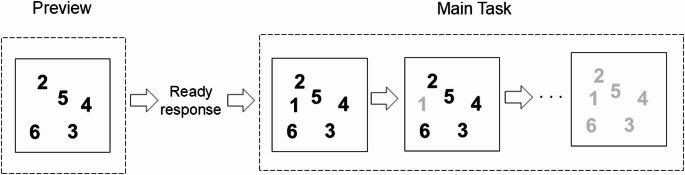 Figure 2
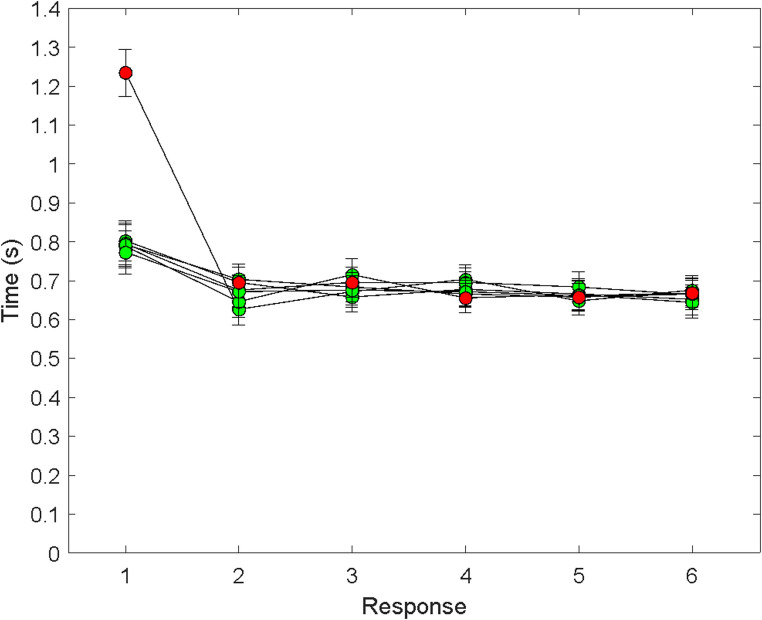 Figure 3
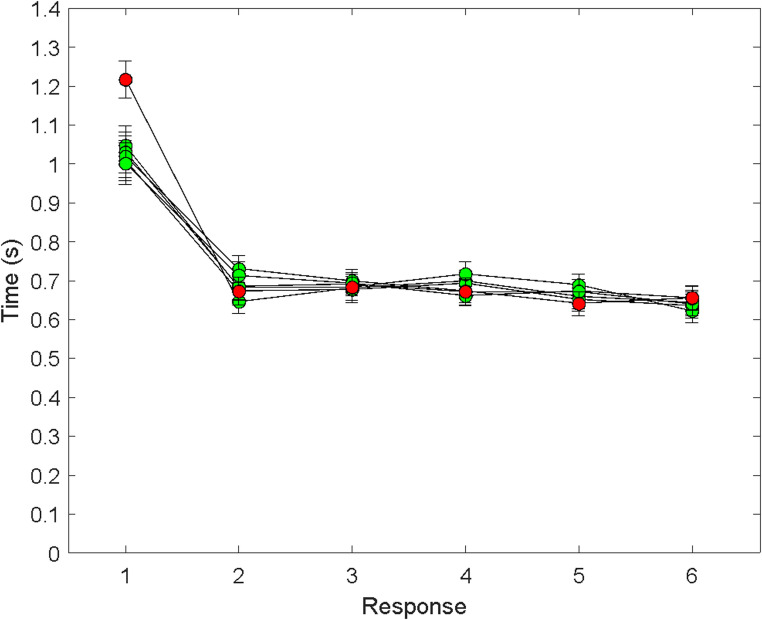 Figure 4
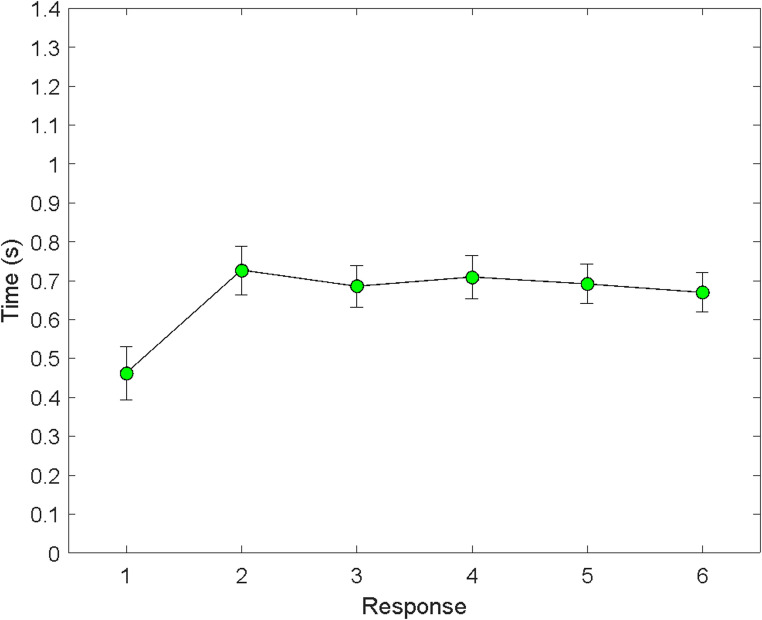 Figure 5
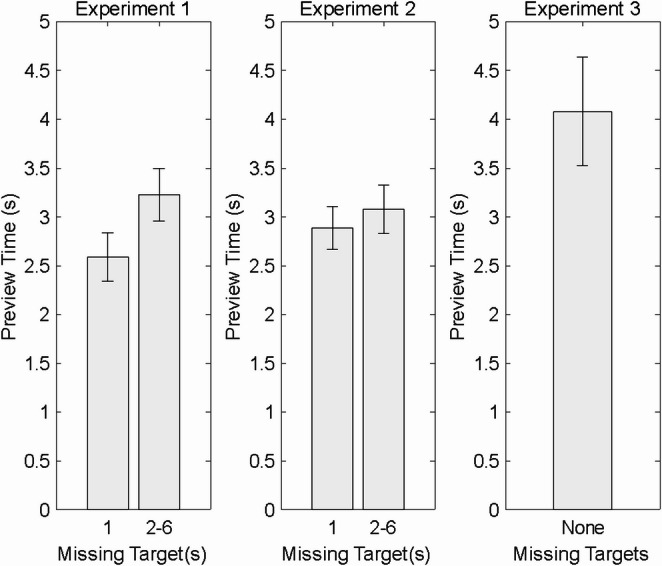 Figure 6
Peer Reviews
No public reviews on file for this paper yet. If you reviewed it on a platform where reviews are public (OpenReview, ICLR, NeurIPS, ICML), you can paste yours below so the community can read it here.
Videos
No videos yet. Explain this paper in a talk, walkthrough, or lecture? Add one.
Taxonomy
TopicsCreativity in Education and Neuroscience · Perfectionism, Procrastination, Anxiety Studies · Neural and Behavioral Psychology Studies