Development of Cellular Energy Metabolism During Differentiation of Human iPSCs into Cortical Neurons
Šárka Danačíková, Petr Pecina, Alena Pecinová, Jan Svoboda, David Vondrášek, Davide Alessandro Basello, Tomáš Čajka, Daniel Hadraba, Tomáš Mráček, Vladimír Kořínek, Jakub Otáhal

TL;DR
This study tracks how human stem cells change their energy use as they develop into brain neurons, showing increased reliance on mitochondria and antioxidant pathways.
Contribution
The study provides the first detailed multi-omics characterization of metabolic changes during early human iPSC differentiation into cortical neurons.
Findings
Differentiating neurons show increased mitochondrial function and oxidative phosphorylation.
Metabolic flux analysis reveals a shift toward biosynthetic and antioxidant glucose utilization in neurons.
Differentiated neurons maintain glycolytic activity, indicating metabolic flexibility.
Abstract
Neuronal differentiation requires extensive metabolic remodeling to support increased energetic and biosynthetic demands. Here, we present an integrated multi-omics and functional characterization of metabolic transitions during early differentiation of human induced pluripotent stem cells (iPSCs) into excitatory cortical neurons using doxycycline-inducible overexpression of neurogenin-2 (NGN2). We analyzed parental iPSCs and induced neurons (iNs) at days 7 and 14 of differentiation, integrating gene expression profiling, label-free quantitative proteomics, high-resolution respirometry, fluorescence lifetime imaging microscopy (FLIM), and 13C₆-glucose metabolic flux analysis. Our data reveal progressive metabolic remodeling associated with neuronal maturation, including enhanced oxidative phosphorylation, increased mitochondrial content, and respiratory capacity. Proteomic analyses…
Genes, proteins, chemicals, diseases, species, mutations and cell lines named across the full text — each resolved to its canonical identifier and authoritative record.
Click any figure to enlarge with its caption.
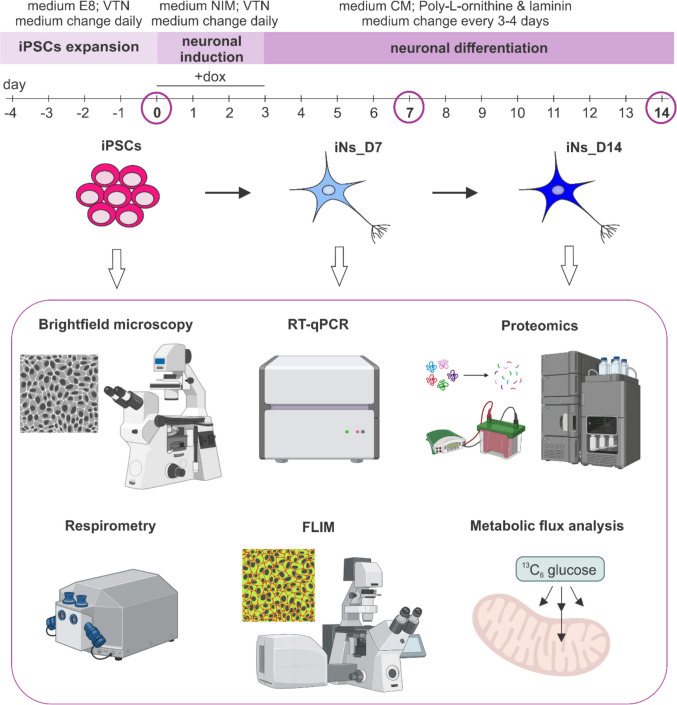 Figure 1
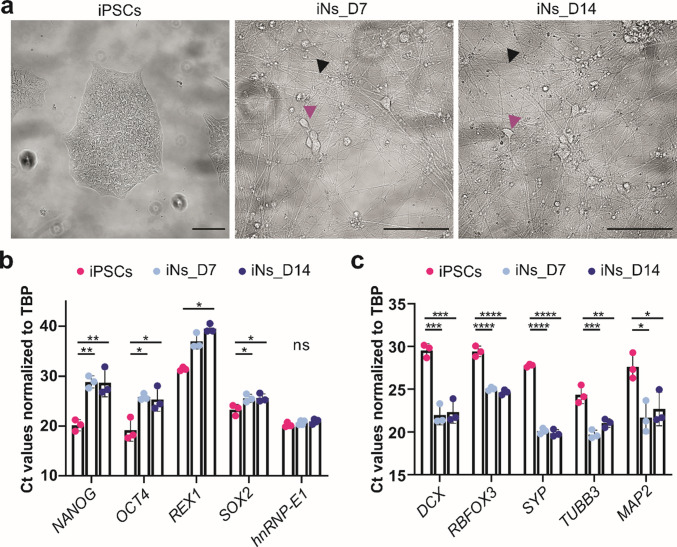 Figure 2
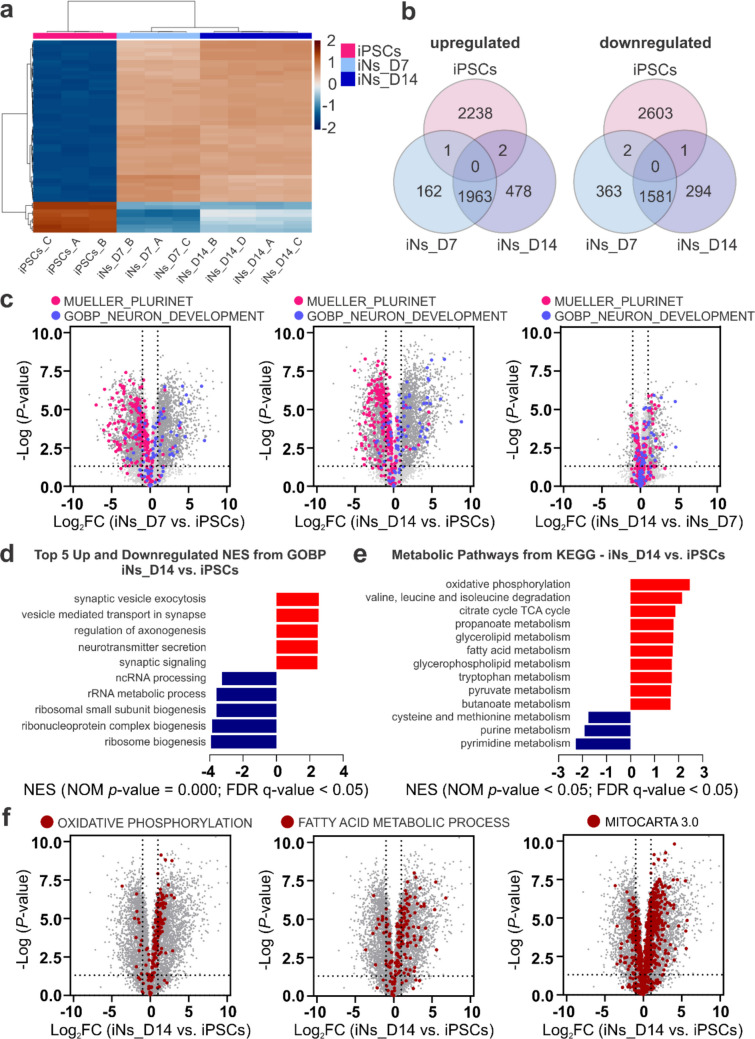 Figure 3
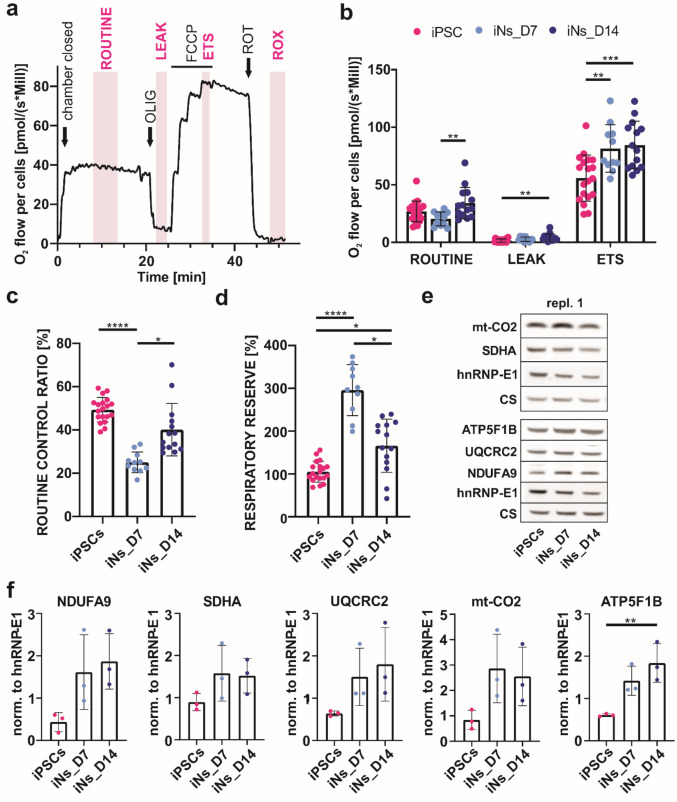 Figure 4
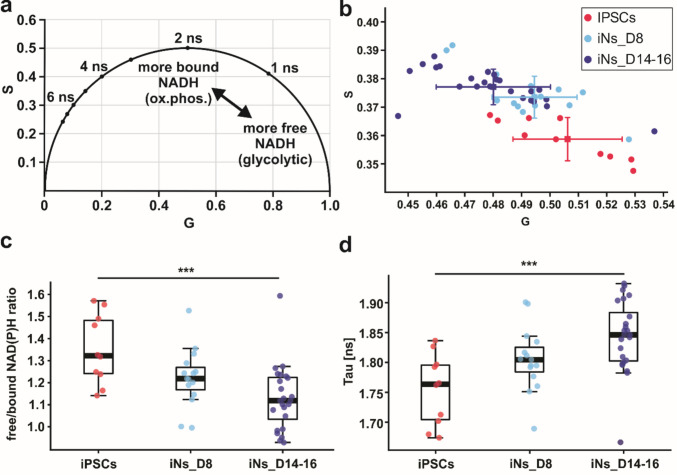 Figure 5
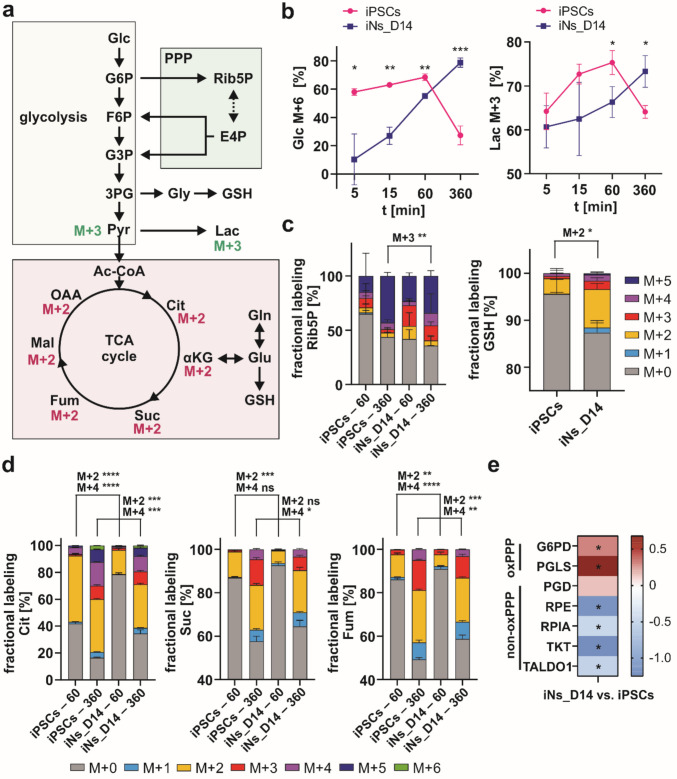 Figure 6
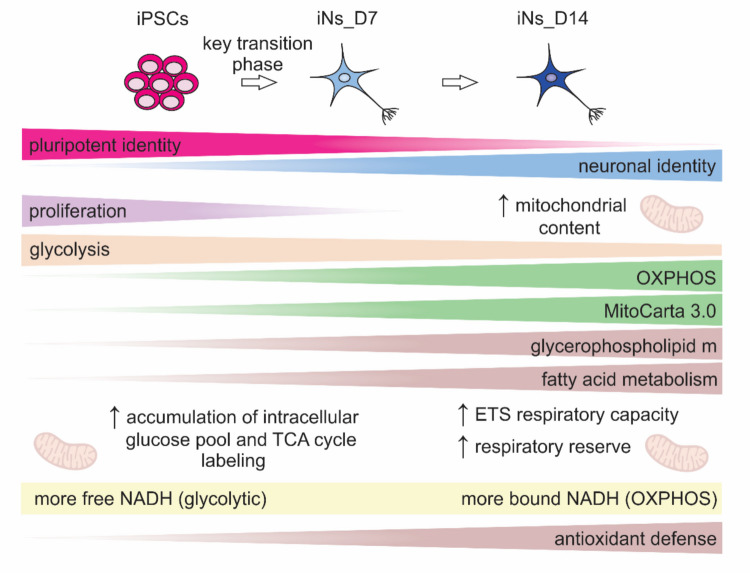 Figure 7
Peer Reviews
No public reviews on file for this paper yet. If you reviewed it on a platform where reviews are public (OpenReview, ICLR, NeurIPS, ICML), you can paste yours below so the community can read it here.
Videos
No videos yet. Explain this paper in a talk, walkthrough, or lecture? Add one.
Taxonomy
TopicsPluripotent Stem Cells Research · Neurogenesis and neuroplasticity mechanisms · Single-cell and spatial transcriptomics