Host factor Rab4b mediates internalization and intoxication of 3D4/21 cells by the active subunit of the Glaesserella parasuis cytolethal distending toxin via influencing EEA1 expression
Yiwen Zhang, Zhen Yang, Senyan Du, Qin Zhao, Xiaobo Huang, Rui Wu, Yiping Wang, Qigui Yan, Sanjie Cao, Yiping Wen

TL;DR
This study shows that the host protein Rab4b helps Glaesserella parasuis toxin enter cells by boosting EEA1 levels, leading to cell toxicity.
Contribution
The novel finding is that Rab4b mediates GpCDT intoxication by regulating EEA1 expression in 3D4/21 cells.
Findings
Rab4b interacts with the active subunit of GpCDT and influences its cytotoxicity.
Rab4b upregulates EEA1 expression, which is essential for GpCDT internalization.
EEA1-deficient cells resist GpCDT toxicity, showing Rab4b's role in vesicle trafficking.
Abstract
The cytolethal distending toxin (CDT), a significant exotoxin, is closely linked to the pathogenicity of Glaesserella parasuis (GPS), but its pathogenic not yet fully elucidated. Previously, we identified Rab4b as a potential host factor contributing to the cytotoxicity of GpCDT through a whole-genome CRISPR/Cas9 screen technology, and subsequently confirmed its association with GpCDT cytotoxicity in PK-15 cells. In this study, our data first indicated that Rab4b could interact with the active subunit of the Glaesserella parasuis cytolethal distending toxin. Investigating the relationship between Rab4b and GpCDT subunits as confirmed by coimmunoprecipitation assay. Next, the porcine alveolar macrophage cell line 3D4/21 was used to establish an infected cell model. Using CRISPR/Cas9 gene editing, we established Rab4b and EEA1-expression-deficient 3D4/21 cell lines. 3D4/21 cells,…
Genes, proteins, chemicals, diseases, species, mutations and cell lines named across the full text — each resolved to its canonical identifier and authoritative record.
Click any figure to enlarge with its caption.
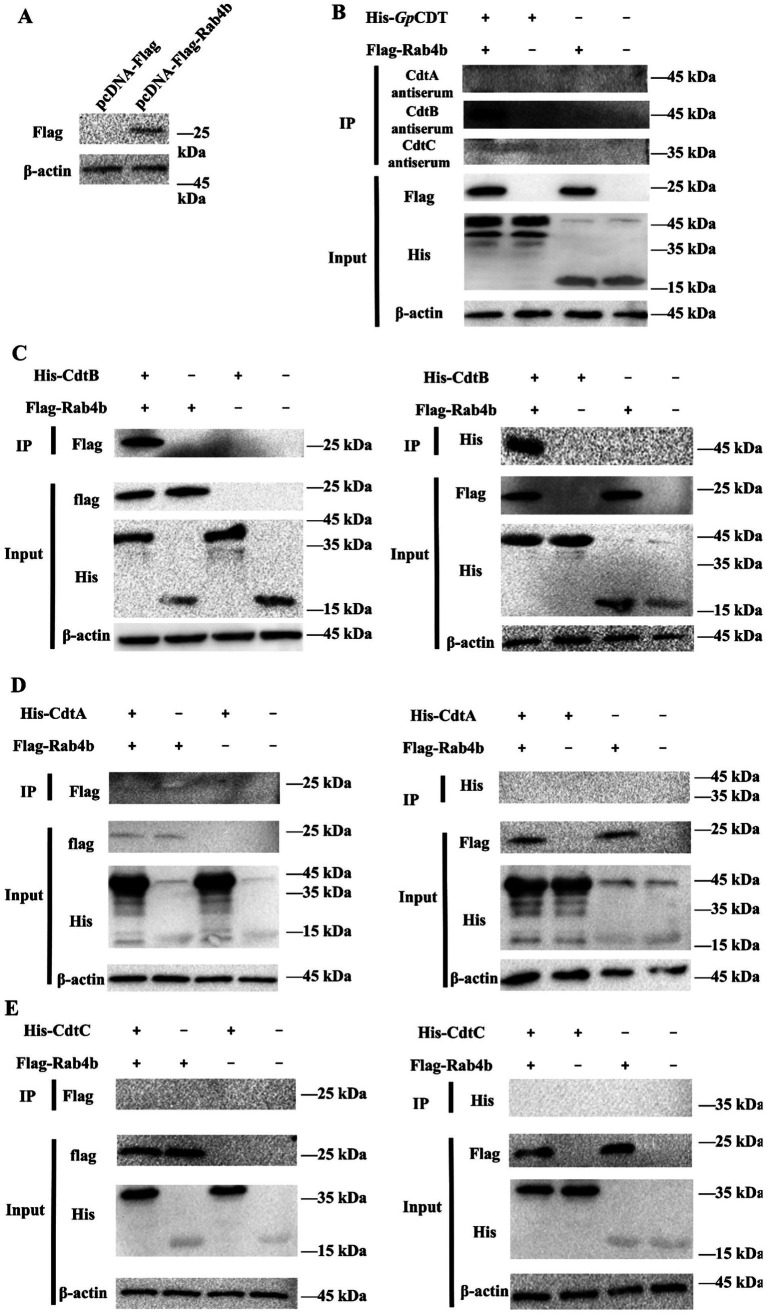 Figure 1
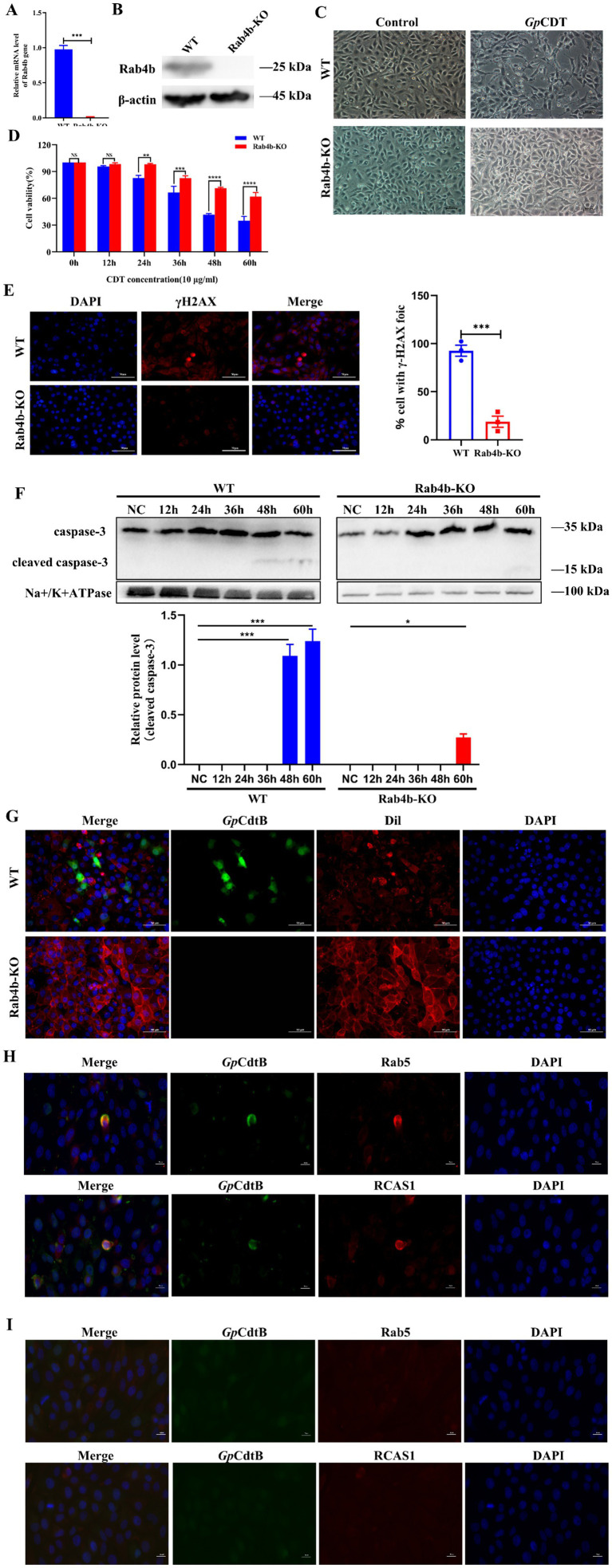 Figure 2
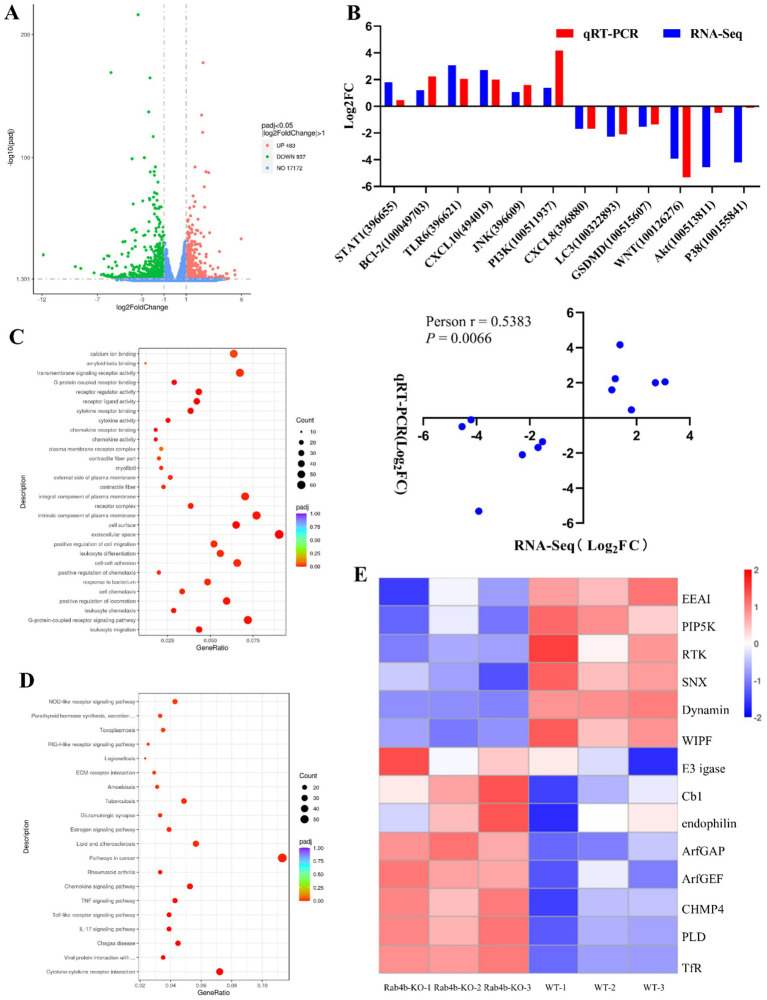 Figure 3
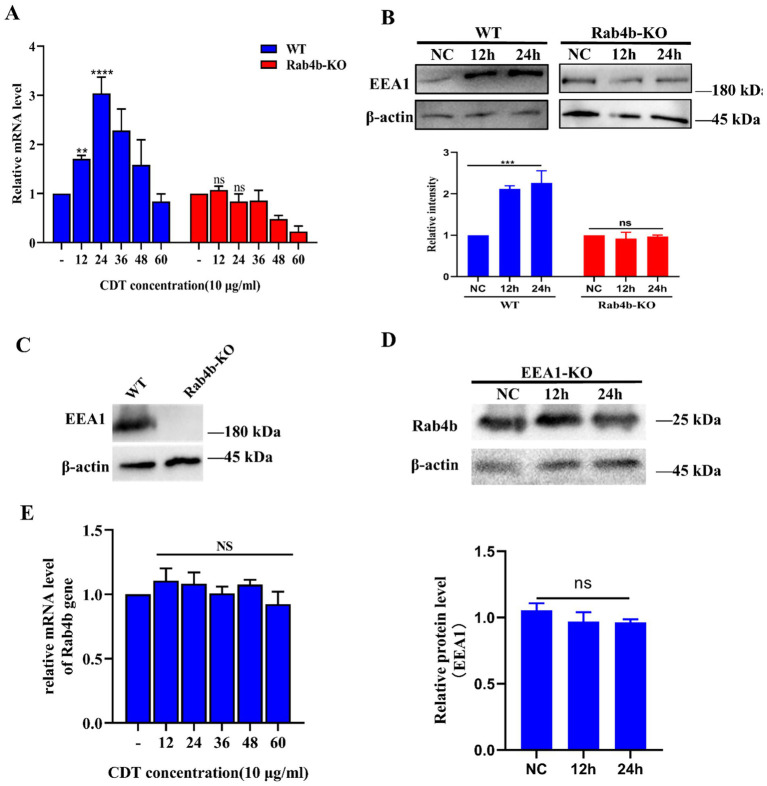 Figure 4
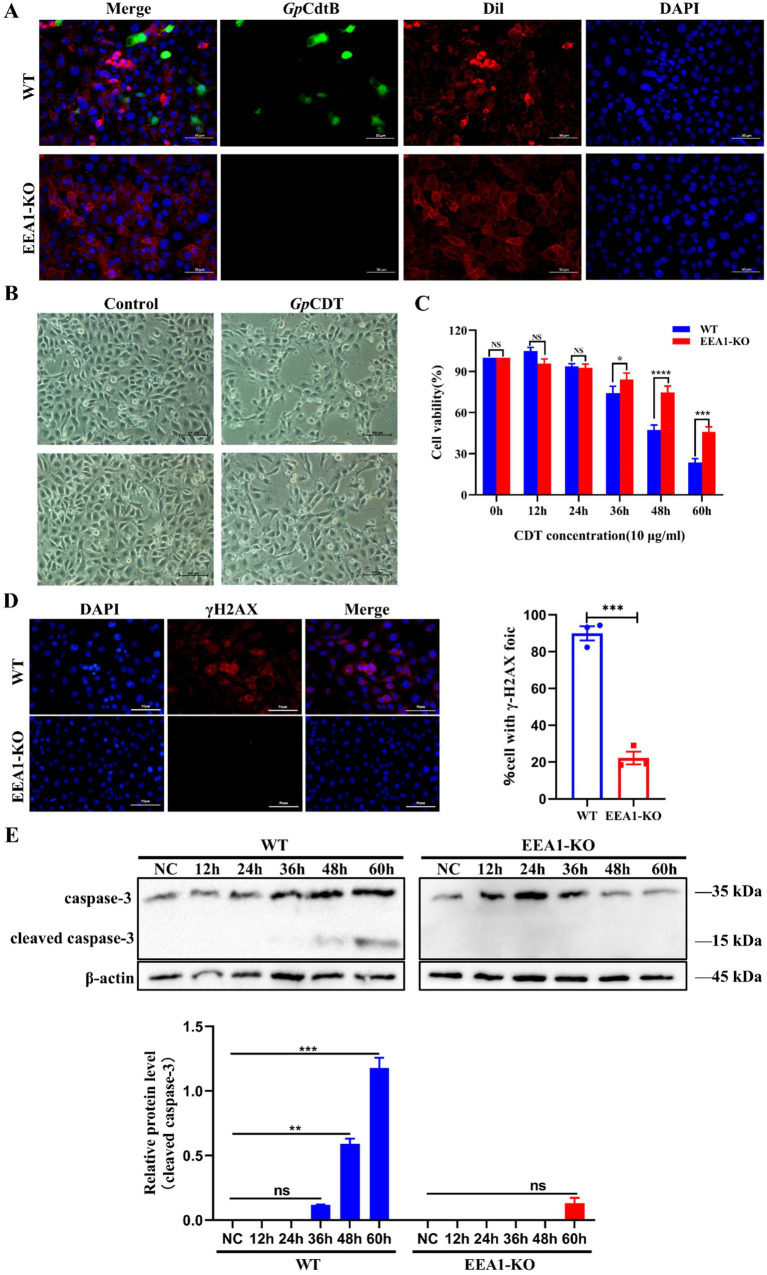 Figure 5
Peer Reviews
No public reviews on file for this paper yet. If you reviewed it on a platform where reviews are public (OpenReview, ICLR, NeurIPS, ICML), you can paste yours below so the community can read it here.
Videos
No videos yet. Explain this paper in a talk, walkthrough, or lecture? Add one.
Taxonomy
TopicsCellular transport and secretion · Microbial infections and disease research · Bacterial Genetics and Biotechnology