Achyranthes bidentata polysaccharides attenuate hypoxic renal injury by reducing neutrophil extracellular traps and suppressing the NLRP3/ASC/caspase-1 pathway: a preliminary study
Kai Li, JingWei Fang, GuangMin Xie, FangNing Wei, JunYing Lv

TL;DR
This study shows that Achyranthes bidentata polysaccharides can protect the kidneys from hypoxia-induced damage by reducing harmful immune structures and inflammation.
Contribution
This is the first preliminary study to demonstrate that ABPS mitigates hypoxic renal injury by targeting neutrophil extracellular traps and the NLRP3 inflammasome pathway.
Findings
ABPS significantly reduced levels of neutrophil extracellular trap markers like cf-DNA and MPO-DNA.
ABPS suppressed the NLRP3/ASC/caspase-1 pathway and reduced oxidative stress markers like MDA and ROS.
High-dose ABPS restored kidney function markers such as BUN and Scr to near-normal levels.
Abstract
The aim of this study was to investigate whether Achyranthes bidentata polysaccharides (ABPSs) alleviate hypoxic renal injury (HRI) and the possible mechanism. The HRI rat model was established using a hypobaric hypoxia chamber. Rats were divided into a control group, a hypoxia group, low-dose ABPS (ABPL) group, a high-dose ABPS (ABPH) group, a DNase I-positive control group, and an NLRP3 agonist nigericin sodium salt (NSS) group. Blood serum components relevant to neutrophil extracellular traps (NETs), including cell-free DNA (cf-DNA), myeloperoxidase-DNA (MPO-DNA), neutrophil elastase-DNA (NE-DNA), citrullinated histone 3 (cit-H3), blood urea nitrogen (BUN), serum creatinine (Scr), cystatin C (CysC), neutrophil gelatinase-associated lipocalin (NGAL), and kidney injury molecule-1 (KIM-1), were analyzed. NOD-like receptor protein 3 (NLRP3) pathway proteins, MPO, NE, cit-H3, and…
Genes, proteins, chemicals, diseases, species, mutations and cell lines named across the full text — each resolved to its canonical identifier and authoritative record.
Click any figure to enlarge with its caption.
 Figure 1
 Figure 2
 Figure 3
 Figure 4
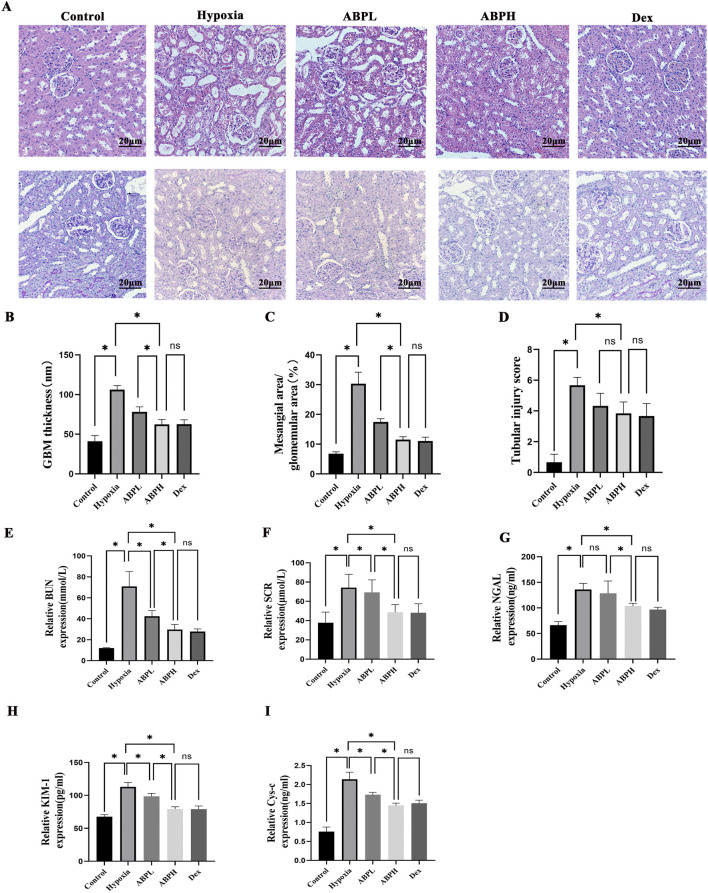 Figure 5
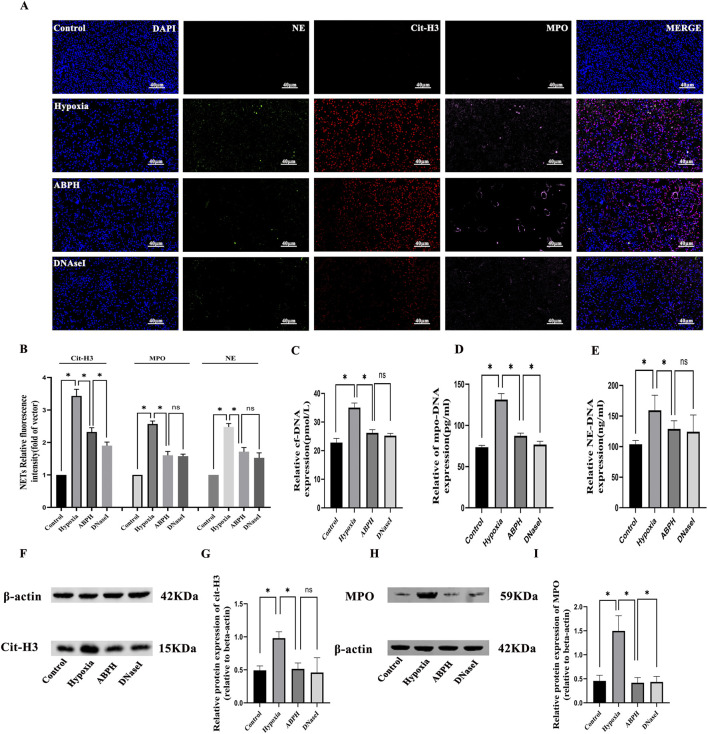 Figure 6
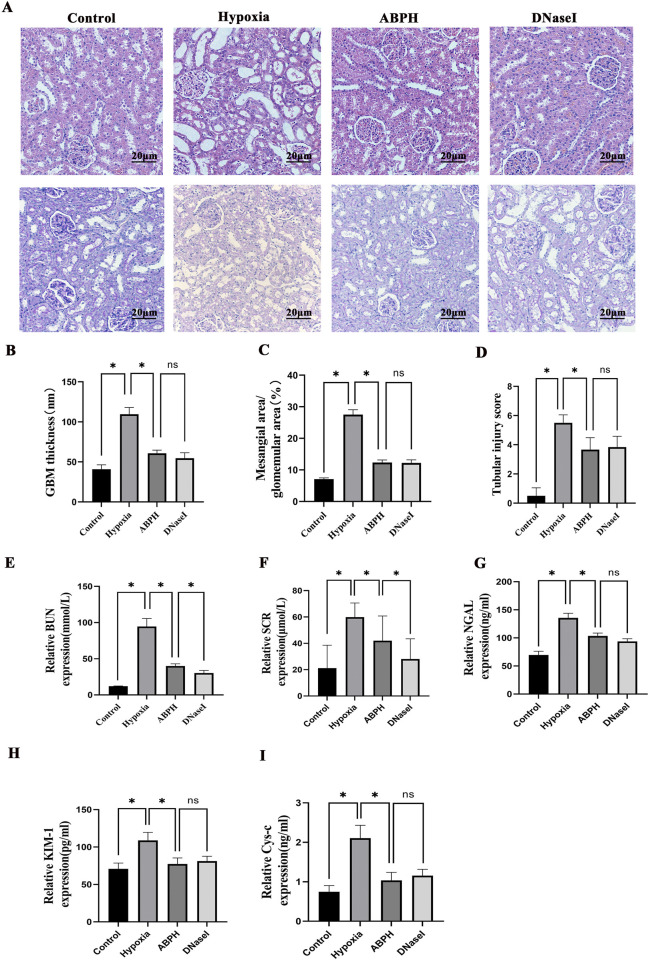 Figure 7
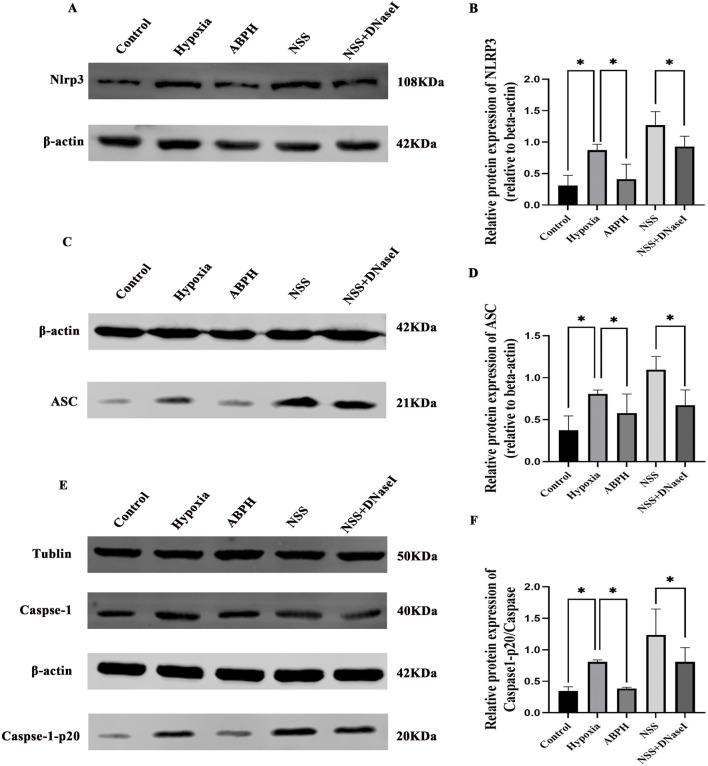 Figure 8
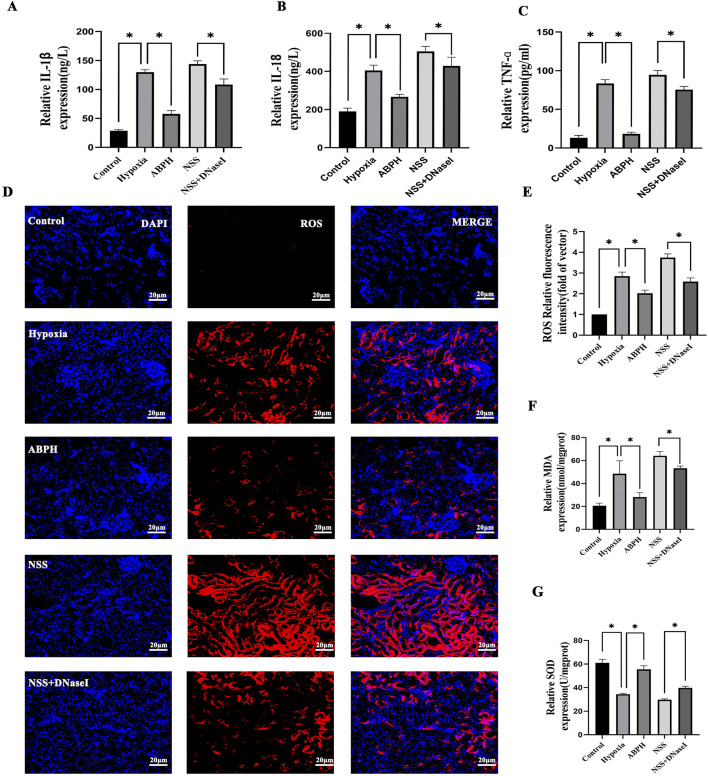 Figure 9
Peer Reviews
No public reviews on file for this paper yet. If you reviewed it on a platform where reviews are public (OpenReview, ICLR, NeurIPS, ICML), you can paste yours below so the community can read it here.
Videos
No videos yet. Explain this paper in a talk, walkthrough, or lecture? Add one.
Taxonomy
TopicsNeutrophil, Myeloperoxidase and Oxidative Mechanisms · Acute Kidney Injury Research · Immune cells in cancer