The trade-off between maximizing reconstruction and physiological interpretation of muscle synergies with autoencoders
Cristina Brambilla, Nicol Moscatelli, Valentina Lanzani, Lorenzo Molinari Tosatti, Alessandro Brusaferri, Alessandro Scano

TL;DR
This paper explores how different autoencoder designs affect the extraction of muscle synergies, finding that best reconstruction doesn't always mean best physiological interpretation.
Contribution
The study identifies that ReLU+tanh autoencoder configurations yield more physiologically meaningful synergies than those with best reconstruction accuracy.
Findings
Extracted synergies are highly sensitive to autoencoder architecture choices.
ReLU+tanh configurations produce more physiologically meaningful synergies than those with optimal reconstruction accuracy.
Non-linear techniques are emphasized for better synergy extraction across various movement datasets.
Abstract
In neuroscience, the muscle synergy method is a widely known computational approach for studying motor control from electromyographic (EMG) recordings. Standard algorithms for synergy extraction rely on a linearity assumption for synergy combination. However, the interactions between muscle groups and movement dynamics often exhibit non-linear characteristics, suggesting the need for alternative approaches. In this context, autoencoders (AEs) have been proposed as promising tools. However, previous studies focused on the reconstruction accuracy optimization and not on the structure of the synergies, and the influence of AE design parameters has not been thoroughly investigated. This study aims to explore the impact of different activation functions on the effectiveness of AEs. To this end, we used a rich dataset of upper-limb EMG signals recorded from 16 muscles in 15 participants…
Genes, proteins, chemicals, diseases, species, mutations and cell lines named across the full text — each resolved to its canonical identifier and authoritative record.
Click any figure to enlarge with its caption.
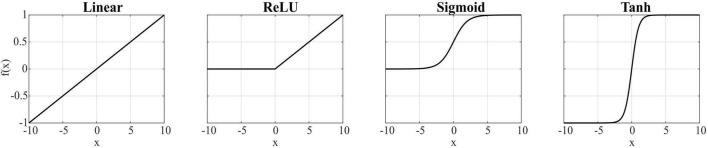 Figure 1
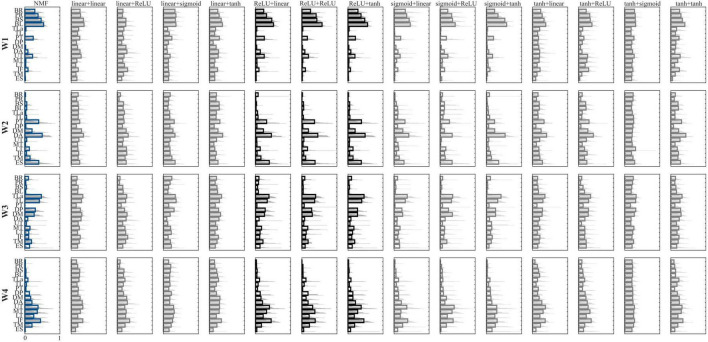 Figure 2
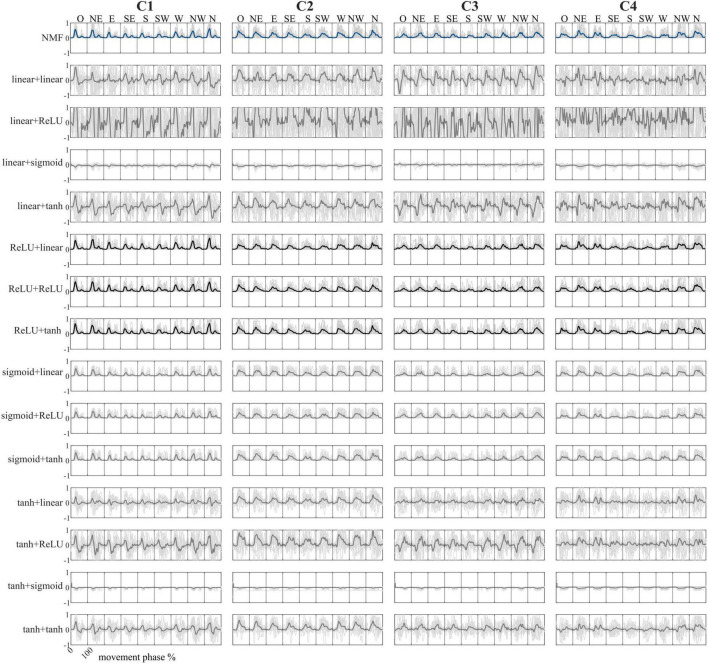 Figure 3
Peer Reviews
No public reviews on file for this paper yet. If you reviewed it on a platform where reviews are public (OpenReview, ICLR, NeurIPS, ICML), you can paste yours below so the community can read it here.
Videos
No videos yet. Explain this paper in a talk, walkthrough, or lecture? Add one.
Taxonomy
TopicsMuscle activation and electromyography studies · Motor Control and Adaptation · Balance, Gait, and Falls Prevention