Antioxidant enzyme responses in different wheat species infested with the corn leaf aphid, Rhopalosiphum maidis Fitch
Pritam Kumari, Poonam Jasrotia, Sunny Maanju, Sindhu Sareen, Dinesh Kumar

TL;DR
This study explores how different wheat species respond biochemically to aphid infestation, identifying potential genetic resources for breeding pest-resistant wheat.
Contribution
The study identifies specific antioxidant and phenylpropanoid enzyme responses in wheat genotypes that correlate with resistance to corn leaf aphids.
Findings
Synthetic wheat showed the highest antioxidant enzyme activity, indicating strong oxidative stress tolerance.
Amphidiploid wheat and Aegilops kotschyi exhibited high aphid mortality despite lower enzyme activity, suggesting non-enzymatic defenses.
Phenylalanine ammonia-lyase and polyphenol oxidase were upregulated in resistant genotypes, indicating their role in secondary metabolite defenses.
Abstract
Wheat (Triticum aestivum L.) is a staple crop worldwide, but it remains vulnerable to the corn leaf aphid (Rhopalosiphum maidis Fitch), a major pest that causes both direct yield losses and indirect damage through disease transmission. To elucidate biochemical mechanisms underlying resistance, 65 wild and synthetic wheat genotypes were evaluated under aphid-infested and uninfested conditions. Aphid nymphal mortality varied significantly across genotypes, with amphidiploid and Aegilops kotschyi showing the highest resistance, while synthetic wheat lines exhibited moderate aphid mortality. Biochemical assays revealed consistent induction of antioxidant enzymes, viz., catalase (CAT), ascorbate peroxidase (APX), peroxidase (POX), and glutathione reductase (GR), across all genotypes upon infestation. Synthetic wheat displayed the highest enzymatic activities, indicating robust oxidative…
Genes, proteins, chemicals, diseases, species, mutations and cell lines named across the full text — each resolved to its canonical identifier and authoritative record.
Click any figure to enlarge with its caption.
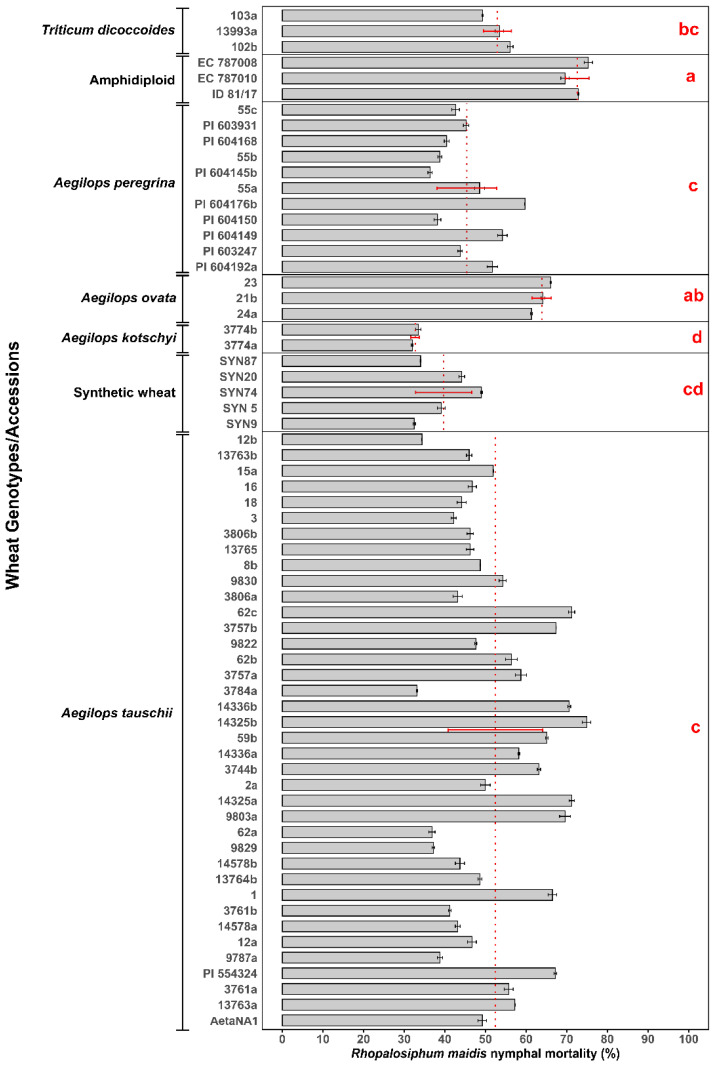 Figure 1
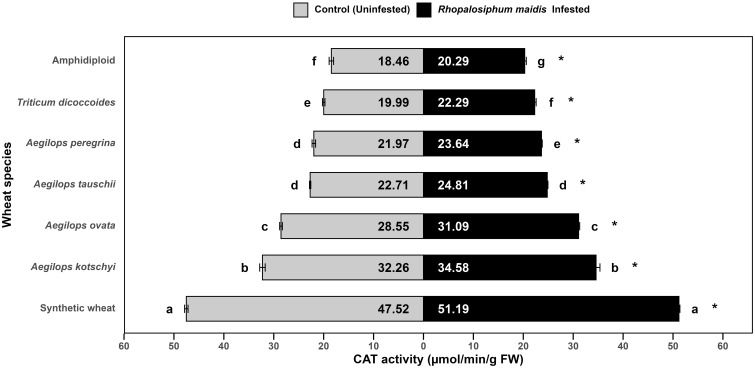 Figure 2
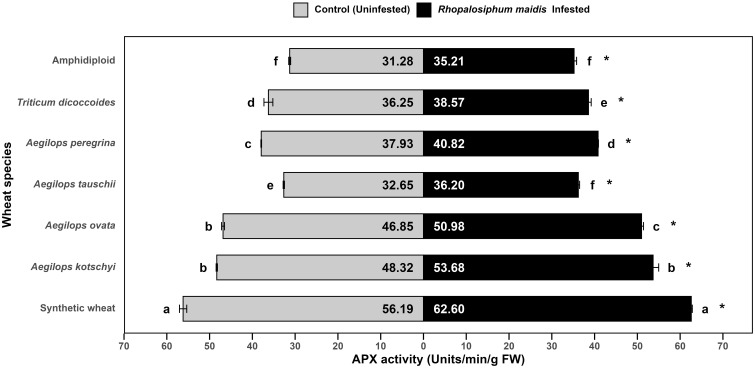 Figure 3
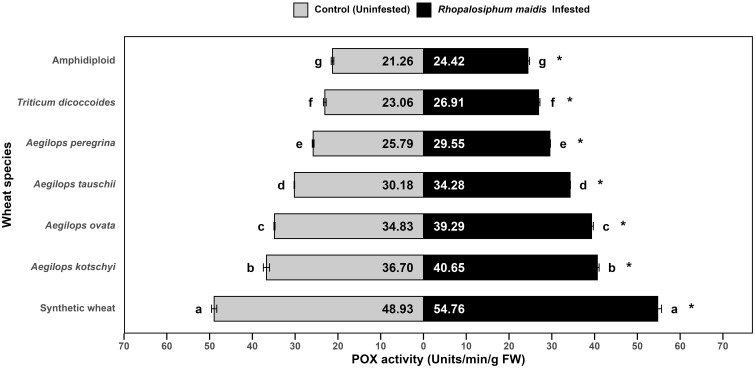 Figure 4
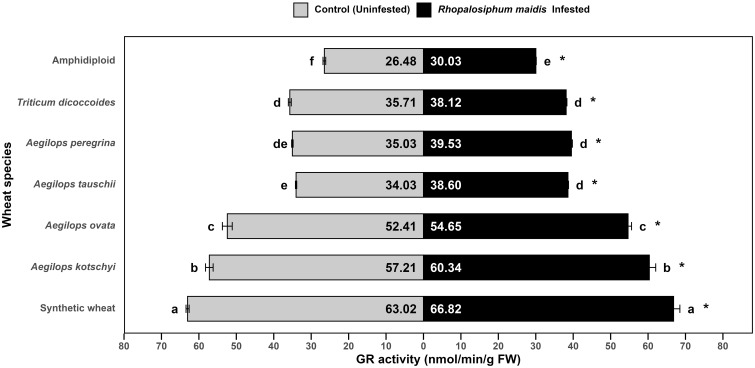 Figure 5
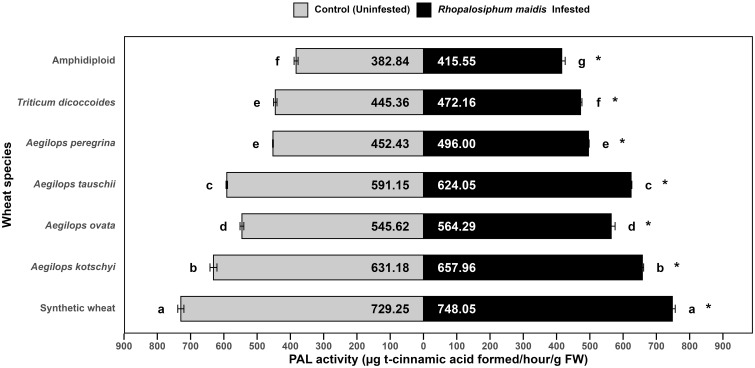 Figure 6
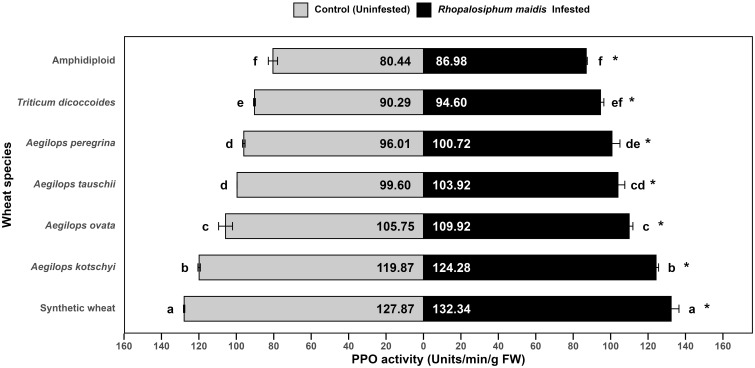 Figure 7
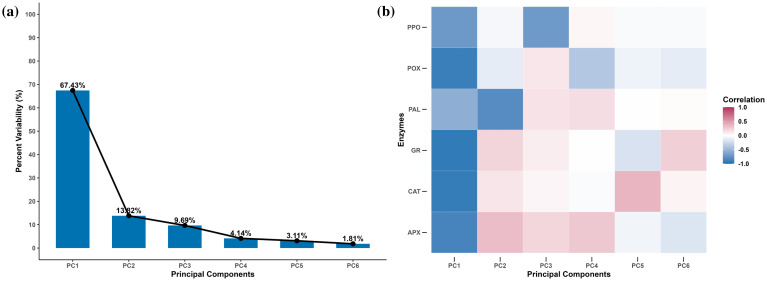 Figure 8
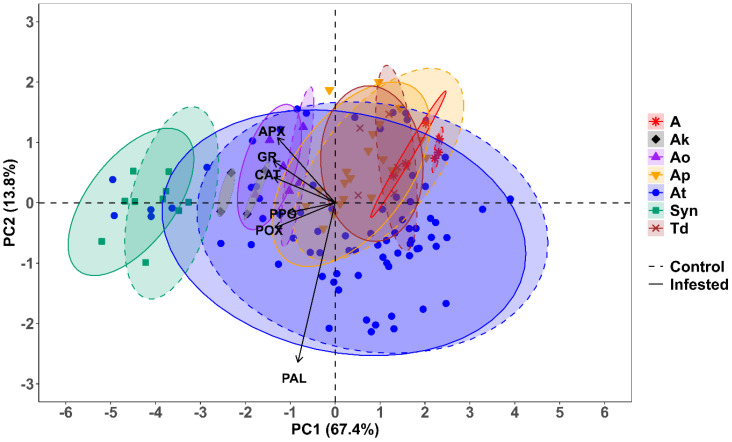 Figure 9
Peer Reviews
No public reviews on file for this paper yet. If you reviewed it on a platform where reviews are public (OpenReview, ICLR, NeurIPS, ICML), you can paste yours below so the community can read it here.
Videos
No videos yet. Explain this paper in a talk, walkthrough, or lecture? Add one.
Taxonomy
TopicsInsect-Plant Interactions and Control · Insect Pest Control Strategies · Plant Gene Expression Analysis