Molecular and expression analyses indicate the role of fusion transcripts in mediating abiotic stress responses in chickpea
Fiza Hamid, Shafaque Zahra, Shailesh Kumar

TL;DR
This study explores how fusion transcripts in chickpea may help the plant respond to environmental stresses like drought and salinity.
Contribution
The study identifies and validates fusion transcripts in chickpea and links them to abiotic stress responses for the first time.
Findings
328 unique fusion transcripts were identified in chickpea using RNA-Seq data from multiple tissues and stress conditions.
10 fusion transcripts were experimentally validated using RT-PCR and Sanger sequencing.
120 fusion gene pairs were found to be conserved across 17 chickpea genotypes, suggesting their biological importance.
Abstract
Understanding the transcriptome diversity is essential for deciphering the transcriptional level regulation. High-throughput sequencing technologies have facilitated the detection of fusion transcripts (FTs), which are chimeric mRNA molecules derived from gene fusions due to chromosomal rearrangements or via the splicing machinery at the RNA level. In this study, we investigated the transcriptome complexity in Cicer arietinum resulting from fusion events using high-throughput RNA-Seq datasets from five tissues, i.e., stem, leaves, buds, flowers, and pods, and two abiotic stress conditions, i.e., drought and salinity. Of the 328 unique FTs identified, 69% exhibited the presence of canonical splice sites at their junction, indicating their generation via trans-splicing. Functional annotation and enrichment analyses of fusion partners suggested that these transcripts may expand functional…
Genes, proteins, chemicals, diseases, species, mutations and cell lines named across the full text — each resolved to its canonical identifier and authoritative record.
Click any figure to enlarge with its caption.
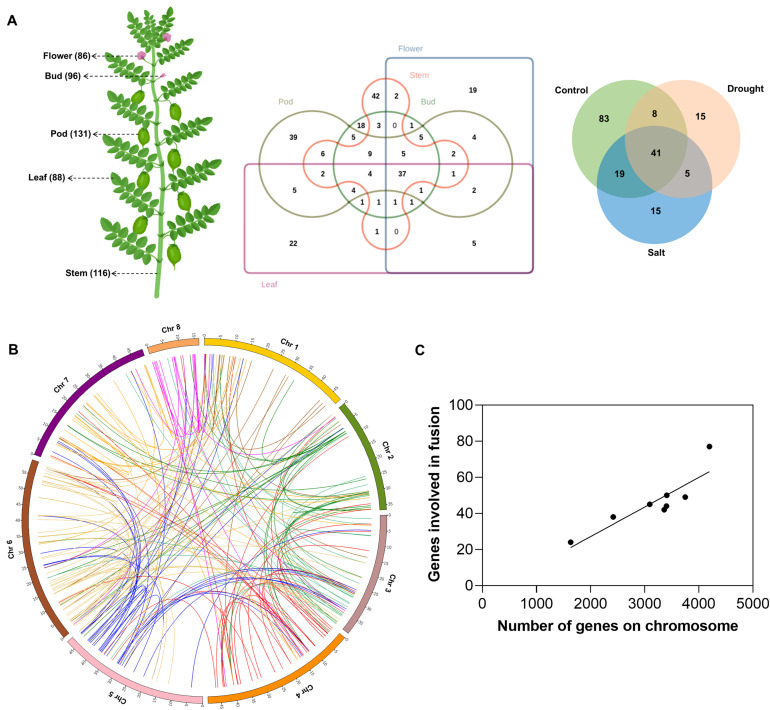 Figure 1
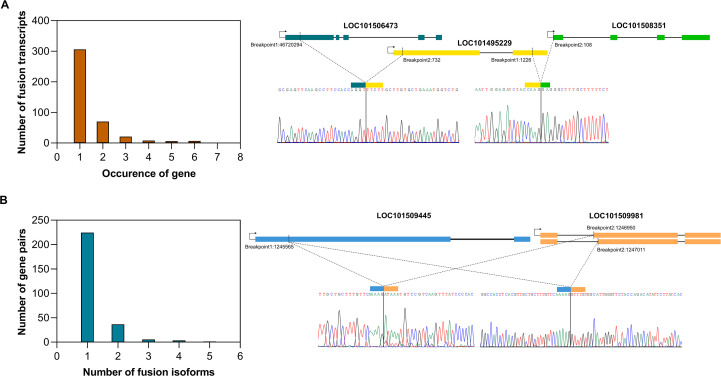 Figure 2
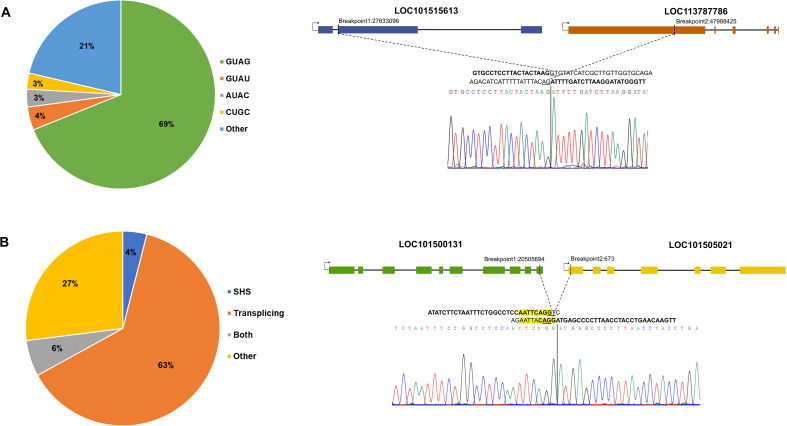 Figure 3
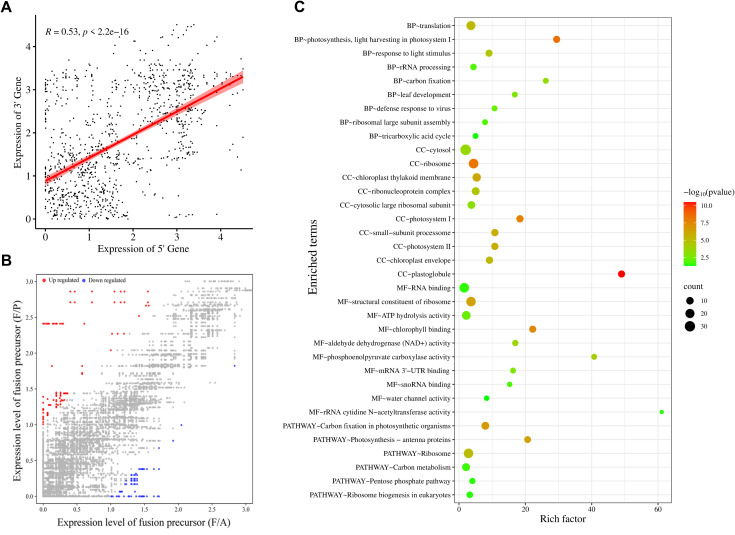 Figure 4
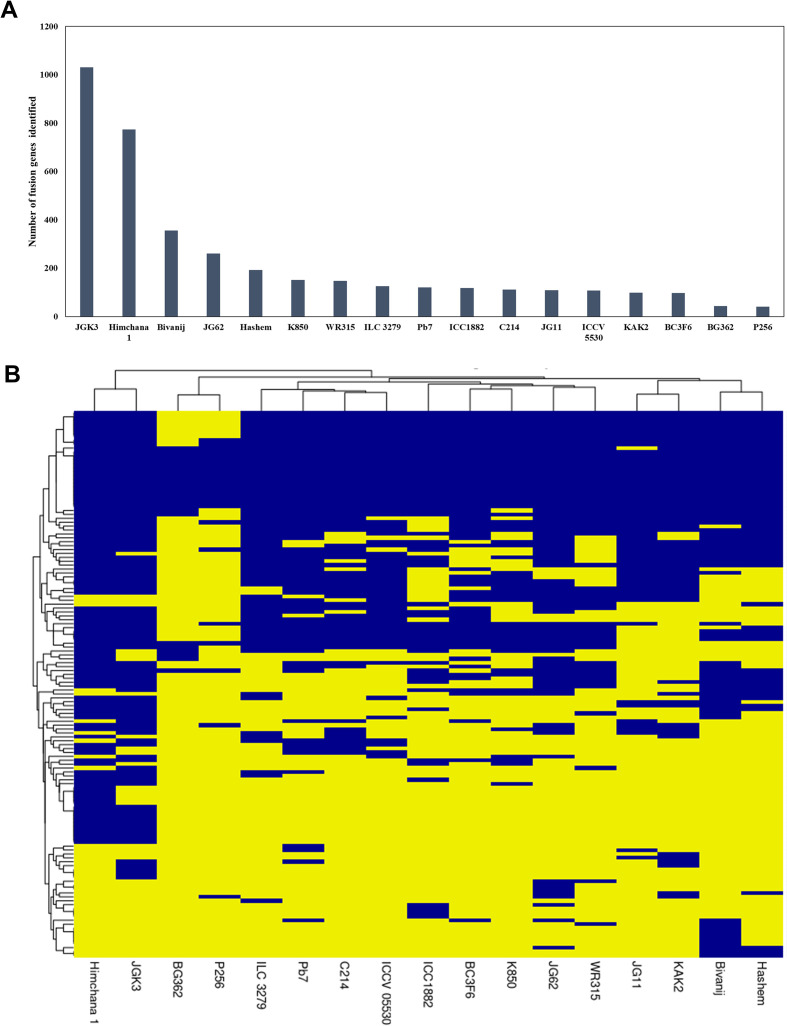 Figure 5
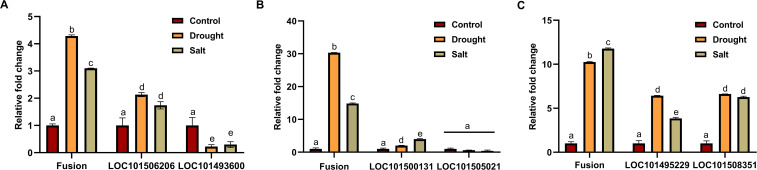 Figure 6
Peer Reviews
No public reviews on file for this paper yet. If you reviewed it on a platform where reviews are public (OpenReview, ICLR, NeurIPS, ICML), you can paste yours below so the community can read it here.
Videos
No videos yet. Explain this paper in a talk, walkthrough, or lecture? Add one.
Taxonomy
TopicsGenetic and Environmental Crop Studies · Chromosomal and Genetic Variations · RNA Research and Splicing