Application of BMSCs-coated PLGA/type I collagen composite mesh in intraperitoneal onlay mesh repair using a rat ventral incisional hernia model
Mingliang He, Yi Pan, Jiayi Li, Yaqin Qi, Kangbei Zhu, Fangjie Zhang

TL;DR
This study develops a new hernia repair mesh combining PLGA, collagen, and stem cells, which reduces inflammation and promotes tissue regeneration in rats.
Contribution
A novel bioactive composite mesh using BMSCs, PLGA, and collagen is introduced for improved hernia repair with anti-adhesive and regenerative properties.
Findings
The composite mesh reduced inflammatory cell infiltration by 73.3% compared to commercial meshes.
BMSCs modulated TGF-β1/Smad3 signaling to mitigate fibrosis and enhance neovascularization.
The mesh degraded at a rate matching tissue regeneration and showed minimal adhesions in histological analysis.
Abstract
This study aimed to address the limitations of synthetic meshes in incisional hernia repair by developing a bioactive composite mesh combining poly(lactic-co-glycolic acid) (PLGA), type I collagen, and bone marrow mesenchymal stem cells (BMSCs). The PLGA scaffolds, fabricated via freeze-drying, were modified with collagen to enhance biocompatibility and loaded with BMSCs to promote tissue regeneration. In vitro and in vivo evaluations in a rat ventral hernia model assessed biomechanical properties, anti-adhesion efficacy, and tissue integration. The PLGA-Collagen I-BMSCs mesh exhibited superior anti-adhesion performance, reduced inflammatory cell infiltration by 73.3%, and enhanced neovascularization compared to commercial meshes (Sepramesh™ and Parietex™). BMSCs modulated TGF-β1/Smad3 signaling to mitigate fibrosis, while collagen alignment improved mechanical recovery. The composite…
Genes, proteins, chemicals, diseases, species, mutations and cell lines named across the full text — each resolved to its canonical identifier and authoritative record.
Click any figure to enlarge with its caption.
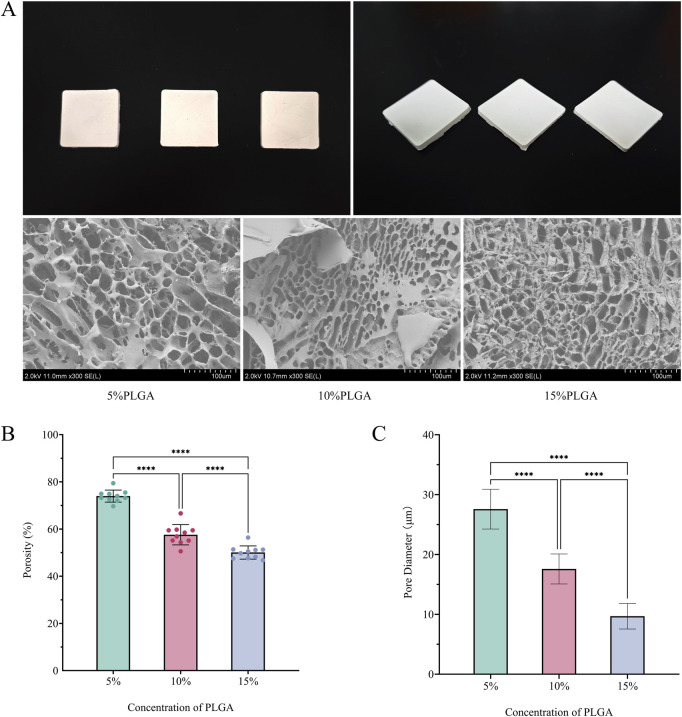 Figure 1
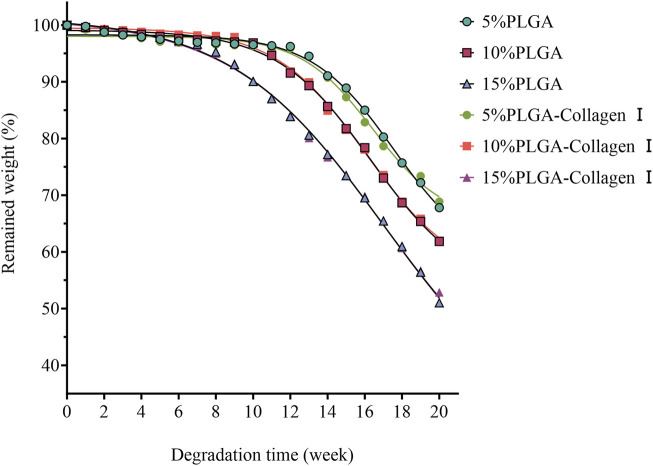 Figure 2
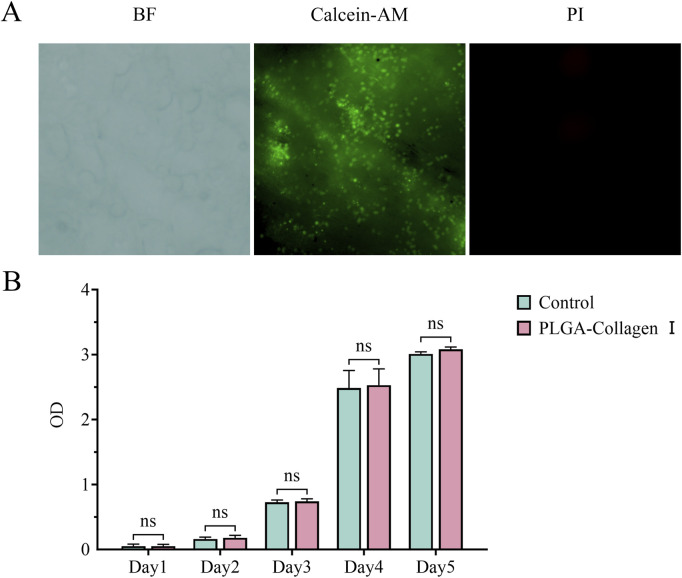 Figure 3
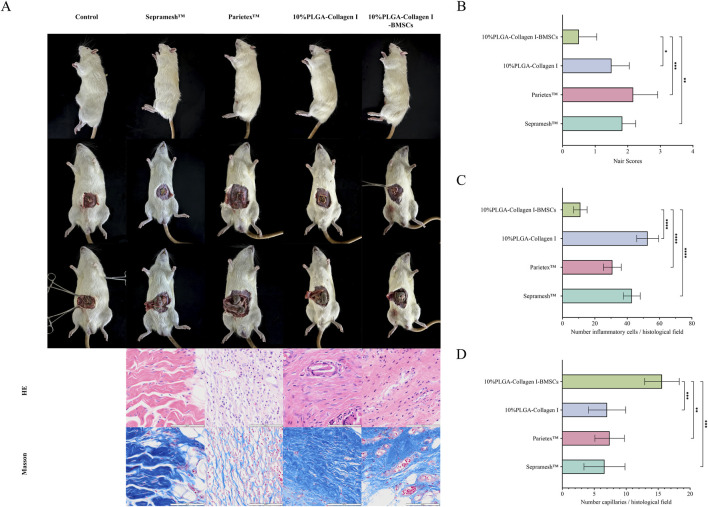 Figure 4
Peer Reviews
No public reviews on file for this paper yet. If you reviewed it on a platform where reviews are public (OpenReview, ICLR, NeurIPS, ICML), you can paste yours below so the community can read it here.
Videos
No videos yet. Explain this paper in a talk, walkthrough, or lecture? Add one.
Taxonomy
TopicsHernia repair and management · Intestinal and Peritoneal Adhesions · Pelvic floor disorders treatments