Huashi Runzao decoction for primary Sjögren disease: a double-blind, randomized controlled trial combined with m6A and m5C RNA modification analysis
Ziwei Huang, Tiantian Deng, Xiya Zhang, Chunxin Lei, Yan Zhang, Jianying Yang, Qian He, Jiahe Liao, Jiaqi Chen, Liwen Yang, Xiaofeng Gu, Jing Luo, Cheng Xiao, Qingwen Tao

TL;DR
A Chinese herbal formula called Huashi Runzao decoction improves symptoms and gland function in patients with primary Sjögren disease, possibly through changes in RNA methylation.
Contribution
This study provides the first clinical evaluation of HRD for pSD and explores its epigenetic mechanisms involving m6A and m5C RNA modifications.
Findings
HRD improved exocrine gland function, including increased saliva and tear secretion in pSD patients.
HRD increased m6A RNA methylation levels and decreased m5C levels, with HNRNPA2B1 identified as a potential key regulator.
Patients experienced reduced disease activity and improved quality of life after HRD treatment.
Abstract
Huashi Runzao decoction (HRD), a Chinese herbal formula, has been used in clinical practice for patients with primary Sjögren disease (pSD) for years. However, the benefits of HRD for pSD have not been evaluated, and HRD epigenetic mechanism of action remains unexplored. We conducted a double-blind, randomized, placebo-controlled clinical trial to evaluate the efficacy and safety of HRD in patients with pSD and to explore its epigenetic mechanism of action. The clinical scores (including oral dryness, dry eye, dryness, fatigue, and limb pain visual analogue scales scores and the ESSPRI) of pSD patients were recorded at baseline and every 4 weeks thereafter. The disease activity scores (including the ESSDAI and ClinESSDAI), exocrine gland function variables (including the result of Schirmer’s test and salivary flow rate), serological indices (ESR, CRP, IgG, IgA, and IgM) and…
Genes, proteins, chemicals, diseases, species, mutations and cell lines named across the full text — each resolved to its canonical identifier and authoritative record.
Click any figure to enlarge with its caption.
 Figure 1
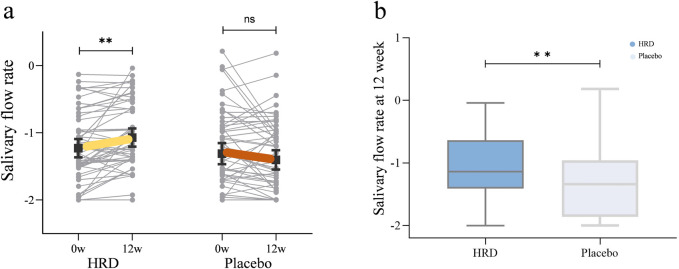 Figure 2
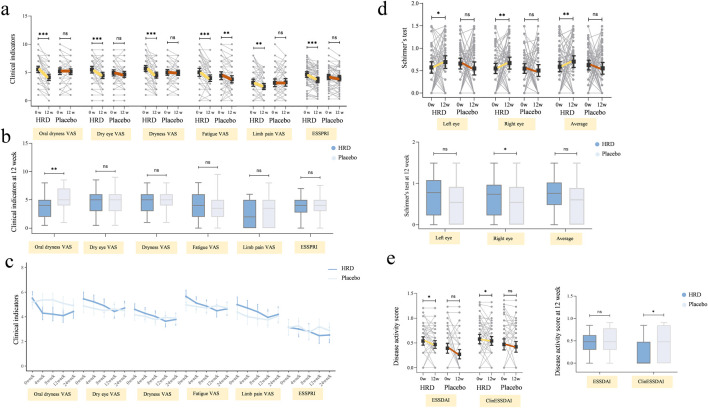 Figure 3
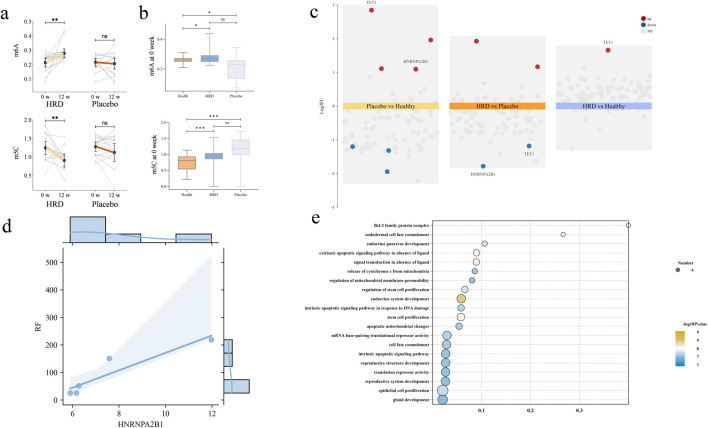 Figure 4
Peer Reviews
No public reviews on file for this paper yet. If you reviewed it on a platform where reviews are public (OpenReview, ICLR, NeurIPS, ICML), you can paste yours below so the community can read it here.
Videos
No videos yet. Explain this paper in a talk, walkthrough, or lecture? Add one.
Taxonomy
TopicsRNA modifications and cancer · RNA regulation and disease · Cancer-related molecular mechanisms research