Supporting evidence and recommendations for the management of patients with systemic-eligible atopic dermatitis: A Canadian consensus document
Kerri Purdy, Melinda Gooderham, Mohannad Abu-Hilal, April Armstrong, Rachel Asiniwasis, Gurbir Dhadwal, Carolyn Jack, Perla Lansang, Fiona Lovegrove, Julien Ringuet, Shanna Spring

TL;DR
This paper presents a Canadian consensus on managing atopic dermatitis with systemic therapies, offering expert-based recommendations for healthcare providers.
Contribution
The paper provides a tailored consensus document for Canadian healthcare systems on systemic treatment of atopic dermatitis.
Findings
A panel of 14 experts reached consensus on 29 statements through three rounds of voting.
The statements are based on expert opinion due to a lack of evidence-based clinical research on patient outcomes.
The recommendations focus on practical management rather than specific treatment guidelines.
Abstract
Atopic dermatitis is a chronic, relapsing, and remitting inflammatory skin disease. Multiple systemic therapeutic options are available to treat atopic dermatitis. To provide evidence-based recommendations on the use of systemic therapies for atopic dermatitis in Canada that consider the nuances of the Canadian healthcare system and provide guidance for populations of clinical interest. A panel of 14 experts, including 11 dermatologists from Canada and 3 from the United States, reviewed available literature on systemic therapies for atopic dermatitis. The published evidence, along with clinical expertise and opinion, was used to draft a concise set of statements to guide healthcare providers in Canada on systemic treatment of atopic dermatitis. During 3 rounds of virtual meetings with all 14 experts voting in all meetings, a total of 29 statements reached the 75% agreement required…
Genes, proteins, chemicals, diseases, species, mutations and cell lines named across the full text — each resolved to its canonical identifier and authoritative record.
Click any figure to enlarge with its caption.
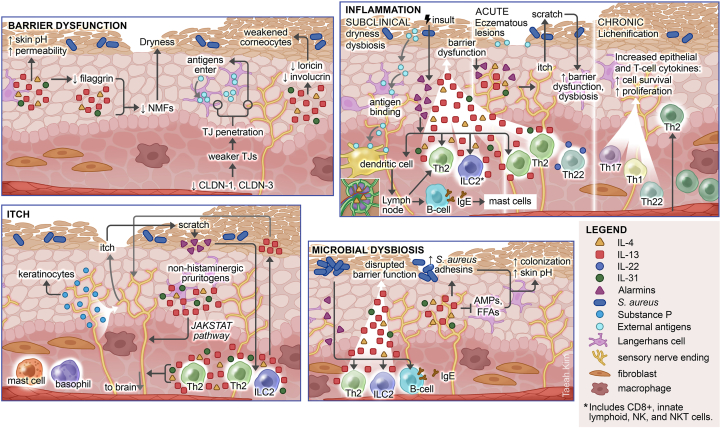 Figure 1
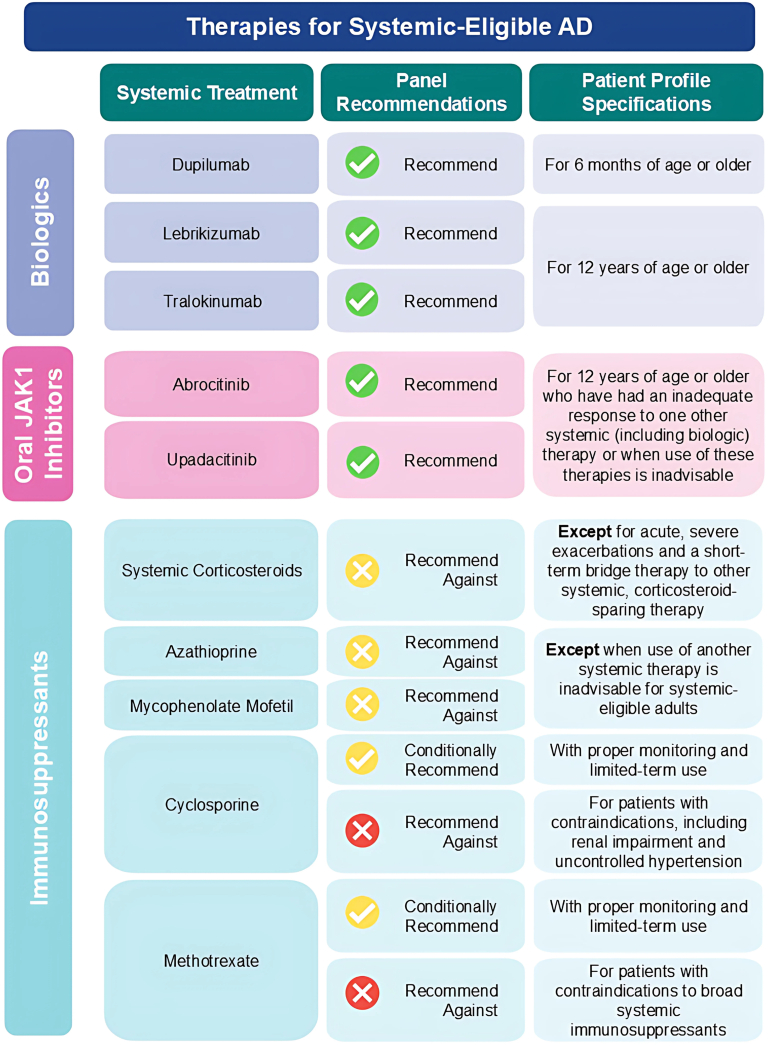 Figure 2
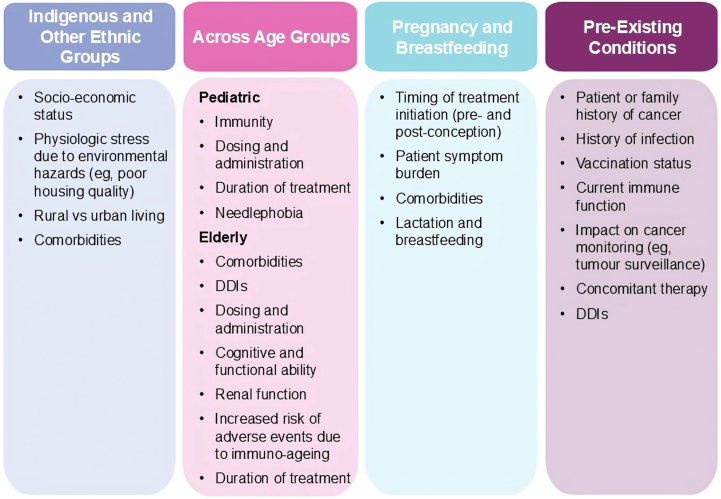 Figure 3
Peer Reviews
No public reviews on file for this paper yet. If you reviewed it on a platform where reviews are public (OpenReview, ICLR, NeurIPS, ICML), you can paste yours below so the community can read it here.
Videos
No videos yet. Explain this paper in a talk, walkthrough, or lecture? Add one.
Taxonomy
TopicsDermatology and Skin Diseases · Food Allergy and Anaphylaxis Research · Urticaria and Related Conditions