Proteogenomic Reassessment Provides Novel Insight into the Life Cycle of Tetrahymenathermophila
Chen Gu, Mingkun Yang, Jing Zhang, Guangying Wang, Lu Fu, Kai Chen, Lujuan Li, Peng Zhang, Shuai Luo, Fangdian Yang, Jiao Zhan, Wei Miao, Feng Ge, Jie Xiong

TL;DR
This study improves the gene catalog of Tetrahymena thermophila and reveals new insights into its life cycle regulation using proteogenomics.
Contribution
A novel proteogenomic approach validated thousands of genes and identified new genes and post-translational modifications in Tetrahymena thermophila.
Findings
24,319 predicted genes were validated, and 383 novel genes were identified.
7123 post-translational modification sites were mapped across 4705 proteins.
The study provides a comprehensive resource for understanding life cycle regulation in Tetrahymena thermophila.
Abstract
Tetrahymena thermophila (T. thermophila), a well-established model organism, has been instrumental in advancing our understanding of evolutionarily conserved biological processes. A key biological feature of this unicellular eukaryote is its life cycle strategy, marked by three major stages: growth, starvation, and conjugation. Despite its prominence as a model system, functional genomic studies of T. thermophila have been constrained by limitations in the accuracy and completeness of gene discovery since the initial genome assembly in 2006. To address this gap, we performed a multi-stage proteogenomic analysis, combining genomic sequencing with high-resolution mass spectrometry (MS)-based proteomic profiling across 10 strategically selected life cycle states. This integrative approach enabled a comprehensive reassessment of gene discovery, leading to the validation of 24,319 previously…
Genes, proteins, chemicals, diseases, species, mutations and cell lines named across the full text — each resolved to its canonical identifier and authoritative record.
Click any figure to enlarge with its caption.
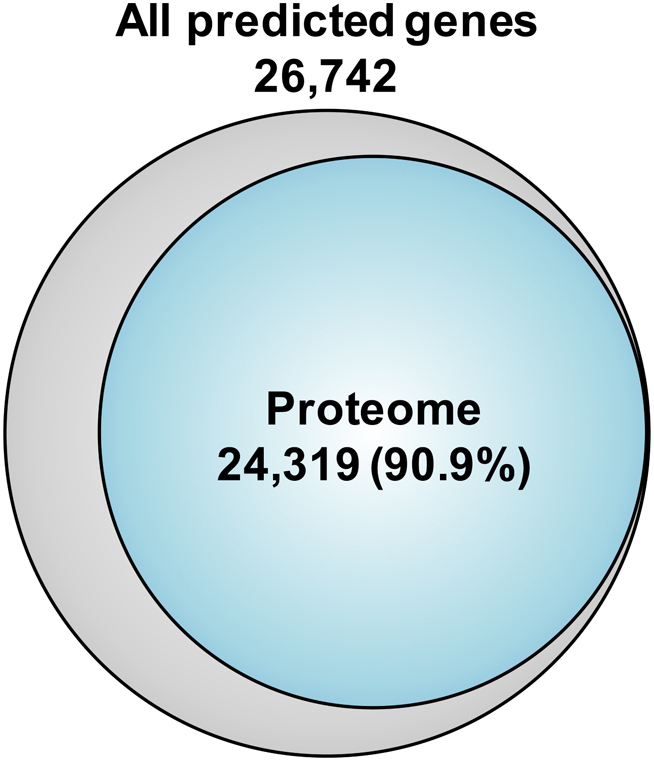 Figure 1
 Figure 2
 Figure 3
 Figure 4
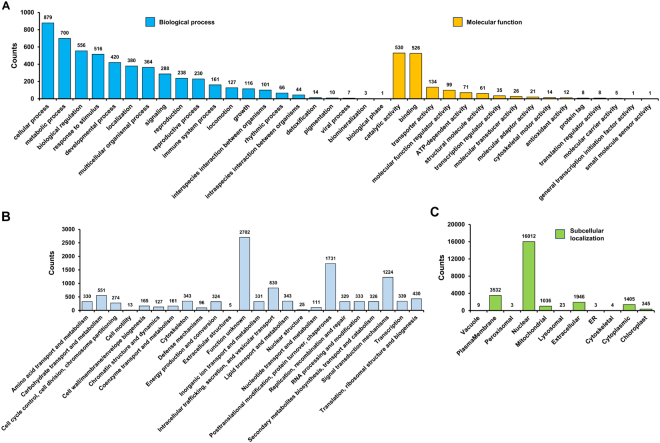 Figure 5
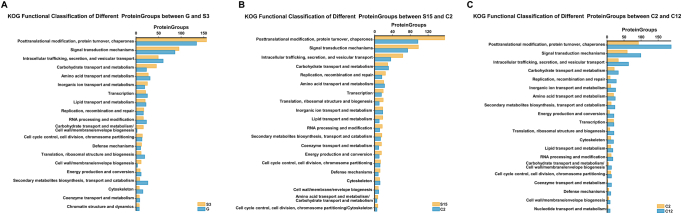 Figure 6
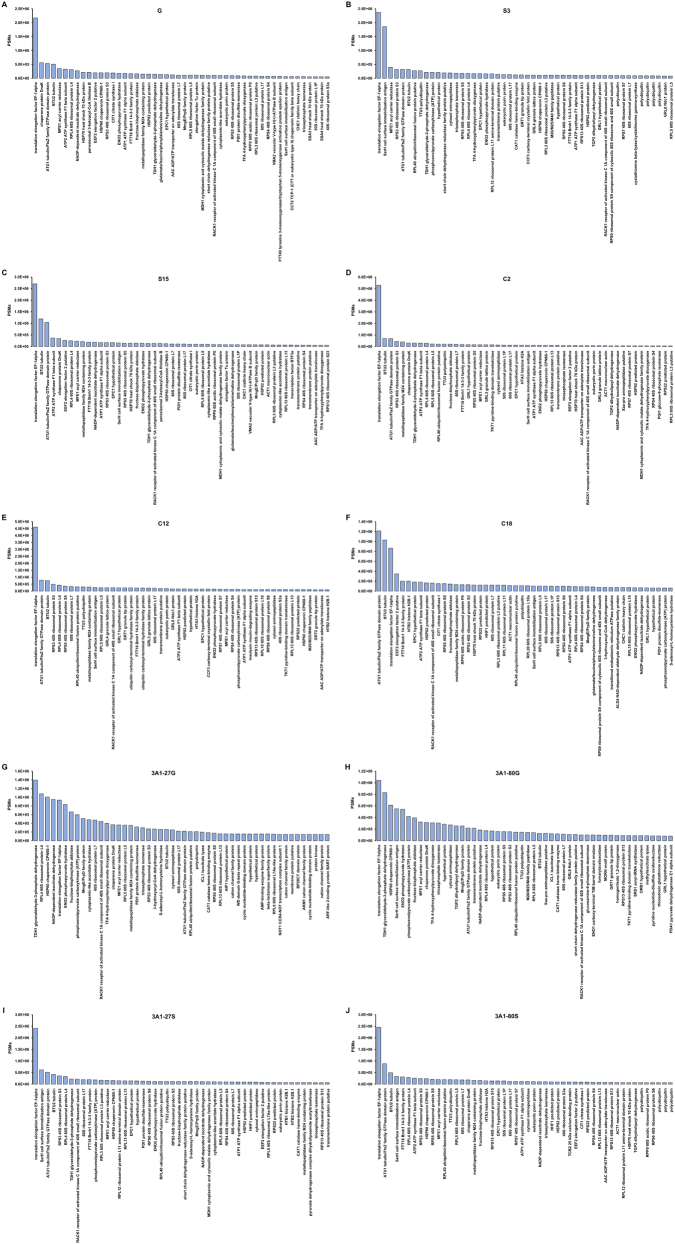 Figure 7
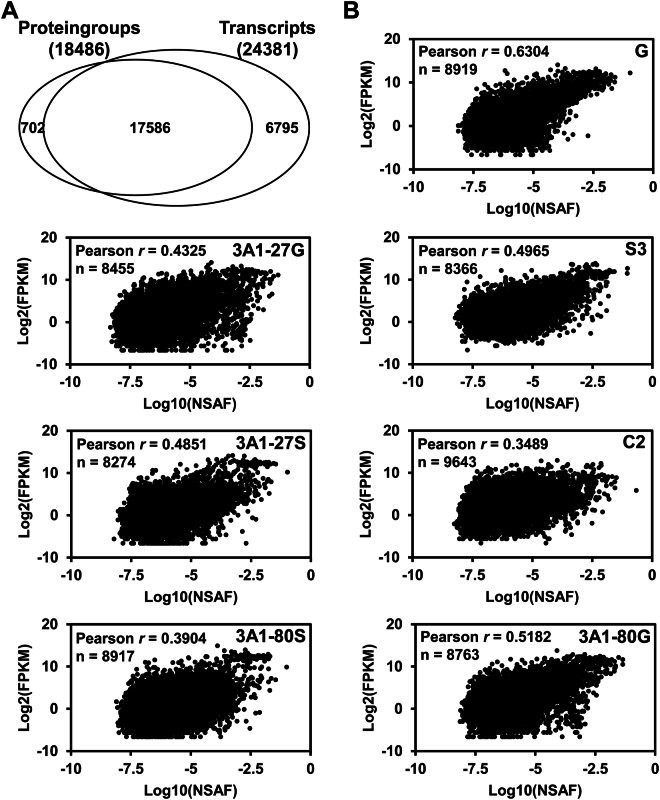 Figure 8
 Figure 9
 Figure 10
 Figure 11
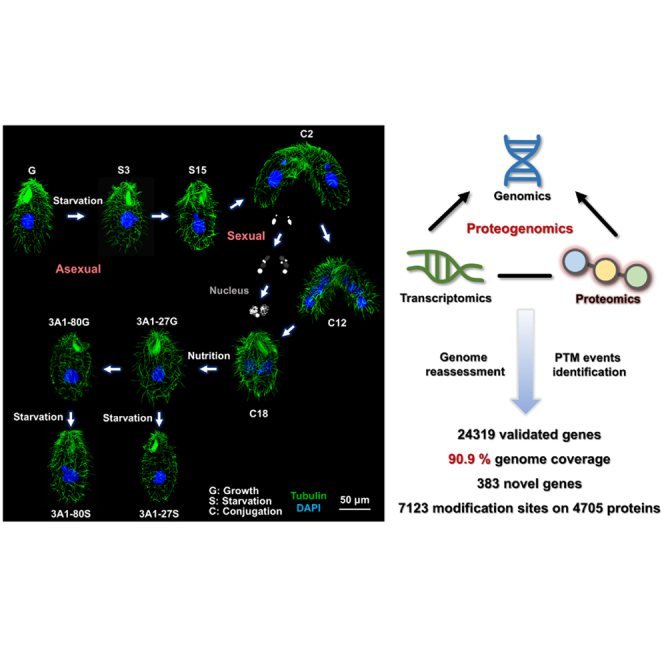 Figure 12
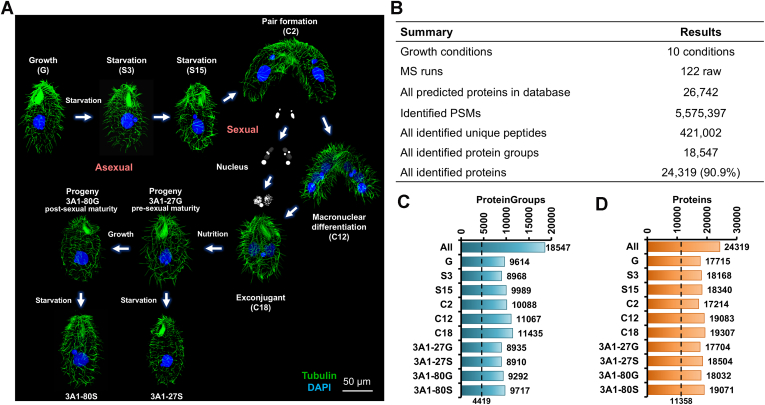 Figure 13
 Figure 14
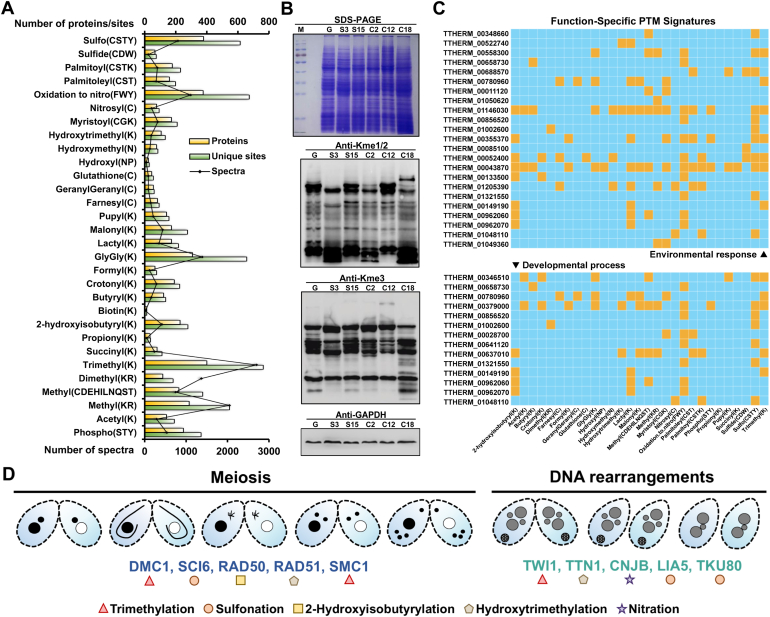 Figure 15
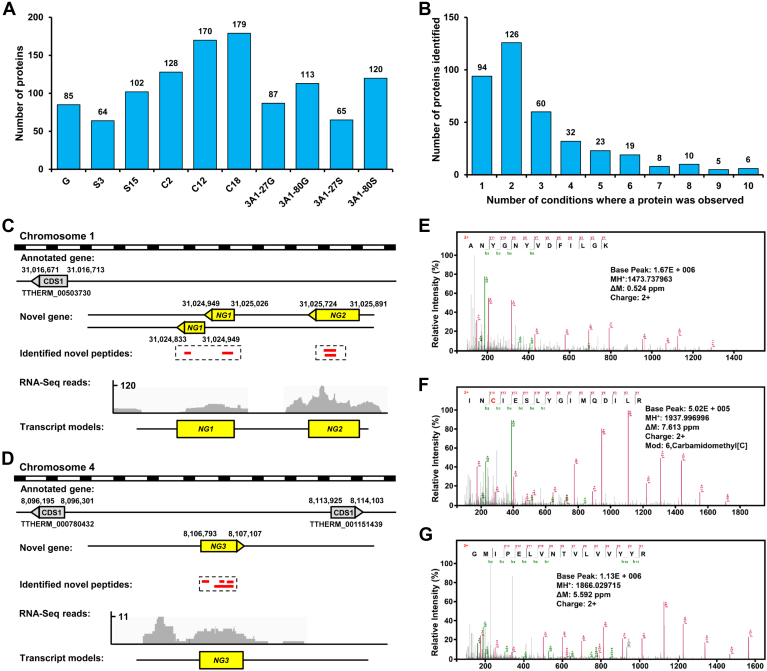 Figure 16
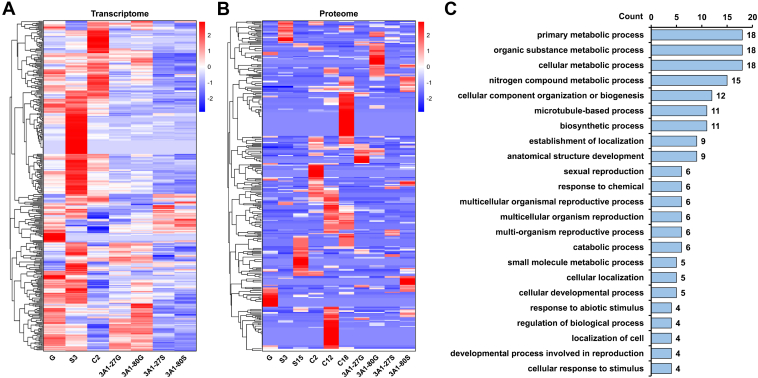 Figure 17
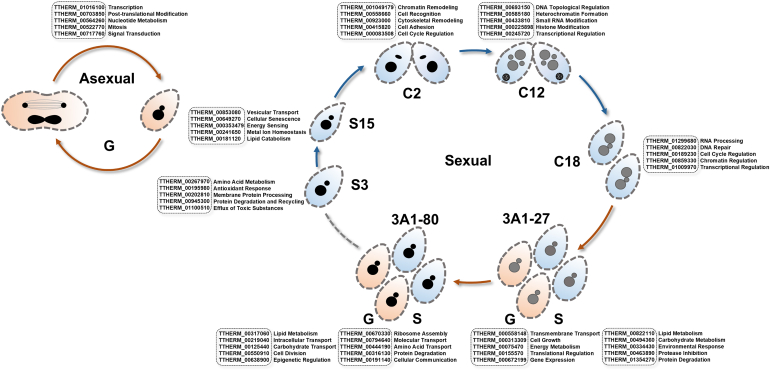 Figure 18
Peer Reviews
No public reviews on file for this paper yet. If you reviewed it on a platform where reviews are public (OpenReview, ICLR, NeurIPS, ICML), you can paste yours below so the community can read it here.
Videos
No videos yet. Explain this paper in a talk, walkthrough, or lecture? Add one.
Taxonomy
TopicsProtist diversity and phylogeny · Microbial Community Ecology and Physiology · Environmental DNA in Biodiversity Studies