Modern antiseptics against multidrug-resistant Pseudomonas aeruginosa, emerging from war-related injuries in Ukraine
Oleksandr Nazarchuk, Kristian Riesbeck, Valentyn Kovalchuk, Tetiana Denysko, Mariia Faustova, Roman Chornopyshchuk, Halyna Nazarchuk, Oleg Parkhomenko, Nataliia Bahniuk, Dmytro Dmytriiev, Vasyl Nagaichuk

TL;DR
This study tests modern antiseptics against drug-resistant Pseudomonas aeruginosa from war injuries in Ukraine, finding some are effective against biofilms and resistant strains.
Contribution
The study evaluates the efficacy of modern antiseptics against MDR P. aeruginosa, particularly their impact on biofilm formation and eradication.
Findings
Decamethoxine and polyhexanide showed the highest antimicrobial activity against MDR P. aeruginosa.
Octenidine was most effective in inhibiting immature biofilm formation and partially eradicating mature biofilms.
Chlorhexidine stimulated mature biofilm growth, while most antiseptics at half concentration partially eradicated biofilms.
Abstract
Susceptibility testing of clinical multidrug-resistant (MDR) and reference P. aeruginosa strains was performed using the standard twofold serial dilution method. The minimum inhibitory concentration (MIC) and minimum bactericidal concentration (MBC) of antiseptics were determined. MIC and MBC values were also interpreted as the bacteriostatic index of antiseptic activity (BSIAA) and the bactericidal index of antiseptic activity (BCIAA). The ability of strains to form biofilms, the inhibition of biofilm formation, and the destruction of mature biofilms under the influence of bacteriostatic, bactericidal, and ½ of the initial antiseptic concentration were modeled using Christensen’s test. Antiseptics from the detergent group, decamethoxine (0.1 and 0.02%) and polyhexanide (0.1%), demonstrated the highest antimicrobial activity. Their bacteriostatic concentrations were 63.2 ± 5.2 μg/mL and…
Genes, proteins, chemicals, diseases, species, mutations and cell lines named across the full text — each resolved to its canonical identifier and authoritative record.
Click any figure to enlarge with its caption.
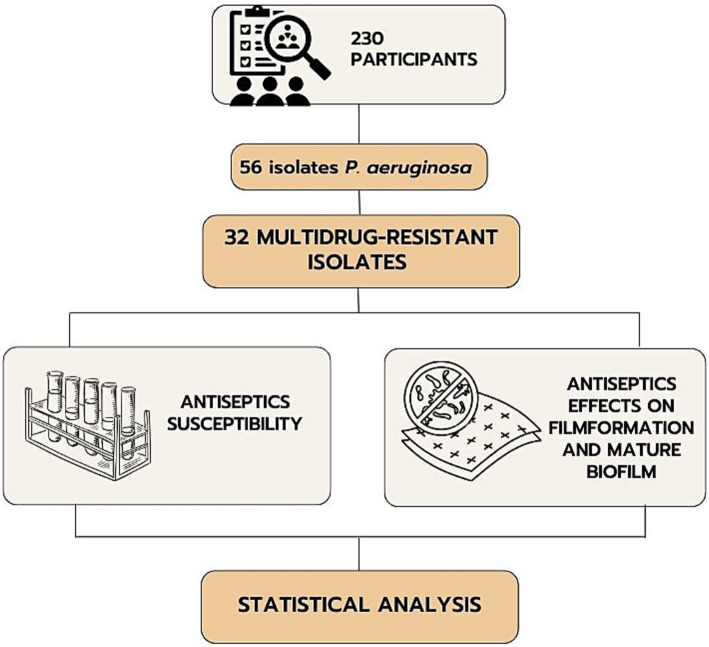 Figure 1
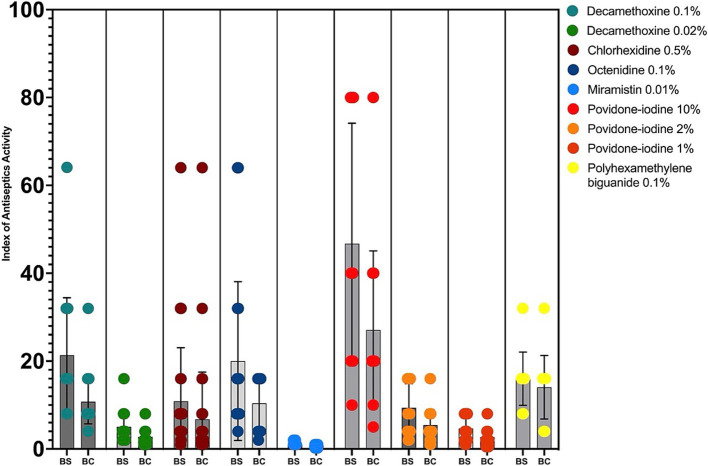 Figure 2
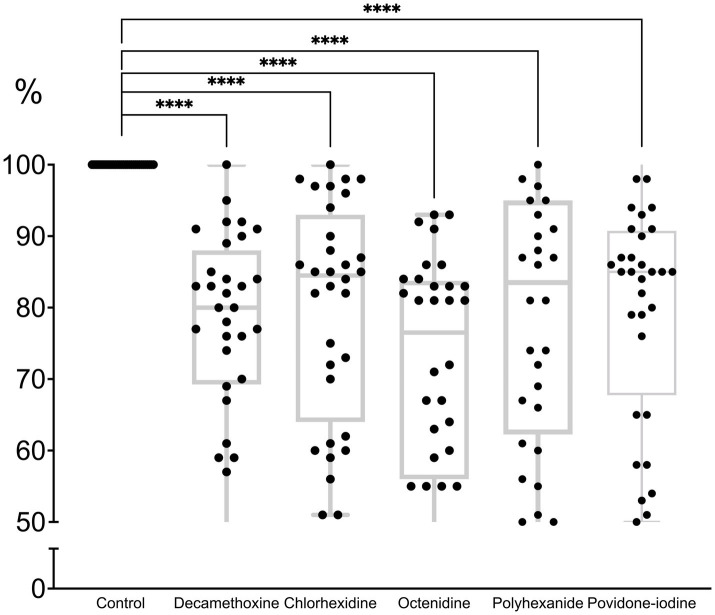 Figure 3
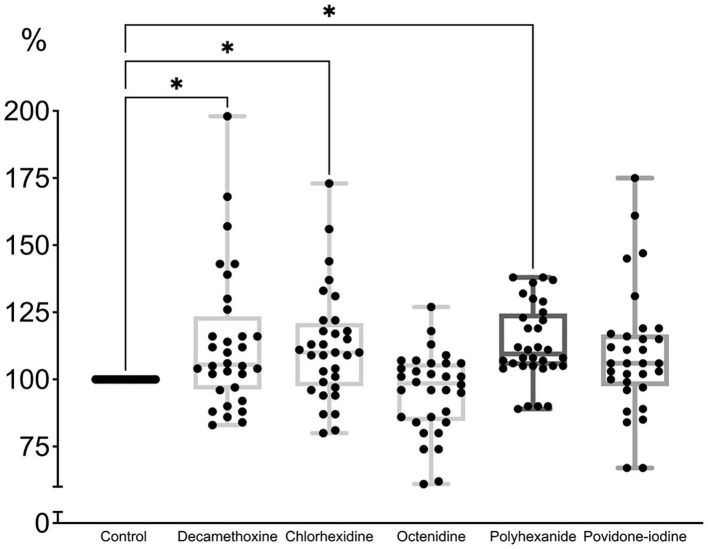 Figure 4
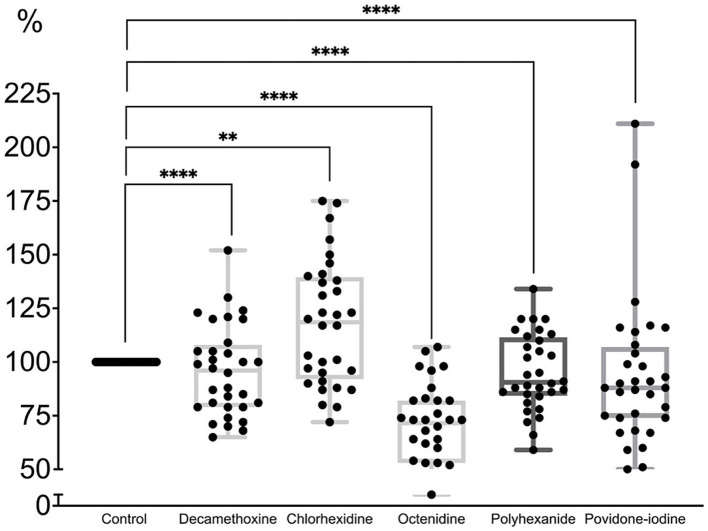 Figure 5
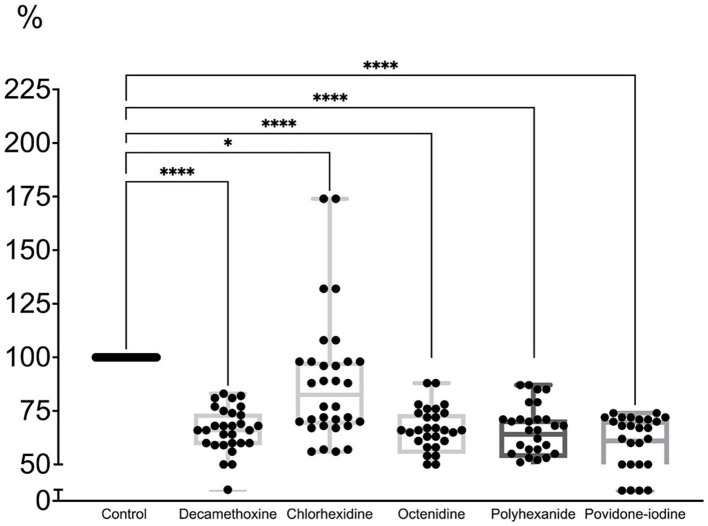 Figure 6
Peer Reviews
No public reviews on file for this paper yet. If you reviewed it on a platform where reviews are public (OpenReview, ICLR, NeurIPS, ICML), you can paste yours below so the community can read it here.
Videos
No videos yet. Explain this paper in a talk, walkthrough, or lecture? Add one.
Taxonomy
TopicsAntibiotic Resistance in Bacteria · Antimicrobial agents and applications · Bacterial biofilms and quorum sensing