Mitophagy as a therapeutic target for exercise-induced fatigue: modulation by natural compounds and mechanistic insights
Miao Yu, Xiujuan Jiang, Yingxin Zhang, Wensi Zhang, Tianlong Wang, Jialin Wang, Junwei Shao, Lixin Zhang, Yiting Sun, Xianglong Meng, Xiaohong Li, Xianjun Liu

TL;DR
This paper explores how mitophagy, the process of removing damaged mitochondria, can be a target for treating exercise-induced fatigue, especially through natural compounds.
Contribution
The paper introduces novel strategies for developing natural anti-fatigue agents by modulating mitophagy pathways.
Findings
Mitophagy pathways like PINK1/Parkin and BNIP3/Nix are key in managing exercise-induced fatigue.
Natural compounds such as sulforaphane and ginseng modulate mitophagy to reduce fatigue.
A mitophagy threshold exists across different models, suggesting its therapeutic potential.
Abstract
Exercise-induced fatigue is closely associated with mitochondrial dysfunction, and mitophagy plays a critical role in maintaining mitochondrial homeostasis by clearing damaged mitochondria and reducing oxidative stress. This review systematically summarizes current evidence on the regulatory mechanisms of mitophagy in exercise-induced fatigue, particularly through pathways such as PINK1/Parkin, BNIP3/Nix, FUNDC1, and AMPK, and examines how natural compounds including sulforaphane, Rhodiola crenulata, ginseng, modulate these pathways to alleviate fatigue. These findings suggest the presence of mitophagy threshold in different models and highlight its potential as a therapeutic target for fatigue management. Ultimately, this review proposes novel strategies for developing natural anti-fatigue agents based on mitophagy regulation, while underscoring the need for further mechanistic studies…
Genes, proteins, chemicals, diseases, species, mutations and cell lines named across the full text — each resolved to its canonical identifier and authoritative record.
Click any figure to enlarge with its caption.
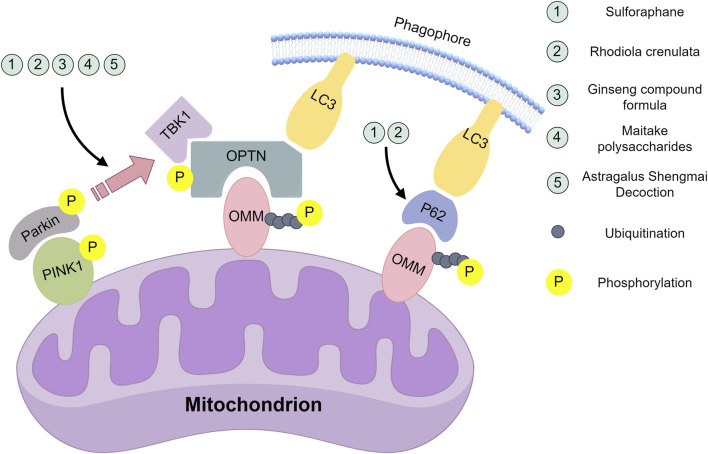 Figure 1
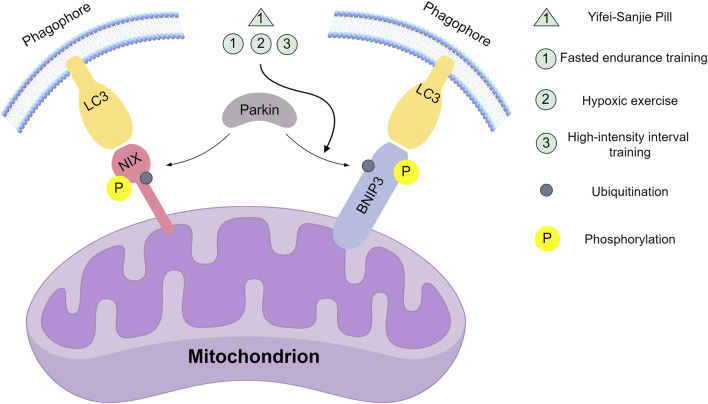 Figure 2
Peer Reviews
No public reviews on file for this paper yet. If you reviewed it on a platform where reviews are public (OpenReview, ICLR, NeurIPS, ICML), you can paste yours below so the community can read it here.
Videos
No videos yet. Explain this paper in a talk, walkthrough, or lecture? Add one.
Taxonomy
TopicsAutophagy in Disease and Therapy · Medicinal Plants and Bioactive Compounds · Exercise and Physiological Responses