A Rare Case of t(1; 19) Translocation in Acute Myeloid Leukemia: Evaluation of a High-Risk Patients
Songül Beskisiz Dönen, Abdullah Karakuş, Mehmet Orhan Ayyıldız

TL;DR
This paper reports a rare chromosomal translocation in a high-risk AML case, emphasizing its diagnostic and treatment challenges.
Contribution
The novelty lies in presenting a rare t(1; 19) translocation in AML and its clinical implications.
Findings
The t(1; 19) translocation is a rare genetic aberration in AML.
This case highlights the diagnostic and therapeutic challenges of rare translocations in AML.
The case contributes to understanding high-risk AML and clinical decision-making.
Abstract
Acute Myeloid Leukemia (AML) is a heterogeneous malignancy arising from the malignant transformation of hematopoietic stem cells, characterized by the accumulation of blasts in the myeloid lineage. While common cytogenetic alterations in AML play a critical role in prognostic classification, rare chromosomal translocations may have distinct impacts on disease biology and treatment response. In this report, we present a high-risk AML case harboring the t(1; 19) translocation. By highlighting the diagnostic and therapeutic challenges posed by this uncommon genetic aberration, this case aims to contribute to clinical practice in the field of hematology.
Genes, proteins, chemicals, diseases, species, mutations and cell lines named across the full text — each resolved to its canonical identifier and authoritative record.
Click any figure to enlarge with its caption.
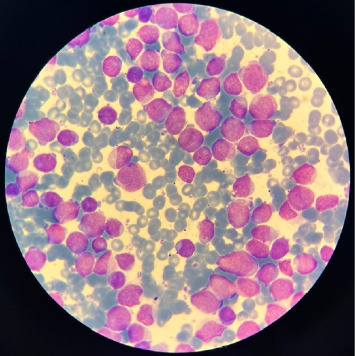 Figure 1
Peer Reviews
No public reviews on file for this paper yet. If you reviewed it on a platform where reviews are public (OpenReview, ICLR, NeurIPS, ICML), you can paste yours below so the community can read it here.
Videos
No videos yet. Explain this paper in a talk, walkthrough, or lecture? Add one.
Taxonomy
TopicsAcute Myeloid Leukemia Research · Chronic Myeloid Leukemia Treatments · Retinoids in leukemia and cellular processes