Potentially MOdifiable factors To ImproVe outcomes of mechanically Ventilated patients in a low-income country Intensive Care Units (MOTIVATE-ICU): rationale and protocol for a registry-embedded prospective observational study
Cornelius Sendagire, Luigi Pisani, Alice Nuwagira, Adam Hewitt-Smith, Jane Nakibuuka, Herbert Kiwalya, Nodreen Christine Ayupo, Dominic Ogwal, Dennis Kakaire, Patience Atumanya, Betty Khainza, Hajara Nakayiza, Hawa Nakandi, Kenneth Tomanya, Martha Alupo, Lameck Ssemogerere

TL;DR
This study aims to find factors in intensive care units in Uganda that can be changed to improve outcomes for patients on ventilators.
Contribution
This is Uganda’s first multicenter ICU study to systematically assess modifiable factors affecting ventilated patient outcomes.
Findings
The study will identify potentially modifiable ICU factors linked to patient outcomes in low-income settings.
It will use high-quality registry data to explore associations between care processes and mortality or length of stay.
A sub-study will examine tracheostomy-related outcomes among ventilated patients.
Abstract
To identify modifiable intensive care unit factors associated with outcomes among patients receiving invasive mechanical ventilation in a low-income setting. This prospective, multicenter, registry-embedded observational study has two components: a prospective registry-based cohort assessing patient- and care-process-related factors and a cross-sectional intensive care unit survey evaluating organizational structure. Functional intensive care units in Uganda will be included. Patients aged ≥ 15 years old requiring invasive mechanical ventilation will be enrolled. Patients extubated within 48 hours, transferred after > 24 hours, and imminent early death will be excluded. Primary outcomes will include 28-day intensive care unit mortality, intensive care unit length of stay, and mechanical ventilation duration. Tracheostomy-related outcomes will be explored in a pre-planned sub-study.…
Genes, proteins, chemicals, diseases, species, mutations and cell lines named across the full text — each resolved to its canonical identifier and authoritative record.
Click any figure to enlarge with its caption.
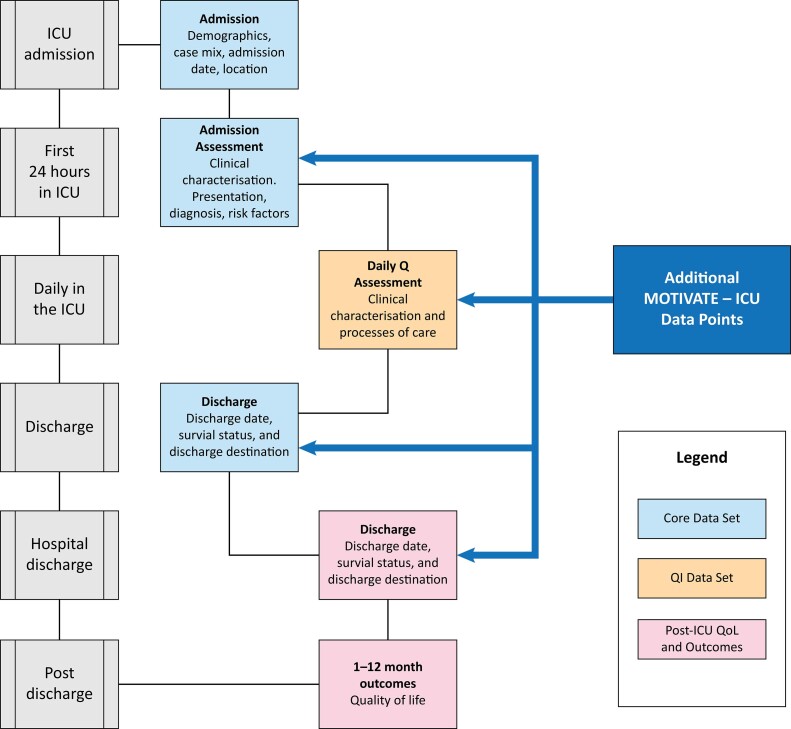 Figure 1
Peer Reviews
No public reviews on file for this paper yet. If you reviewed it on a platform where reviews are public (OpenReview, ICLR, NeurIPS, ICML), you can paste yours below so the community can read it here.
Videos
No videos yet. Explain this paper in a talk, walkthrough, or lecture? Add one.
Taxonomy
TopicsSepsis Diagnosis and Treatment · Respiratory Support and Mechanisms · Trauma and Emergency Care Studies