VENTIlatory strategies for patients with severe traumatic brain injury in the LOw- and Middle-Income CountrieS. The VENTILOMICS survey
Hemanshu Prabhakar, Charu Mahajan, Indu Kapoor, Gentle S. Shrestha, Edoardo Picetti, Chiara Robba, Marcus J. Schultz, Mani Kalaivani, Walter Videtta, Walter Videtta, Gisele Sampaio, Simon P. Gutierrez, Andres M. Rubiano, Manuel Jibaja, Ananya Abate, Yanet Pina Arruebarrena

TL;DR
This study examines how healthcare professionals in low- and middle-income countries manage ventilatory care for patients with severe traumatic brain injury.
Contribution
The study provides insights into ventilatory practices in resource-limited settings and highlights the need for tailored guidelines.
Findings
Most respondents use 6-8mL/kg tidal volumes for patients with high or medium oxygen ratios.
Lower tidal volumes (4-6mL/kg) are preferred for patients with low oxygen ratios.
Lower positive end-expiratory pressure is used for patients with intracranial hypertension.
Abstract
To revisit the VENTIlatory Strategies for Patients with Severe Traumatic Brain Injury (VENTILO) survey, focusing on ventilatory management practices among healthcare professionals in low- and middle-income countries. A cross-sectional on-line survey, VENTIlatory strategies for patients with severe traumatic brain injury in the LOw- and Middle-Income CountrieS (VENTILOMICS), was conducted using the original VENTILO survey questionnaire, developed following a review of literature on respiratory management in traumatic brain injury patients, captured demographics of participants, type of hospital/specialty and available neuromonitoring tools; protocols for mechanical ventilation and weaning, and respiratory management strategies. Descriptive statistics were computed for all study variables. We analyzed data based on the economic status of the low- and middle-income countries. There were…
Genes, proteins, chemicals, diseases, species, mutations and cell lines named across the full text — each resolved to its canonical identifier and authoritative record.
Click any figure to enlarge with its caption.
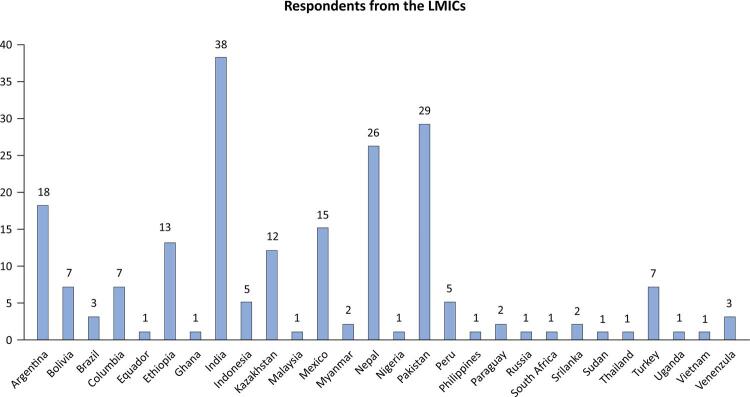 Figure 1
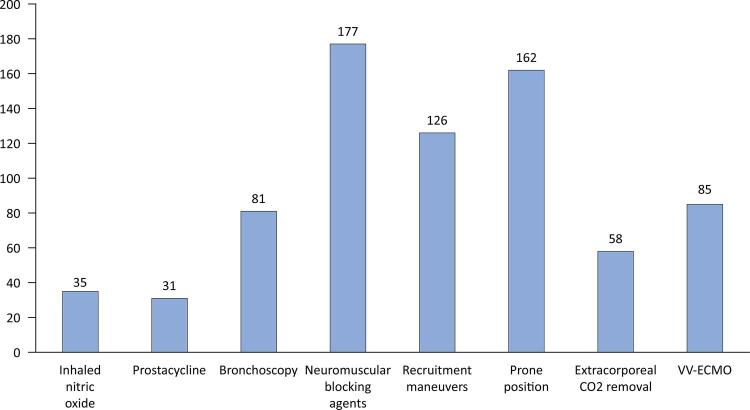 Figure 2
Peer Reviews
No public reviews on file for this paper yet. If you reviewed it on a platform where reviews are public (OpenReview, ICLR, NeurIPS, ICML), you can paste yours below so the community can read it here.
Videos
No videos yet. Explain this paper in a talk, walkthrough, or lecture? Add one.
Taxonomy
TopicsRespiratory Support and Mechanisms · Cardiac Arrest and Resuscitation · Traumatic Brain Injury and Neurovascular Disturbances