The PROtective VEntilation (PROVE) Network - advancing research and collaboration in mechanical ventilation
Marcus J. Schultz, Lorenzo Ball, Martin Bernardi, Denise Battaglini, Laura A. Buiteman, Juliana Carvalho Ferreira, Marcelo Gama de Abreu, Silvia De Rosa, Sabrine N. Hemmes, Robert Huhle, Guido Mazzinari, David M.P. van Meenen, Prashant Nasa, Ary Serpa, Paolo Pelosi

TL;DR
The PROVE Network is a global collaboration focused on improving mechanical ventilation practices through research, education, and innovation.
Contribution
The PROVE Network advances mechanical ventilation research by fostering global collaboration, mentorship, and evidence-based strategies.
Findings
The PROVE Network has contributed to optimal ventilation strategies for critically ill patients, including those with COVID-19.
The network promotes closed-loop ventilation systems and integrates AI for personalized ventilation solutions.
It emphasizes mentorship, diversity, and inclusivity to drive innovation in mechanical ventilation.
Abstract
The PROtective VEntilation (PROVE) Network is a globally-recognized collaborative research group dedicated to advancing research, education, and collaboration in the field of mechanical ventilation. Established to address critical questions in intraoperative and intensive care ventilation, the network focuses on improving outcomes for patients undergoing mechanical ventilation in diverse settings, including operating rooms, intensive care units, burn units, and resource-limited environments in low- and middle-income countries. The PROVE Network is committed to generating high-quality evidence through a comprehensive portfolio of investigations, including randomized clinical trials, observational research, and meta-analyses. Its work has significantly contributed to understanding optimal ventilation strategies in critically ill patients, such as those with COVID-19, and in exploring…
Genes, proteins, chemicals, diseases, species, mutations and cell lines named across the full text — each resolved to its canonical identifier and authoritative record.
Click any figure to enlarge with its caption.
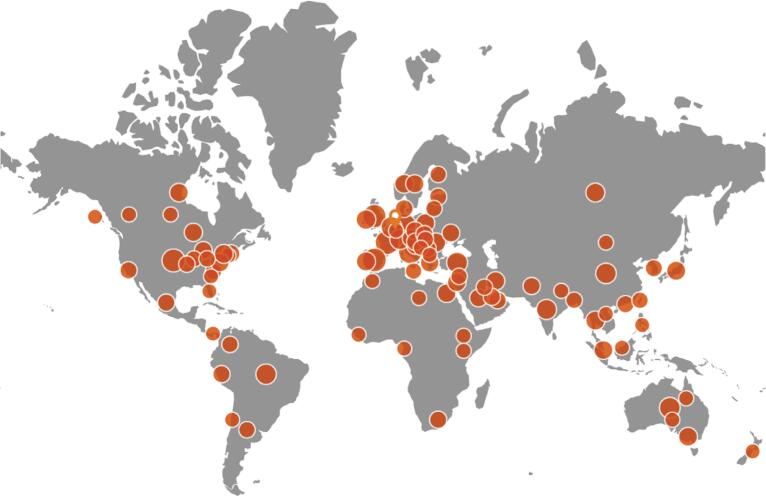 Figure 1
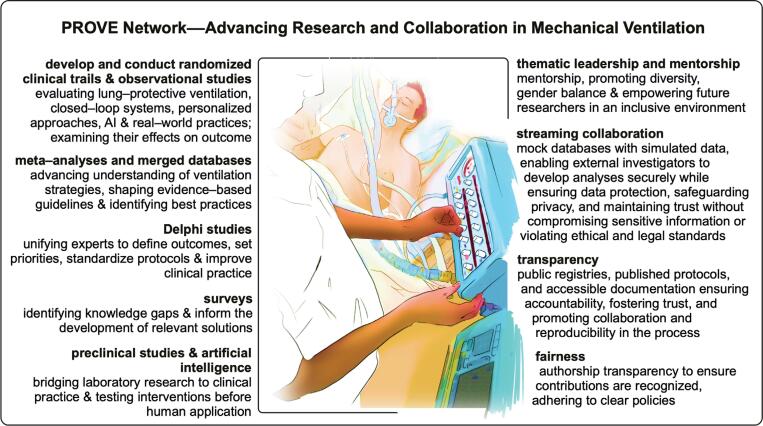 Figure 2
Peer Reviews
No public reviews on file for this paper yet. If you reviewed it on a platform where reviews are public (OpenReview, ICLR, NeurIPS, ICML), you can paste yours below so the community can read it here.
Videos
No videos yet. Explain this paper in a talk, walkthrough, or lecture? Add one.
Taxonomy
TopicsRespiratory Support and Mechanisms · Intensive Care Unit Cognitive Disorders · Cardiac Arrest and Resuscitation