Does the Value of the Faecal Immunochemical Test (FIT) Result Matter, and Can This Be Used as a Triage Criterion for Symptomatic FIT-Positive Patients?
Firuza Soxibova, Neil Muscat, Neeraj Thapa, Naomi MacKenzie

TL;DR
This study explores whether the value of a positive FIT test can help prioritize patients for colon cancer investigations, finding that while high FIT values are more likely to indicate cancer, low values still require caution.
Contribution
The study evaluates the use of FIT test values as a triage tool for symptomatic patients, providing insights into how different FIT ranges correlate with cancer likelihood.
Findings
All 25 colorectal cancers were found in FIT-positive patients, with 52% having FIT values >400.
20% of cancers occurred in patients with low FIT values (11-50 µg/g), indicating low values are not entirely reassuring.
The positive predictive value of FIT for cancer was 11.2%, showing high FIT scores do not always indicate malignancy.
Abstract
Background The Faecal Immunochemical Test (FIT) is a cornerstone in both colorectal cancer (CRC) screening programs and referral pathways for symptomatic patients. The test identifies haemoglobin in stool and, when present, is used as a referral indicator on the suspected CRC pathway. Since its introduction, the number of referrals with a positive FIT has risen, stretching diagnostic capabilities to the limit. This study examines whether the value of the result is significant and, if so, can be used as part of the triage process. Methods This retrospective cohort study analysed patients who underwent FIT as part of a CRC screening program between June 2020 and November 2021 in Wrightington, Wigan and Leigh NHS Foundation Trust. A total of 293 patients contributed clinical data, including FIT scores, presenting symptoms, and diagnostic outcomes. The patients were stratified according…
Genes, proteins, chemicals, diseases, species, mutations and cell lines named across the full text — each resolved to its canonical identifier and authoritative record.
Click any figure to enlarge with its caption.
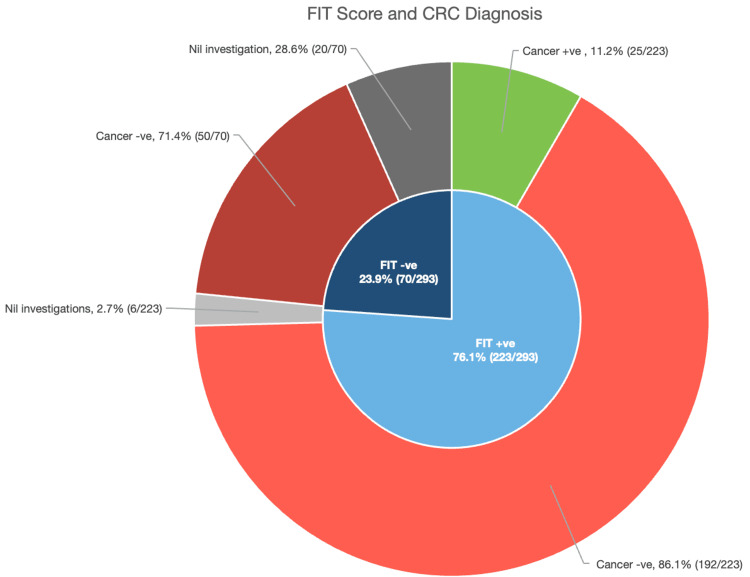 Figure 1
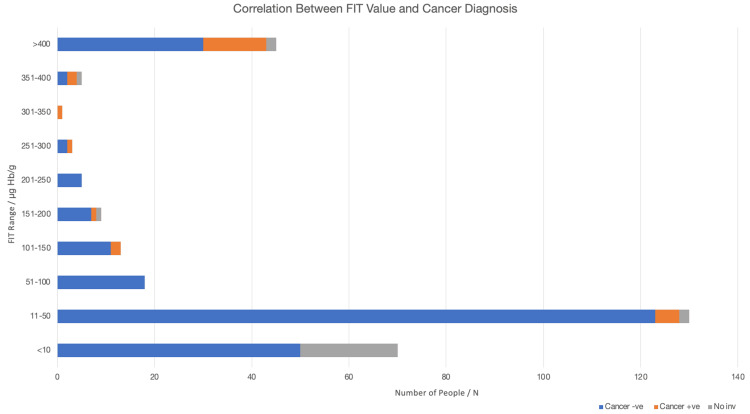 Figure 2
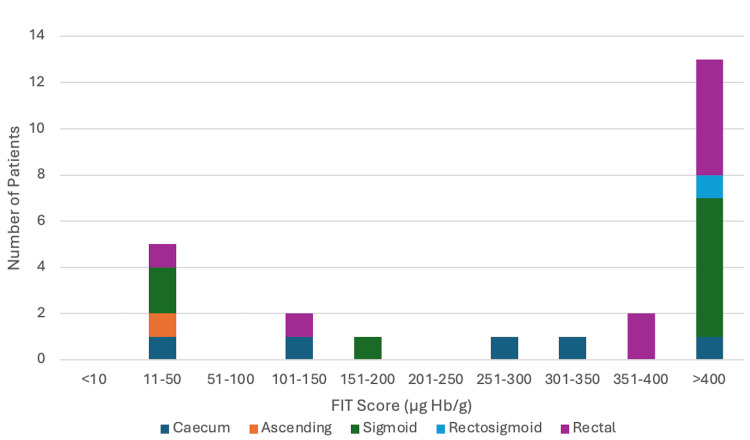 Figure 3
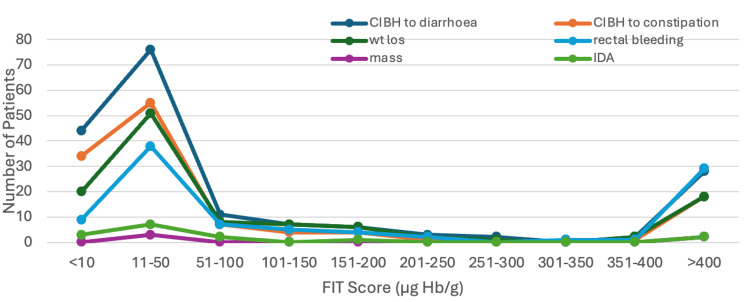 Figure 4
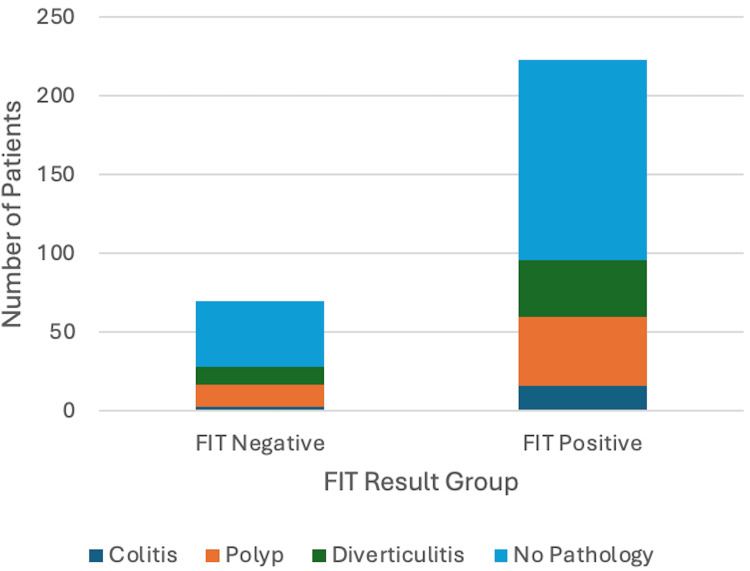 Figure 5
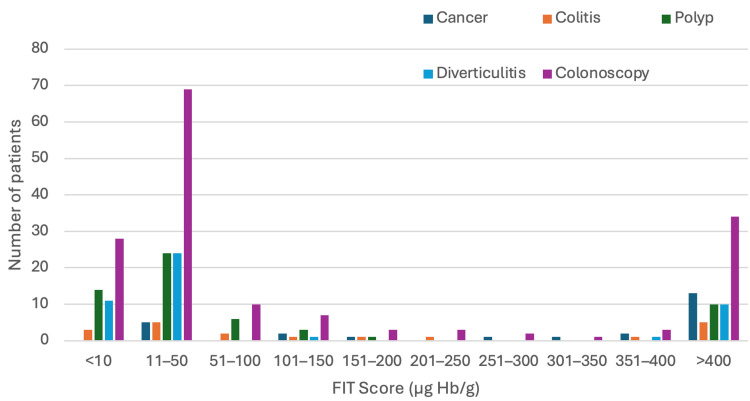 Figure 6
Peer Reviews
No public reviews on file for this paper yet. If you reviewed it on a platform where reviews are public (OpenReview, ICLR, NeurIPS, ICML), you can paste yours below so the community can read it here.
Videos
No videos yet. Explain this paper in a talk, walkthrough, or lecture? Add one.
Taxonomy
TopicsColorectal Cancer Screening and Detection · Diverticular Disease and Complications · Gastrointestinal disorders and treatments