“Case report”: Whole-exome sequencing reveals compound heterozygous variants in the EIF2B5 gene in a familial case of vanishing white matter
Sofía Savy, Francisco A. Montes, Carola L. Grosso, Laura E. Laróvere, Silene M. Silvera-Ruiz, Gerardo H. Carro, Guillermo Guelbert, Adriana Becerra, David Morales, Juan P. Nicola

TL;DR
A 26-year-old woman from a Bolivian family was diagnosed with vanishing white matter after whole-exome sequencing revealed harmful gene variants in EIF2B5.
Contribution
The study reports a novel compound heterozygous variant in EIF2B5 in a non-consanguineous family with vanishing white matter.
Findings
Whole-exome sequencing identified two pathogenic variants in the EIF2B5 gene in a patient with vanishing white matter.
Sanger sequencing confirmed autosomal recessive inheritance and enabled molecular diagnosis of asymptomatic family members.
The case highlights the importance of genetic testing in diagnosing leukodystrophies with atypical presentations.
Abstract
Vanishing white matter (VWM) is a rare autosomal recessive leukodystrophy associated with pathogenic variants in any of the five genes (EIF2B1-5) that encode subunits of the eukaryotic translation initiation factor 2B (eIF2B). Here, we present a case of a 26-year-old female patient from a non-consanguineous Amerindian Bolivian family, with clinical and neuroimaging findings suggestive of early-onset VWM, characterized by slowly progressive neurological deterioration in the absence of ovarian disorder. Whole-exome sequencing revealed a novel pair of compound heterozygous variants in the EIF2B5 gene, confirming the diagnosis of leukodystrophy with VWM and bringing closure to a nearly 20-year diagnostic odyssey. The identified c.318A>T (p.Leu106Phe) and c.1688G>A (p.Arg563Gln) in the EIF2B5 gene were classified as pathogenic and likely pathogenic, respectively, according to the American…
Genes, proteins, chemicals, diseases, species, mutations and cell lines named across the full text — each resolved to its canonical identifier and authoritative record.
Click any figure to enlarge with its caption.
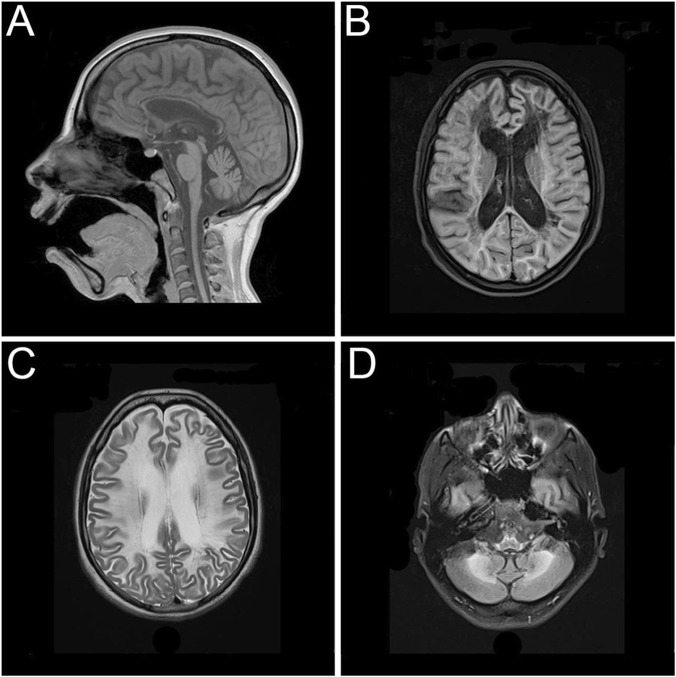 Figure 1
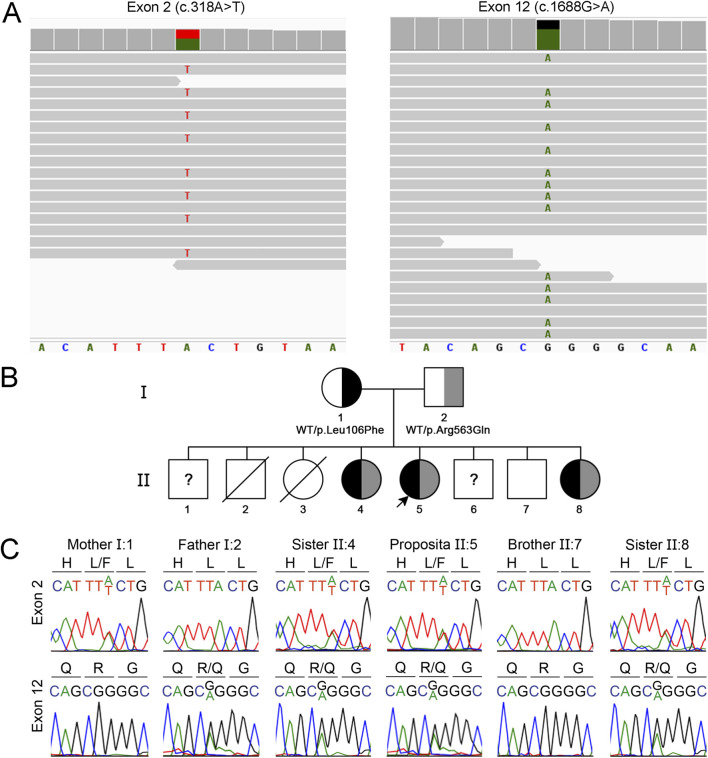 Figure 2
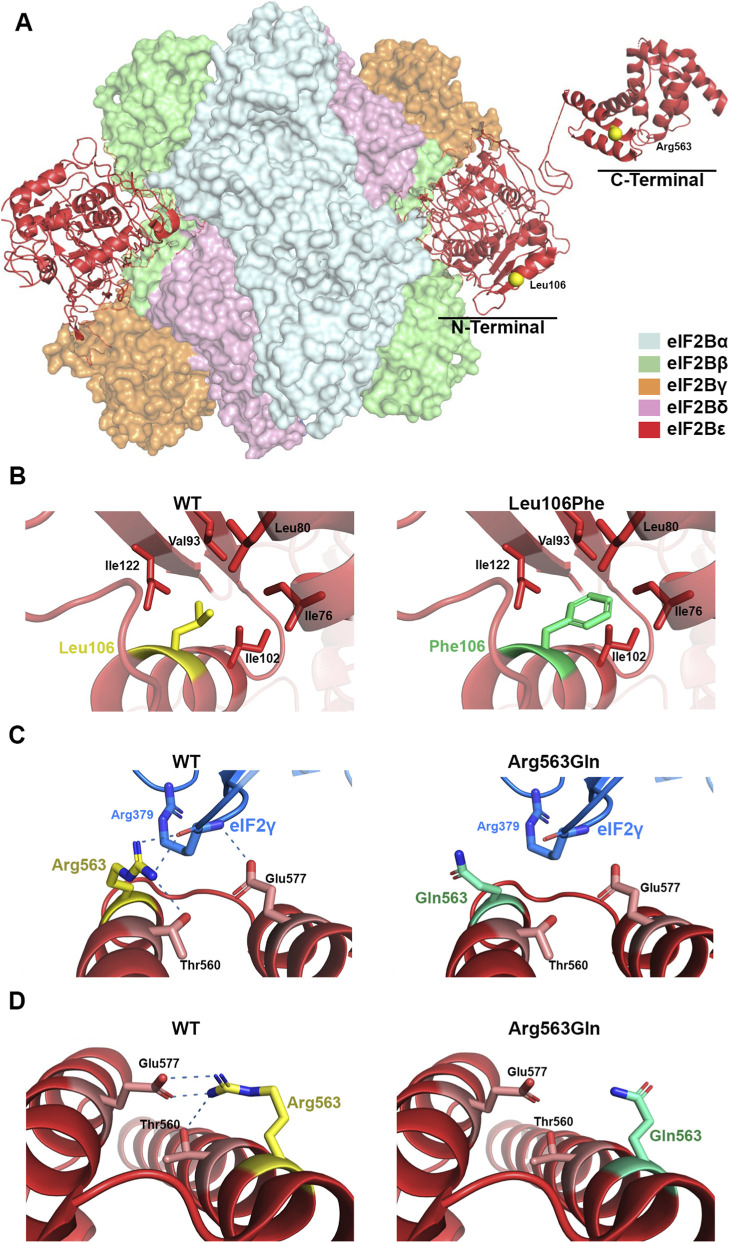 Figure 3
Peer Reviews
No public reviews on file for this paper yet. If you reviewed it on a platform where reviews are public (OpenReview, ICLR, NeurIPS, ICML), you can paste yours below so the community can read it here.
Videos
No videos yet. Explain this paper in a talk, walkthrough, or lecture? Add one.
Taxonomy
TopicsRNA regulation and disease · Neurological diseases and metabolism · RNA and protein synthesis mechanisms