Genomic and epidemiologic characteristics of SARS-CoV-2 persistent infections in California, January 2021 - July 2023
John M. Bell, Jesse Elder, Rahil Ryder, Emily A. Smith, Michelle Scribner, Sabrina Gilliam, Deva Borthwick, Megan Crumpler, Jacek Skarbinski, Christina Morales, Debra A. Wadford, Denis Kainov, Denis Kainov, Denis Kainov

TL;DR
This study identifies and characterizes 69 persistent SARS-CoV-2 infections in California, revealing their genomic and epidemiological traits to better understand virus evolution and public health implications.
Contribution
A framework for detecting persistent SARS-CoV-2 infections using genomic and epidemiologic data, revealing patterns of intra-host evolution and risk factors.
Findings
Persistent infections lasted up to 400 days and showed significant demographic and clinical differences compared to general SARS-CoV-2 cases.
Mutations in the Spike receptor binding domain suggest immune evasion and convergent evolution across persistent infections.
Two notable persistent infections revealed substantial intra-host evolution and viral subpopulation competition.
Abstract
Novel SARS-CoV-2 variants demonstrating considerable intra-host evolution emerged throughout the pandemic. The persistent infections thought to give rise to these variants, however, have been difficult to identify at scale. This study sought to detect and characterize persistent infection cases in California using routine epidemiologic and genomic surveillance data. We identified 69 persistent infection cases with collection dates between January 2021 and July 2023 ranging from 21 to 400 days in duration, with an average of 44 days. Significant differences were identified in age distribution, sex, hospitalizations, and deaths between persistent infection cases and all sequenced California SARS-CoV-2 cases. Underlying health conditions were identified for the majority of cases with available medical records. In these cases, the Spike receptor binding domain was enriched for nonsynonymous…
Genes, proteins, chemicals, diseases, species, mutations and cell lines named across the full text — each resolved to its canonical identifier and authoritative record.
Click any figure to enlarge with its caption.
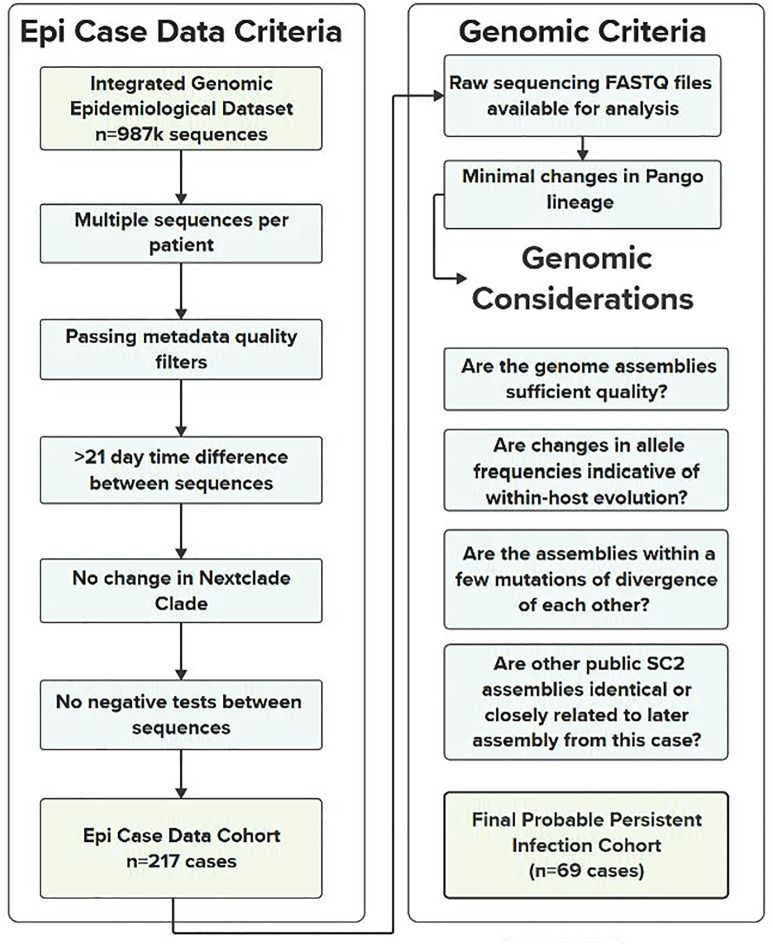 Figure 1
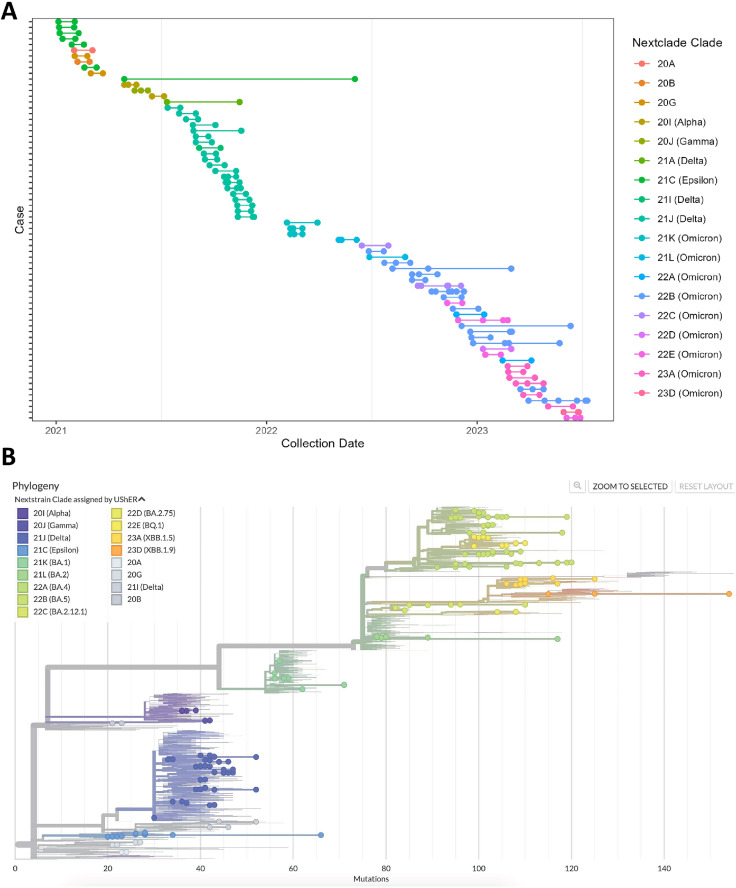 Figure 2
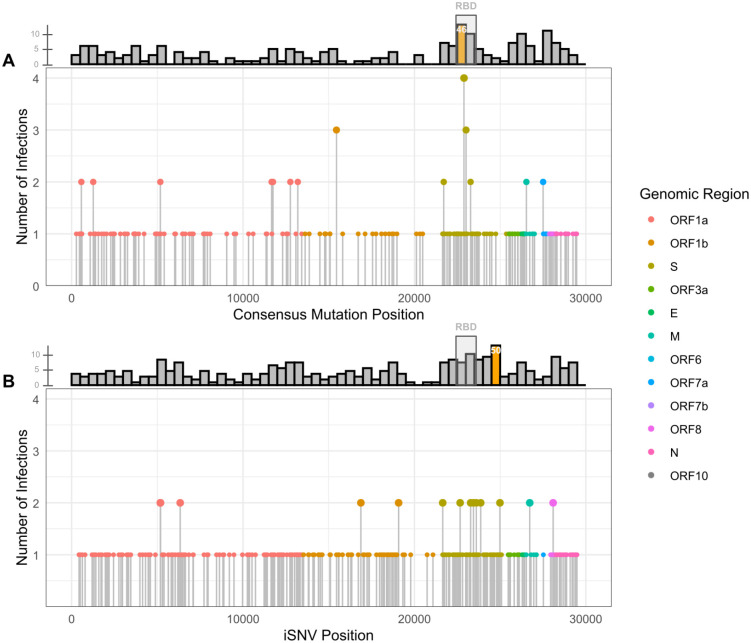 Figure 3
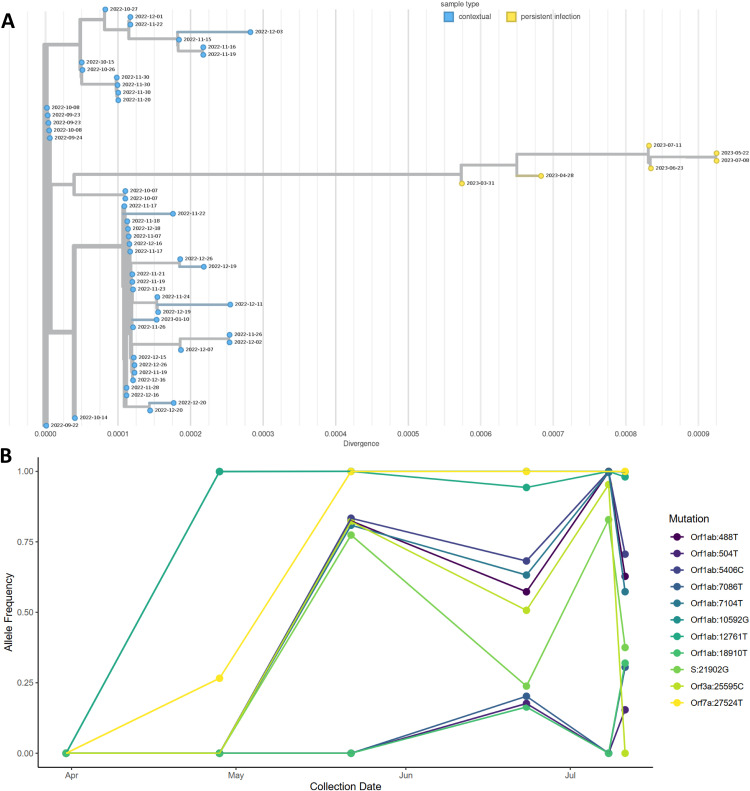 Figure 4
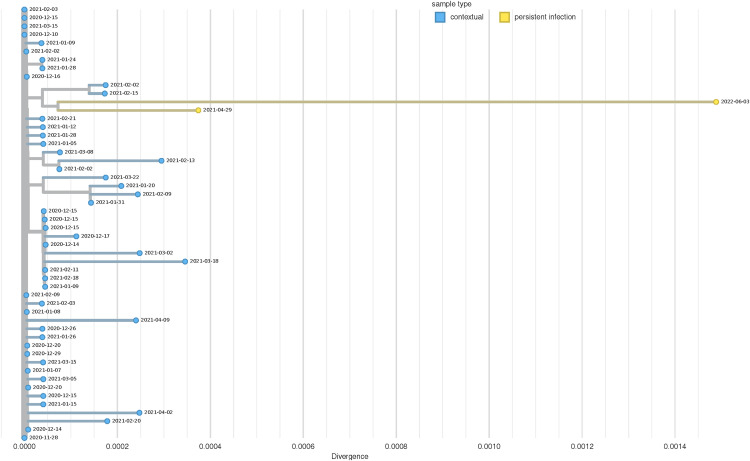 Figure 5
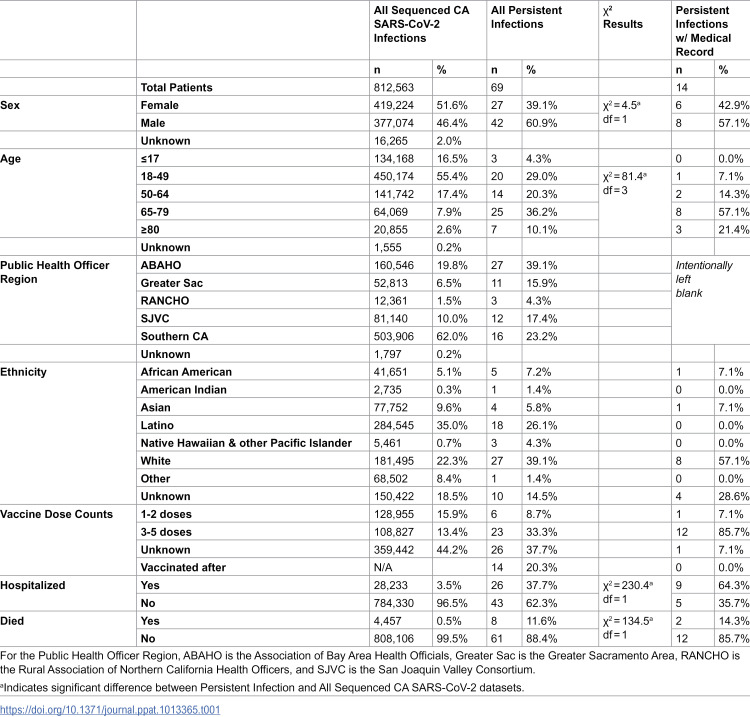 Figure 6
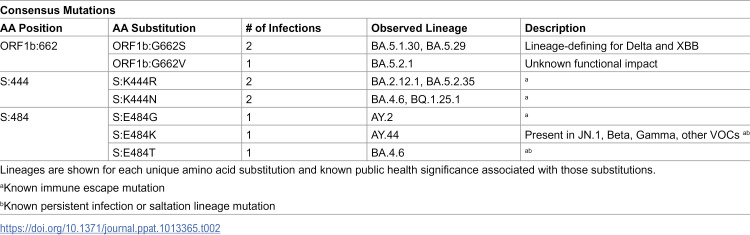 Figure 7
Peer Reviews
No public reviews on file for this paper yet. If you reviewed it on a platform where reviews are public (OpenReview, ICLR, NeurIPS, ICML), you can paste yours below so the community can read it here.
Videos
No videos yet. Explain this paper in a talk, walkthrough, or lecture? Add one.
Taxonomy
TopicsSARS-CoV-2 and COVID-19 Research · COVID-19 Clinical Research Studies · Immune responses and vaccinations