Heterogeneous plasticity of amygdala interneurons in associative learning and extinction
Natalia Favila, Jessica Capece Marsico, Catarina M. Pacheco, Selin Kenet, Benjamin Escribano, Yael Bitterman, Jan Gründemann, Andreas Lüthi, Sabine Krabbe

TL;DR
The study shows that inhibitory interneurons in the amygdala play a flexible role in shaping emotional memories through heterogeneous plasticity during learning and extinction.
Contribution
The study reveals that different interneuron subtypes in the amygdala contribute uniquely to emotional memory encoding and extinction through heterogeneous plasticity.
Findings
Amygdala interneurons show complex and heterogeneous plasticity during memory acquisition, expression, and extinction.
VIP-expressing interneurons respond to salient external stimuli, while SST interneurons align with internal behavioral states.
Molecular identity of interneurons biases their functional roles, influencing excitatory neuron activity and plasticity.
Abstract
Neural circuits undergo experience-dependent plasticity to form long-lasting memories, but how inhibitory interneurons contribute to this process remains poorly understood. Using miniature microscope calcium imaging, we monitored the activity of large amygdala interneuron populations in freely moving mice during fear learning and extinction. Here we show that interneurons exhibit complex and heterogeneous plasticity at both single-cell and ensemble levels across memory acquisition, expression, and extinction. Analysis of molecular interneuron subpopulations revealed that disinhibitory vasoactive intestinal peptide (VIP)-expressing cells are predominantly activated by salient external stimuli, whereas the activity of projection neuron targeting somatostatin (SST) interneurons additionally aligns with internal behavioural states. Although responses within each interneuron subtype are…
Genes, proteins, chemicals, diseases, species, mutations and cell lines named across the full text — each resolved to its canonical identifier and authoritative record.
Click any figure to enlarge with its caption.
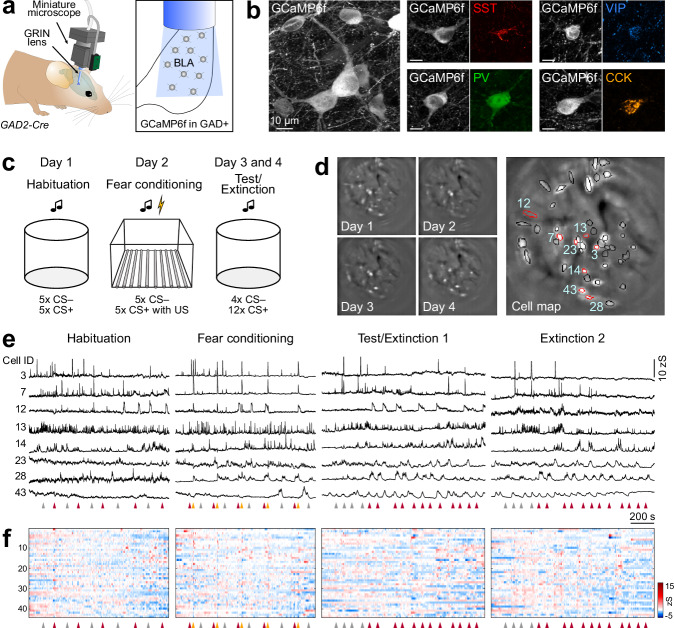 Figure 1
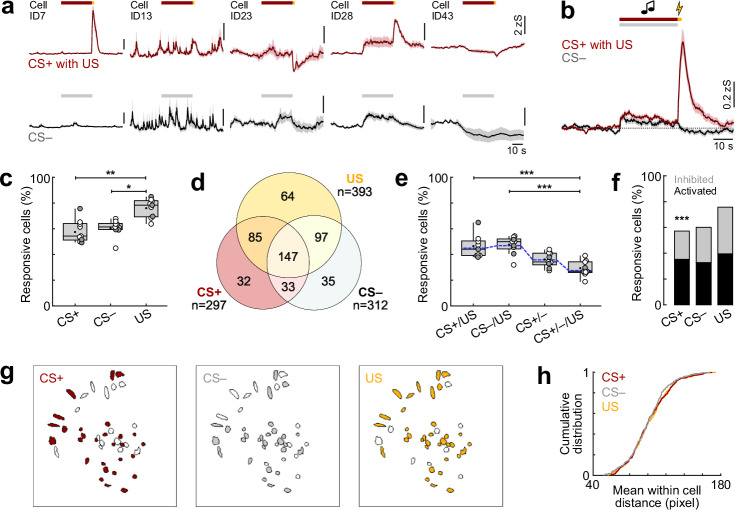 Figure 2
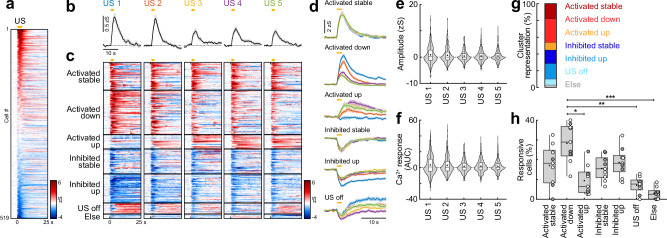 Figure 3
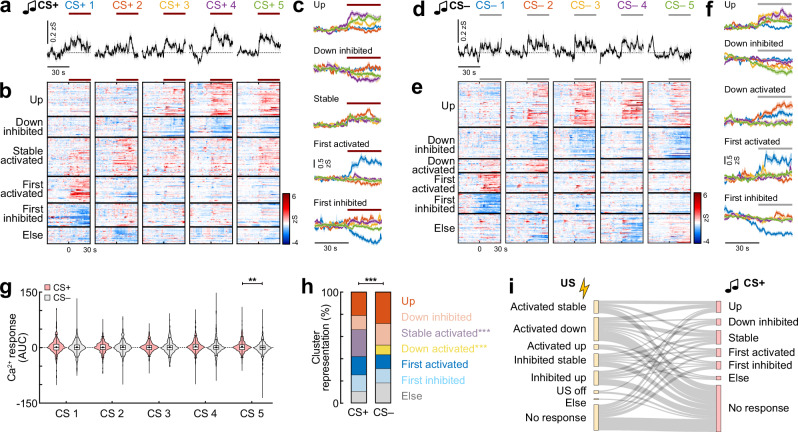 Figure 4
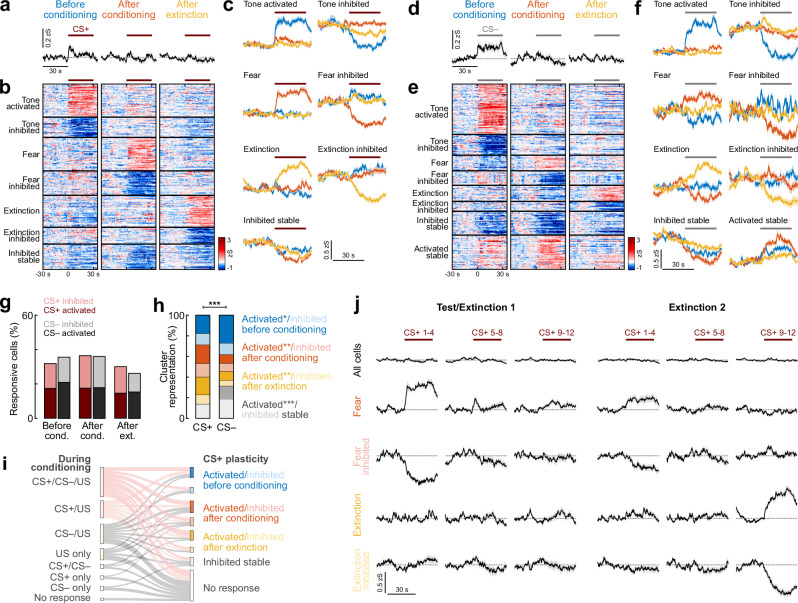 Figure 5
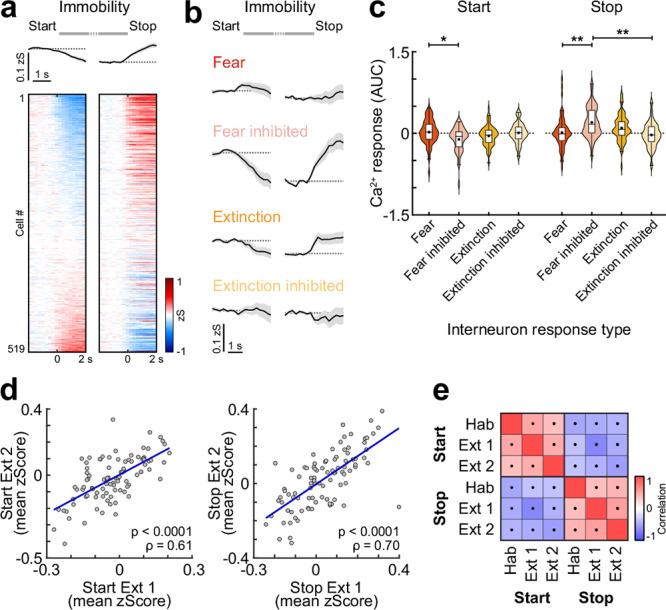 Figure 6
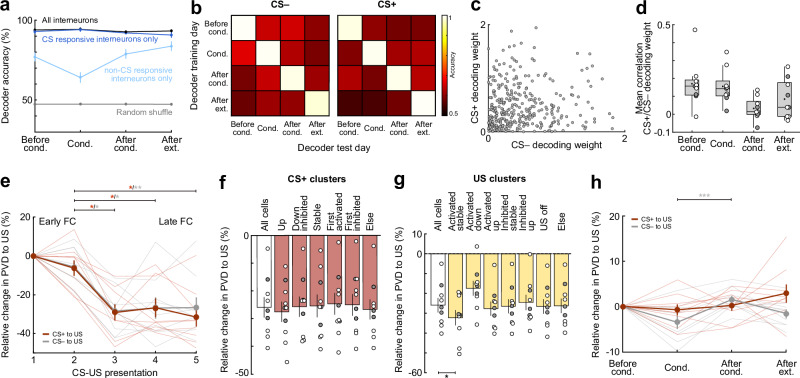 Figure 7
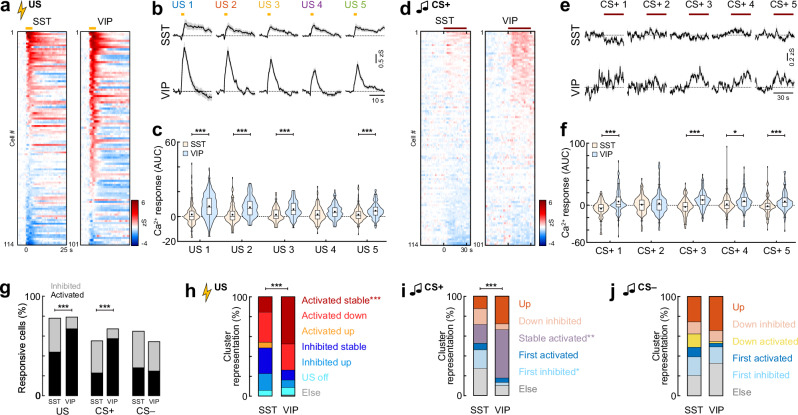 Figure 8
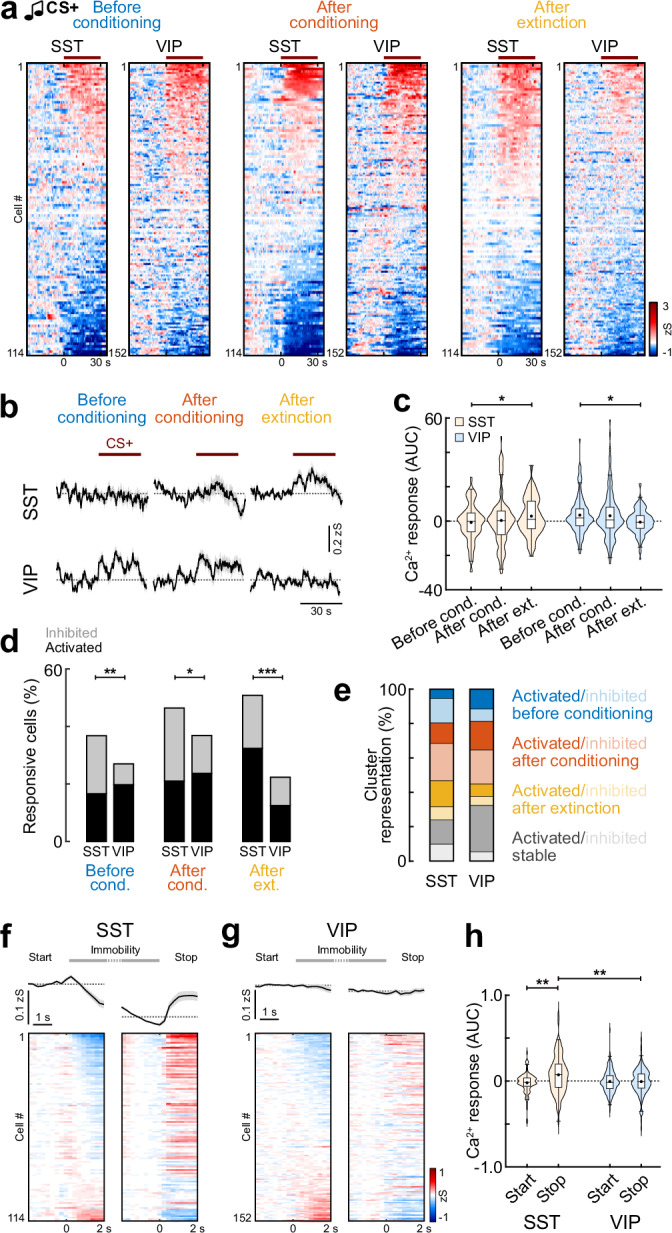 Figure 9
Peer Reviews
No public reviews on file for this paper yet. If you reviewed it on a platform where reviews are public (OpenReview, ICLR, NeurIPS, ICML), you can paste yours below so the community can read it here.
Videos
No videos yet. Explain this paper in a talk, walkthrough, or lecture? Add one.
Taxonomy
TopicsMemory and Neural Mechanisms · Neurogenesis and neuroplasticity mechanisms · Neuroscience and Neuropharmacology Research