The mosaic of Rickettisae from the Caatinga Biome, Brazil: New records and first interactions
João F. Audi Gazeta, Ana Beatriz Pais Borsoi, Karla Bitencourth, Mariana Guimarães Côrtes, Ingrid Benevides Machado, Beatriz Pinheiro Melo da Silva, Robson Cavalcante, Gilberto Salles Gazeta, Nathalie Costa da Cunha, Yazid Abdad, Yazid Abdad, Yazid Abdad, Yazid Abdad

TL;DR
This study identifies new Rickettsia species and tick associations in Ceará, Brazil, expanding understanding of rickettsiosis in the region.
Contribution
First detection of Rickettsia amblyommatis and R. asembonensis in Ceará and the first interaction between Rickettsia parkeri and Amblyomma parvum.
Findings
Rickettsia amblyommatis and R. asembonensis were detected for the first time in northeastern Brazil.
A new association between Rickettsia parkeri and Amblyomma parvum was identified.
The study contributes to understanding the eco-epidemiological profile of Rickettsiae in Ceará.
Abstract
Rickettsiosis are infections that have worldwide distribution, also occurring in all regions of Brazilian territory and being distributed across its various biomes. The most relevant rickettsiosis in Brazil is Spotted Fever (SF), a potentially lethal zoonosis. Although cases of SF have been confirmed in southeastern Brazil, the epidemiological situation in the Northeast remains poorly understood. The aim of this study was to analyze the circulation and identification of Rickettsia species in the state of Ceará, a northeastern state with confirmed SF cases since 2010. In parallel, we identified potential vectors, as to contribute to the development of an eco-epidemiological profile of Rickettsiae in the state. Genomic DNA samples, extracted from ticks collected in areas with suspected cases, were analyzed via PCR to detect Rickettsia spp., with positive samples undergoing further…
Genes, proteins, chemicals, diseases, species, mutations and cell lines named across the full text — each resolved to its canonical identifier and authoritative record.
Click any figure to enlarge with its caption.
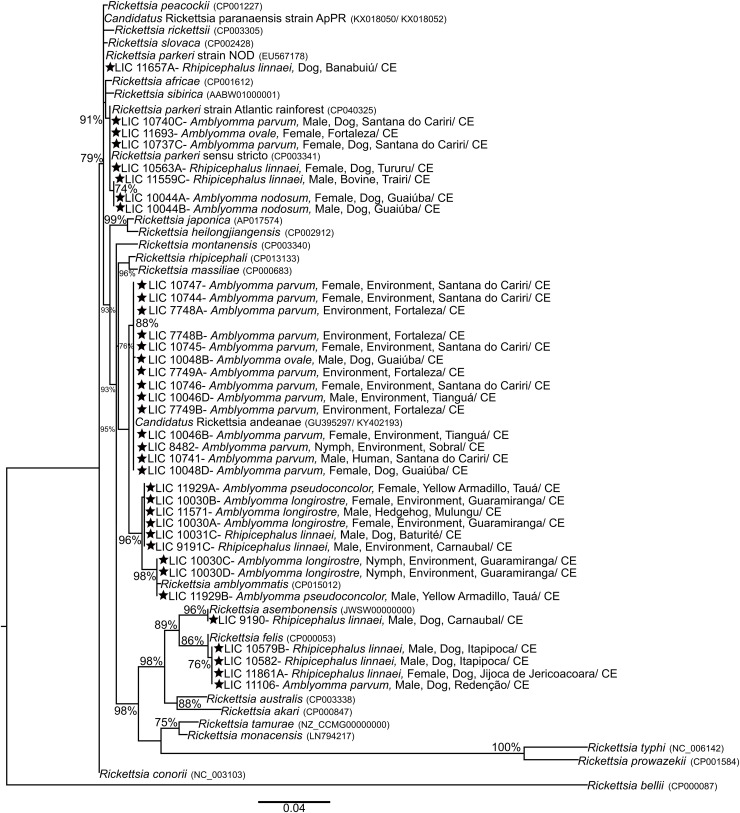 Figure 1
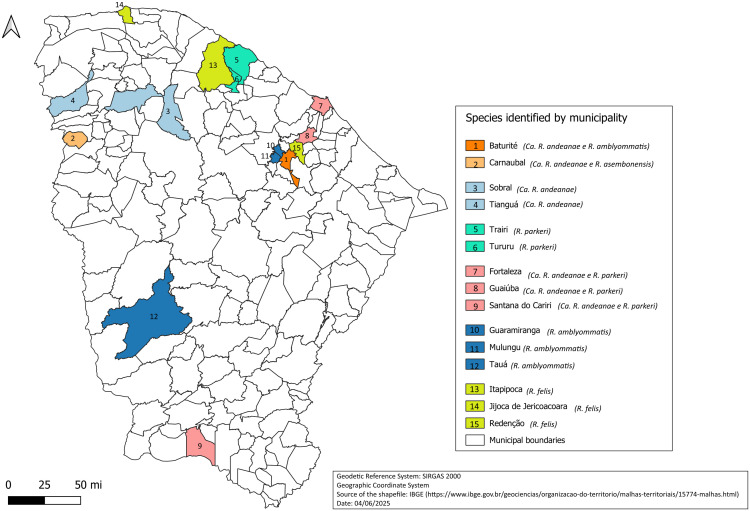 Figure 2
 Figure 3
 Figure 4
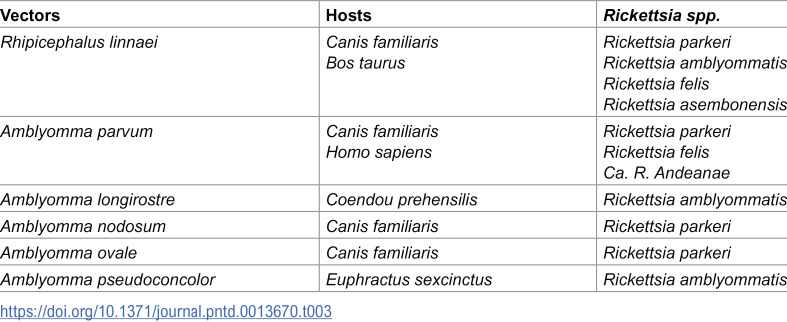 Figure 5
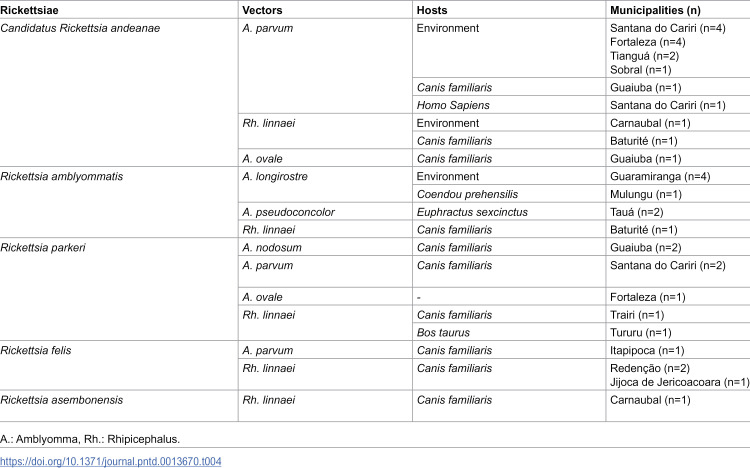 Figure 6
Peer Reviews
No public reviews on file for this paper yet. If you reviewed it on a platform where reviews are public (OpenReview, ICLR, NeurIPS, ICML), you can paste yours below so the community can read it here.
Videos
No videos yet. Explain this paper in a talk, walkthrough, or lecture? Add one.
Taxonomy
TopicsVector-borne infectious diseases · Trypanosoma species research and implications · Leptospirosis research and findings