Development of an RNA aptamer-assisted CRISPR/Cas9 system for efficiently generating and isolating Cas9-free mutants in plant
Sha Liu, Jiuyuan Bai, Bo Zhan, Junyu Yao, Jiayu Zhang, Jia Yi, Mengyue Dong, Qicong Li, Yucheng Shen, Yazhou Chen, Yun Zhao, Quanjiang Ji, Quanjiang Ji, Quanjiang Ji

TL;DR
A new CRISPR/Cas9 system using RNA aptamers improves the efficiency of generating and identifying Cas9-free plant mutants.
Contribution
The 3WJ-4 × Bro/Cas9 system introduces an RNA aptamer as a non-interfering reporter for efficient plant genome editing.
Findings
3WJ-4 × Bro/Cas9 increased T1 mutation rates by 78.6% compared to the GFP/Cas9 system.
The system improved sorting efficiency for Cas9-free mutants by 30.2% in the T2 generation.
It enabled more efficient generation of homozygous double-target mutants in Arabidopsis thaliana.
Abstract
The CRISPR/Cas9 gene-editing system is a powerful tool in plant genetic engineering; however, screening for Cas9-free edited plants remains complex and time-consuming. To address this limitation, we developed an RNA aptamer-assisted CRISPR/Cas9 system, termed 3WJ-4 × Bro/Cas9. In this system, the engineered RNA aptamer 3WJ-4 × Bro functions as a transcriptional reporter, serving as an alternative to traditional fluorescent proteins and thus avoiding their potential interference with Cas9 activity. Compared to the conventional GFP/Cas9 system, 3WJ-4 × Bro/Cas9 showed more efficient transformation and higher accuracy in fluorescence-based selection of positive T1 transformants, without significantly affecting plant growth. Furthermore, 3WJ-4 × Bro/Cas9 achieved a 78.6% increase in the T1 mutation rate compared to GFP/Cas9, with the homozygous mutation rate reaching 1.78%. In addition,…
Genes, proteins, chemicals, diseases, species, mutations and cell lines named across the full text — each resolved to its canonical identifier and authoritative record.
Click any figure to enlarge with its caption.
 Figure 1
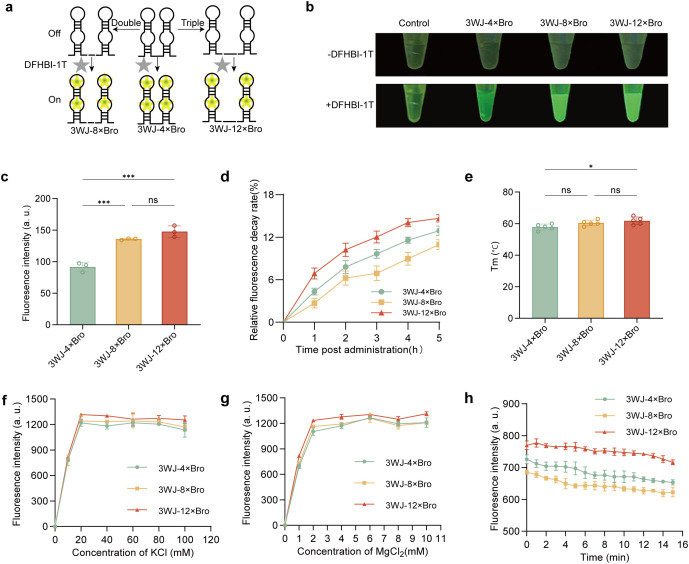 Figure 2
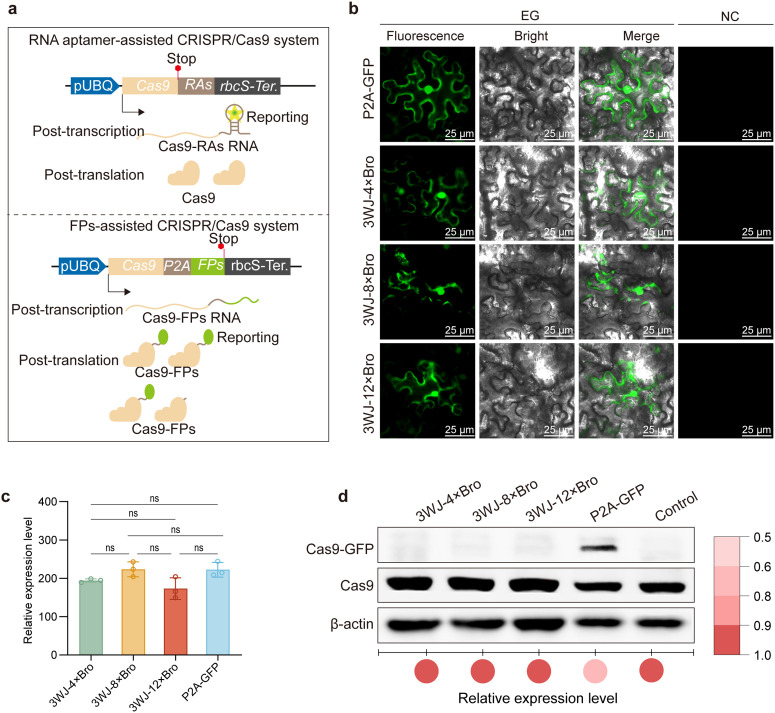 Figure 3
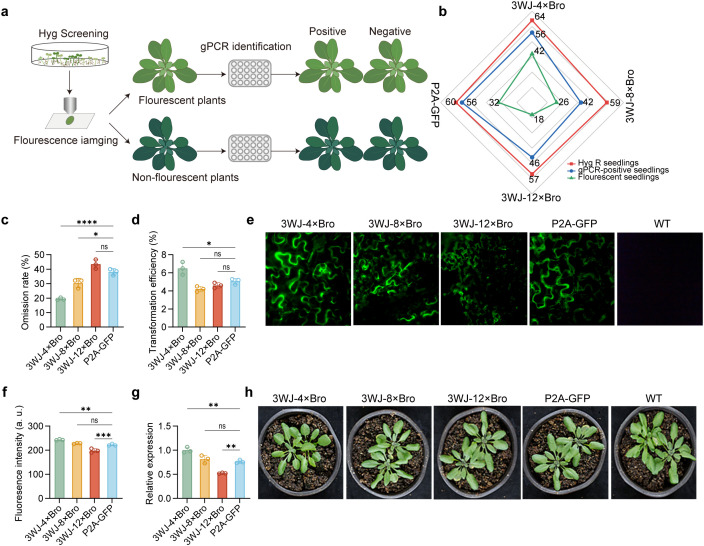 Figure 4
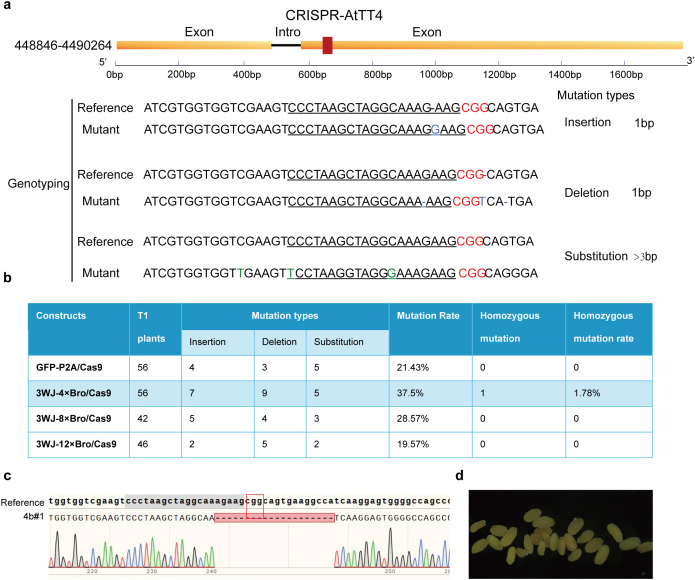 Figure 5
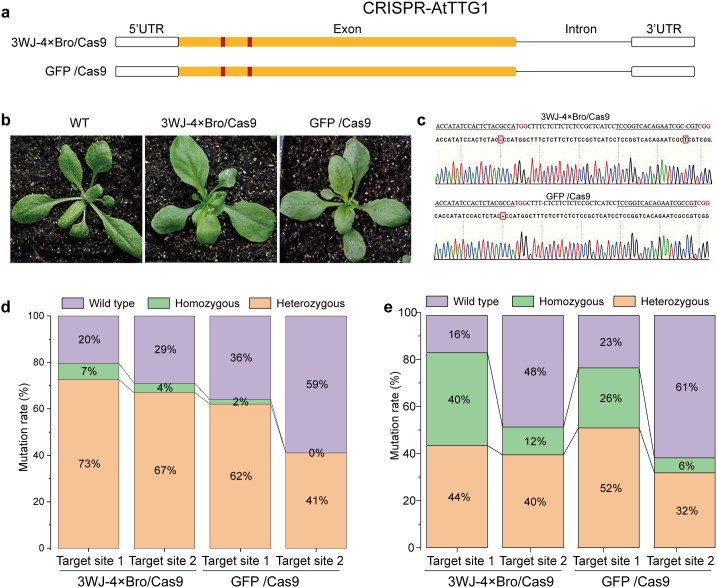 Figure 6
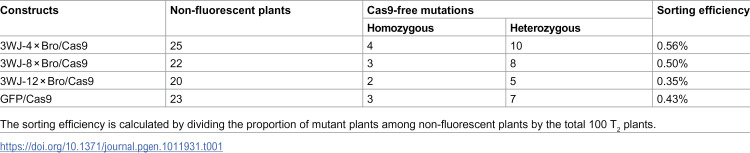 Figure 7
 Figure 8
Peer Reviews
No public reviews on file for this paper yet. If you reviewed it on a platform where reviews are public (OpenReview, ICLR, NeurIPS, ICML), you can paste yours below so the community can read it here.
Videos
No videos yet. Explain this paper in a talk, walkthrough, or lecture? Add one.
Taxonomy
TopicsCRISPR and Genetic Engineering · RNA regulation and disease · Advanced biosensing and bioanalysis techniques