The DR score in RETeval™ electroretinogram system facilitates expeditious and uncomplicated early detection and assessment of diabetic polyneuropathy in clinical practice
Yukako Sugiura-Roth, Tatsuhito Himeno, Emi Asano-Hayami, Yuriko Asada-Yamada, Miyuka Kawai, Yuka Shibata, Tomohide Hayami, Mikio Motegi, Makoto Kato, Hiromi Nakai-Shimoda, Emiri Yura-Miura, Yoshiaki Morishita, Masaki Kondo, Shin Tsunekawa, Jiro Nakamura, Hideki Kamiya

TL;DR
A new DR score from the RETeval™ system can help detect and assess diabetic polyneuropathy early, offering a simpler and more accessible alternative to traditional methods.
Contribution
The DR score, originally for retinopathy, is shown to be useful for detecting diabetic polyneuropathy.
Findings
The DR score was significantly correlated with DPN severity and nerve conduction parameters.
The DR score had moderate diagnostic accuracy for detecting DPN stages with an AUC of 0.738.
Age and the DR score were significant predictors of DPN severity in regression analysis.
Abstract
The principal aim of this investigation was to assess the utility of a novel DR score for the early detection of diabetic polyneuropathy (DPN). This score, currently integrated into the RETeval™ electroretinogram (ERG) system, is derived from parameters such as ERG wave characteristics, patient age, and pupillary response. Traditional nerve conduction studies (NCS), though valuable, have notable limitations, including the necessity for costly equipment and specialized personnel. Consequently, it was postulated that the DR score—initially devised for predicting diabetic retinopathy—might serve as a practical alternative for diagnosing DPN. This study sought to test the hypothesis that the DR score could offer a reliable means of both diagnosing DPN and estimating its severity. The study retrospectively analyzed 82 diabetic patients admitted to Aichi Medical University Hospital between…
Genes, proteins, chemicals, diseases, species, mutations and cell lines named across the full text — each resolved to its canonical identifier and authoritative record.
Click any figure to enlarge with its caption.
 Figure 1
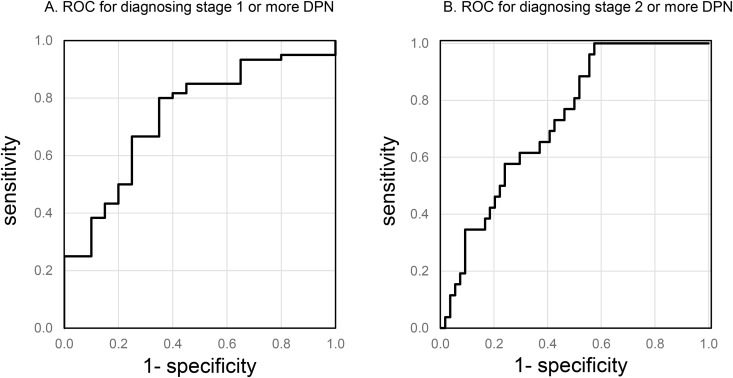 Figure 2
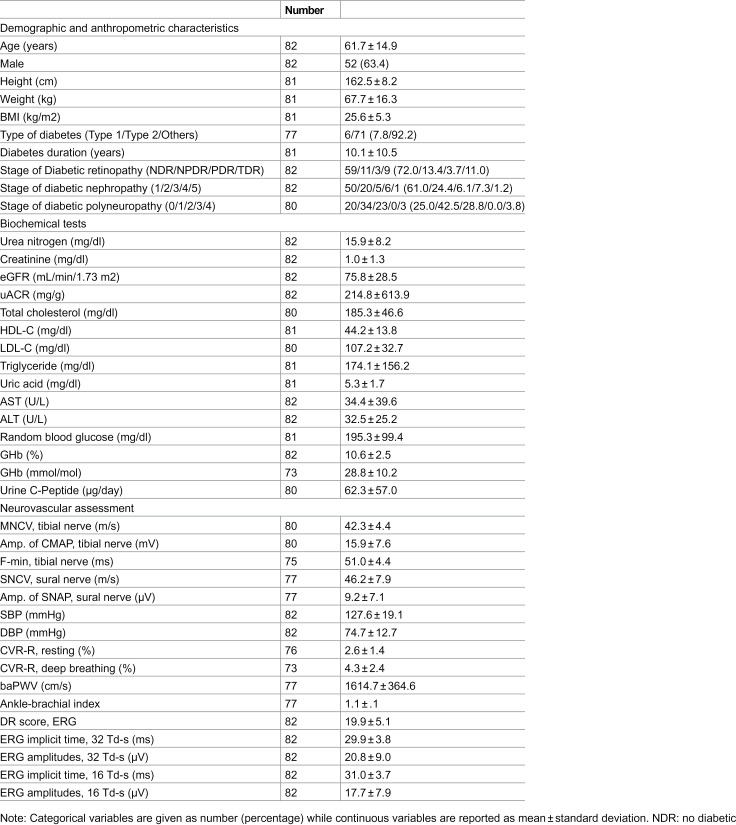 Figure 3
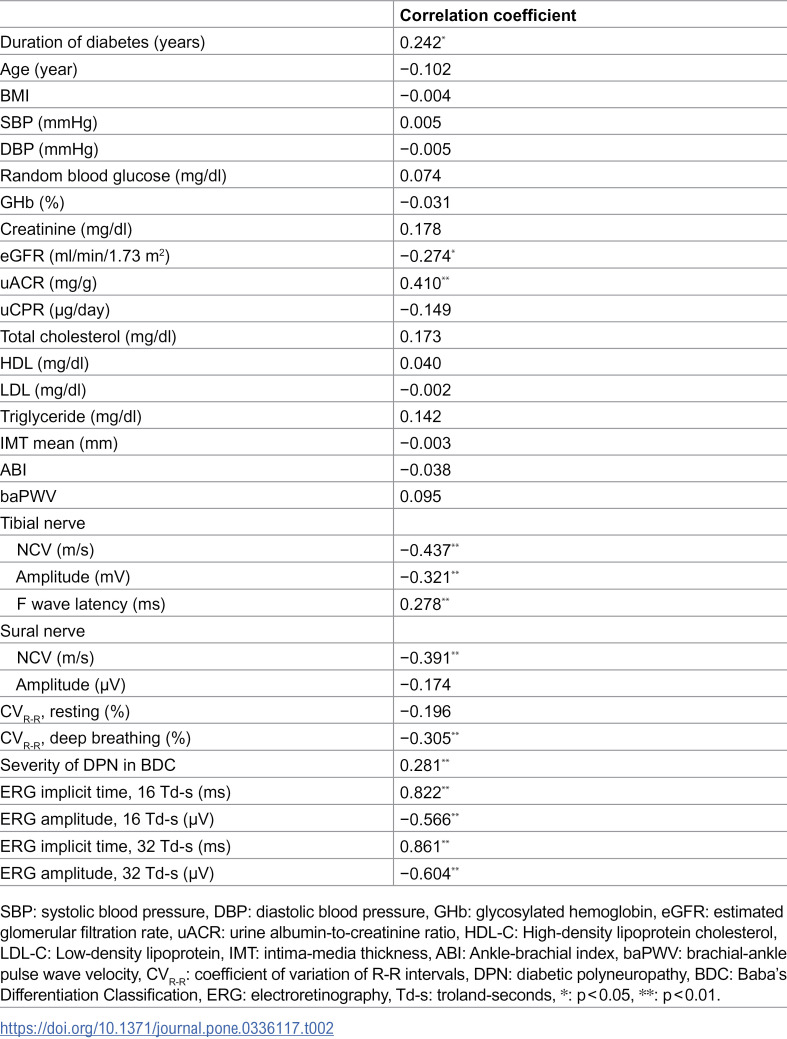 Figure 4
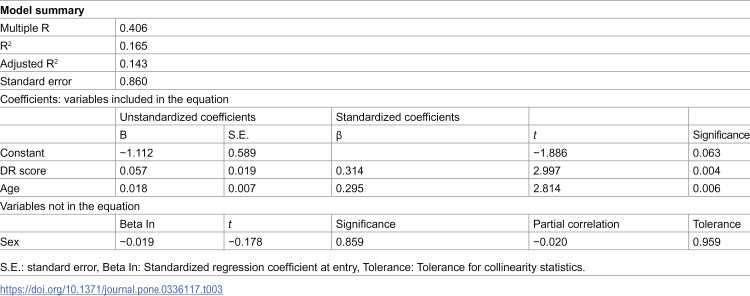 Figure 5
Peer Reviews
No public reviews on file for this paper yet. If you reviewed it on a platform where reviews are public (OpenReview, ICLR, NeurIPS, ICML), you can paste yours below so the community can read it here.
Videos
No videos yet. Explain this paper in a talk, walkthrough, or lecture? Add one.
Taxonomy
TopicsRetinal Development and Disorders · Retinal Diseases and Treatments · Retinal and Optic Conditions