Flexible joints performance assessment of additive manufacturing FDM 3D printed TPU
Daniel Rodríguez-Flores, Héctor Cervantes-Culebro, J. Enrique Chong-Quero, Carlos A. Cruz-Villar, Himadri Majumder, Himadri Majumder, Himadri Majumder, Himadri Majumder

TL;DR
This paper studies how different 3D printing parameters affect the mechanical behavior of flexible joints used in robotics.
Contribution
The study introduces a method to assess the damping and spring coefficients of TPU 3D-printed joints using the Box-Benken design and statistical analysis.
Findings
Density, layer thickness, and width most influence damping behavior.
Raster angle has the greatest impact on the spring coefficient.
3D-printing parameters significantly affect the mechanical performance of flexible joints.
Abstract
Given the increasing adoption of flexible 3D-printed joints in the field of robotics, it is essential to characterize the stiffness/spring coefficient and damping of printed specimens to understand the effects of various processing parameters and their interactions under different loading conditions. This study aims to research the effects of 3D-printed parameters and geometric dimensions, i.e, printing density, layer thickness, raster angle, length, width, and height. The Box-Benken design of experiments is conducted to obtain 44 different parametric combinations to characterize the damping and spring coefficients CF, KF, 𝐂τ, 𝐊τ under a dynamic load. The damping and spring coefficients are characterized using the minimum squared method. Depending on the force decomposition, the damping and spring coefficients are different in each direction. To analyse the experimental results, a…
Genes, proteins, chemicals, diseases, species, mutations and cell lines named across the full text — each resolved to its canonical identifier and authoritative record.
Click any figure to enlarge with its caption.
 Figure 1
 Figure 2
 Figure 3
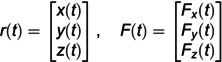 Figure 4
 Figure 5
 Figure 6
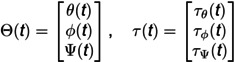 Figure 7
 Figure 8
 Figure 9
 Figure 10
 Figure 11
 Figure 12
 Figure 13
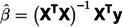 Figure 14
 Figure 15
 Figure 16
 Figure 17
 Figure 18
 Figure 19
 Figure 20
 Figure 21
 Figure 22
 Figure 23
 Figure 24
 Figure 25
 Figure 26
 Figure 27
 Figure 28
 Figure 29
 Figure 30
 Figure 31
 Figure 32
 Figure 33
 Figure 34
 Figure 35
 Figure 36
 Figure 37
 Figure 38
 Figure 39
 Figure 40
 Figure 41
 Figure 42
 Figure 43
 Figure 44
 Figure 45
 Figure 46
 Figure 47
 Figure 48
 Figure 49
 Figure 50
Peer Reviews
No public reviews on file for this paper yet. If you reviewed it on a platform where reviews are public (OpenReview, ICLR, NeurIPS, ICML), you can paste yours below so the community can read it here.
Videos
No videos yet. Explain this paper in a talk, walkthrough, or lecture? Add one.
Taxonomy
TopicsAdditive Manufacturing and 3D Printing Technologies · Soft Robotics and Applications · Piezoelectric Actuators and Control