Prevalence of undernutrition and its associated factors among orphans aged 6–59 months in Nekemte town, Ethiopia
Werku Etafa, Fayera Abdana, Emebet Bobo, Wandimu Muche Mekonen, Dawit Tesfaye Daka, Meseret Belete Fite, Tesfaye Shibiru, Asefa Negeri, Gutu Leta, Dereje Temesgen, Chalachew Wubneh, Chalachew Wubneh, Chalachew Wubneh, Chalachew Wubneh, Chalachew Wubneh, Chalachew Wubneh

TL;DR
This study found high rates of undernutrition among young orphans in Ethiopia and identified factors like poor nutrition knowledge and early introduction of solid foods as contributors.
Contribution
The study provides new insights into undernutrition prevalence and its specific risk factors among orphaned children in Nekemte town.
Findings
37.3% of orphans were stunted, 28.7% wasted, and 24.4% underweight.
Caregivers without legal custody and lack of vitamin A supplementation were linked to stunting.
Early introduction of solid food and incomplete vaccination were associated with underweight and wasting.
Abstract
Undernutrition is a leading cause of childhood mortality in low-income countries. Orphaned children are particularly vulnerable due to the absence of parental care and support, as well as factors such as infection and poor feeding practices. Undernutrition is often associated with developmental delays and recurrent infections. This study aimed to determine the prevalence of undernutrition and its associated factors among orphaned children aged 6–59 months in Nekemte town, Ethiopia. This study employed a cross-sectional, community-based study collected data through interviewer-administered questionnaires and anthropometric measurements. A total of 373 orphans paired with caregivers were selected using a simple random sampling technique from first June to July 30, 2023. Data were coded and entered into Epi Data V.4.6, and SPSS version 25 was used for analysis. Anthropometric indices were…
Genes, proteins, chemicals, diseases, species, mutations and cell lines named across the full text — each resolved to its canonical identifier and authoritative record.
Click any figure to enlarge with its caption.
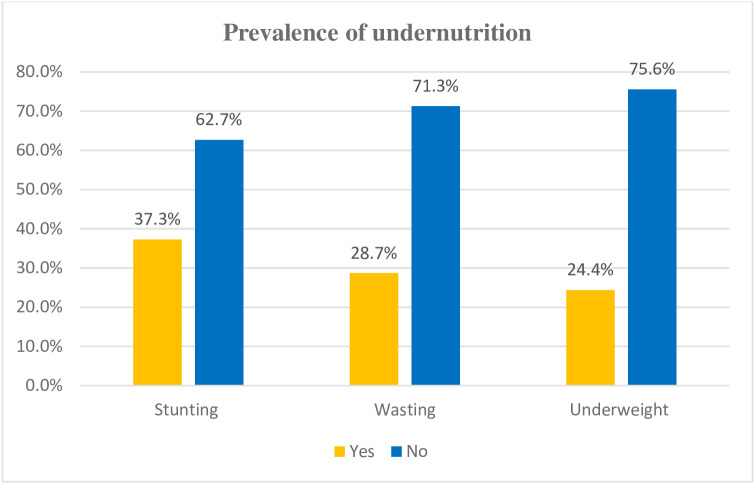 Figure 1
 Figure 2
 Figure 3
 Figure 4
 Figure 5
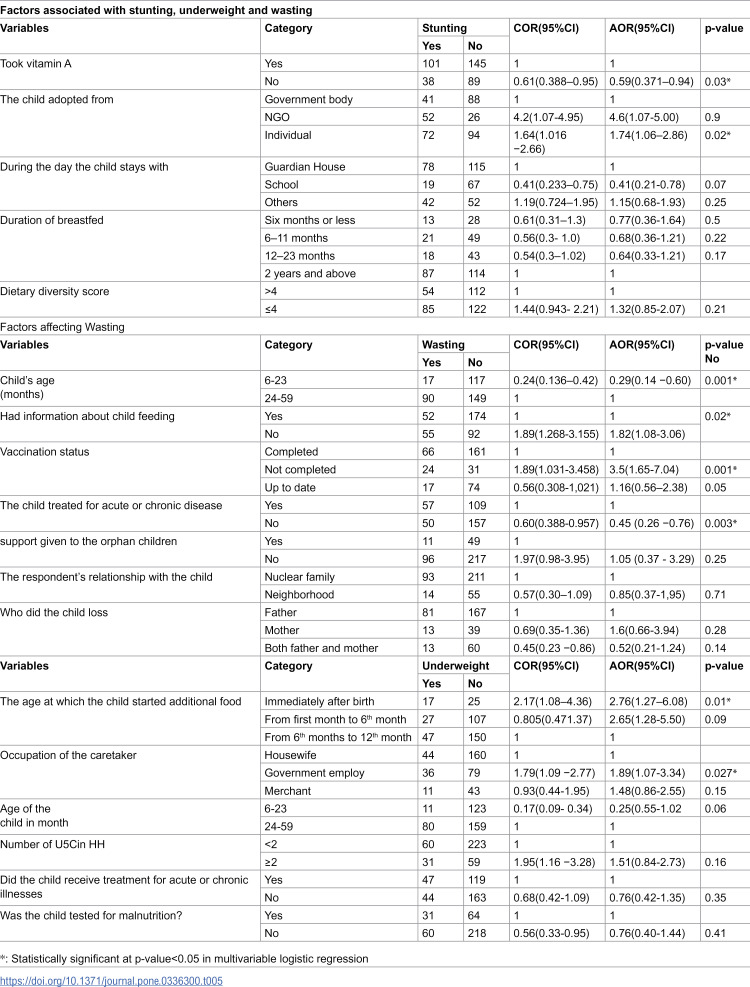 Figure 6
Peer Reviews
No public reviews on file for this paper yet. If you reviewed it on a platform where reviews are public (OpenReview, ICLR, NeurIPS, ICML), you can paste yours below so the community can read it here.
Videos
No videos yet. Explain this paper in a talk, walkthrough, or lecture? Add one.
Taxonomy
TopicsChild Nutrition and Water Access · Poverty, Education, and Child Welfare · Breastfeeding Practices and Influences