Remotely supervised online cognitive training to reduce cognitive difficulties following chemotherapy in patients treated for localized breast cancer: Protocol of the Cog-Stim2 multicenter randomized controlled trial
Marie Bousquet, Marie Lange, Justine Lequesne, Isabelle Durand-Zaleski, Olivia Diaz, Antonio Di Meglio, Thomas Bachelot, Jean-Michel Grellard, Bénédicte Clarisse, Florence Joly, Jen Edwards, Jen Edwards

TL;DR
This study tests if remote supervision of online cognitive training helps breast cancer patients with chemotherapy-related cognitive issues more than unsupervised training.
Contribution
The study introduces a remotely supervised online cognitive training program for CRCI in breast cancer patients, evaluating its added benefits compared to unsupervised training.
Findings
The trial will assess cognitive complaints, mental health, and fatigue in breast cancer patients over 12 weeks and follow-up periods.
Remote supervision by a neuropsychologist is hypothesized to improve adherence and effectiveness of cognitive training.
The study will evaluate the medico-economic impact of supervised cognitive training in CRCI patients.
Abstract
Chemotherapy-related cognitive impairment (CRCI) is frequently reported by breast cancer patients. Cognitive training is considered as one of the most effective approaches for improving cognitive function in patients with CRCI. As implementing cognitive training programs in healthcare centers remains challenging, online cognitive training appears to be an effective way to manage CRCI. Furthermore, supervision by a cognitive health specialist may increase motivation, adherence and effectiveness. However, the added benefit of combining supervision by health specialist with online cognitive training has not been studied in cancer patients. Cog-Stim2 is a nationwide prospective multicenter randomized trial that aims to evaluate, in patients with localized breast cancer treated with chemotherapy who have cognitive complaints (n = 300), the benefits of a 12-week online cognitive training…
Genes, proteins, chemicals, diseases, species, mutations and cell lines named across the full text — each resolved to its canonical identifier and authoritative record.
Click any figure to enlarge with its caption.
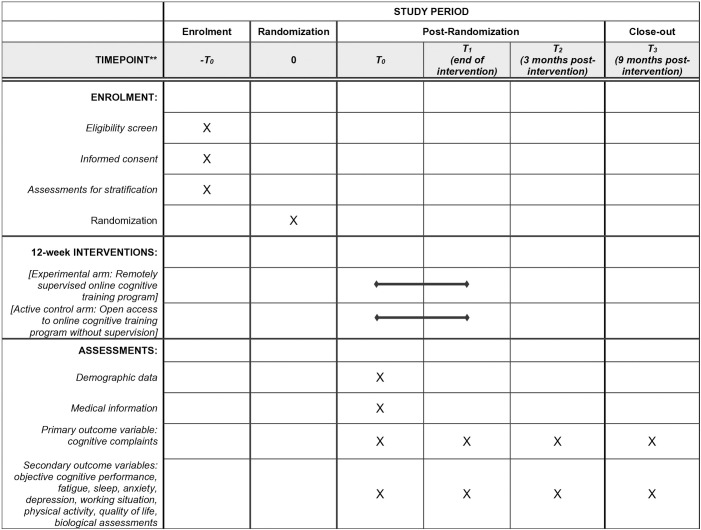 Figure 1
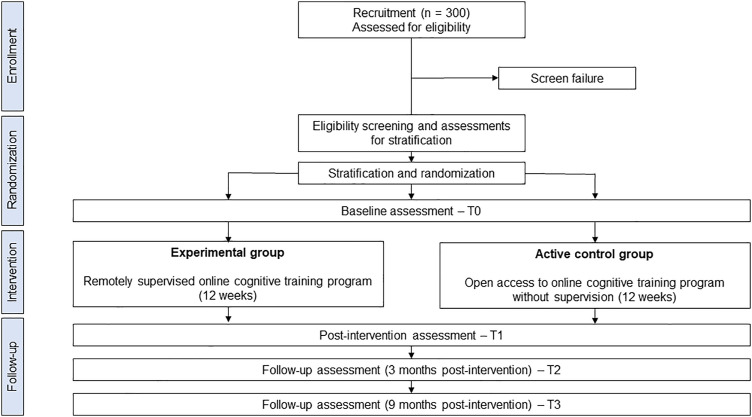 Figure 2
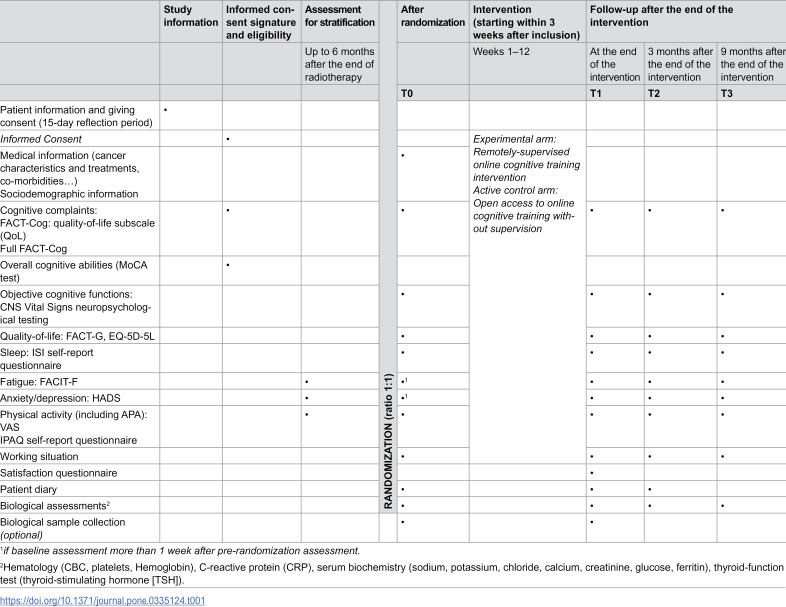 Figure 3
Peer Reviews
No public reviews on file for this paper yet. If you reviewed it on a platform where reviews are public (OpenReview, ICLR, NeurIPS, ICML), you can paste yours below so the community can read it here.
Videos
No videos yet. Explain this paper in a talk, walkthrough, or lecture? Add one.
Taxonomy
TopicsCancer-related cognitive impairment studies · Brain Metastases and Treatment · Advanced Breast Cancer Therapies