Complete genome sequence of a member of a potentially novel genus within the family Opitutaceae isolated from a liquid medium used for co-cultivating duckweeds and river water-derived microbes
Yosuke Morishita, Tomoki Iwashita, Manabu Kanno, Hideyuki Tamaki, Yoichi Kamagata, Tadashi Toyama, Kazuhiro Mori, Masaaki Morikawa, Yasuhiro Tanaka

TL;DR
This paper presents the full genome of a new bacterial strain that may belong to a previously unknown genus found in a liquid medium used for growing duckweeds and microbes.
Contribution
The paper introduces a potentially novel genus within Opitutaceae with a fully sequenced genome.
Findings
The genome of strain MRC-7 is 4,342,534 bp in size.
It contains 3,428 protein-coding sequences, some linked to pectin degradation.
Abstract
We report the complete genome sequence of strain MRC-7, which represents a potentially novel genus within the family Opitutaceae. The genome was 4,342,534 bp in size and contained 3,428 protein-coding sequences, several of which were predicted to be involved in pectin degradation.
Genes, proteins, chemicals, diseases, species, mutations and cell lines named across the full text — each resolved to its canonical identifier and authoritative record.
Click any figure to enlarge with its caption.
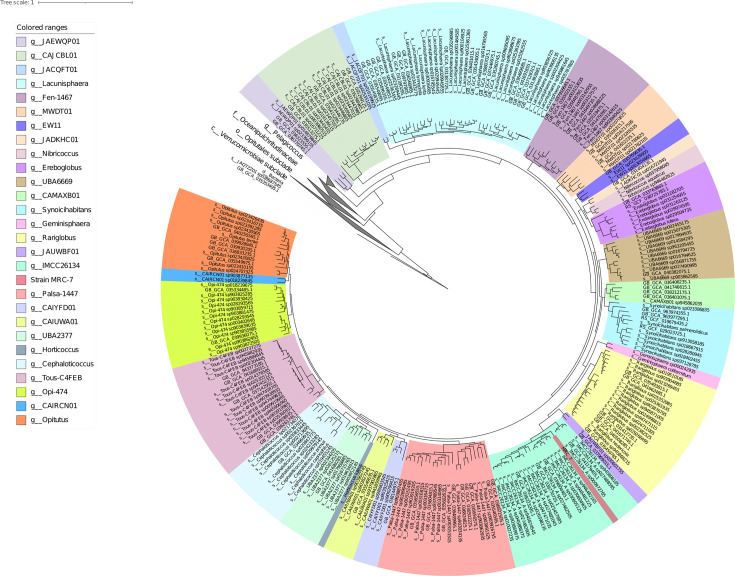 Fig 1
Fig 1| Activities | Enzyme classes |
|---|---|
| Degradation of: | |
| Homogalacturonan | GH2, GH16_3, GH30_5, GH43_4, and GH43_24 |
| Type I rhamnogalacturonan | GH28, GH105, GH106, and GH138 |
| Type II rhamnogalacturonan | GH2, GH105, GH127, GH140, and GH143 |
| Cleavage of: | |
| Pectin | PL1 and PL9_1 |
| Rhamnogalacturonan | PL11_1, PL9_1, and PL11 |
| Unsaturated rhamnogalacturonan | PL11, PL11_1, and PL26 |
- —Japan Society for the Promotion of Sciencehttp://dx.doi.org/10.13039/501100001691
- —Japan Science and Technology Agencyhttp://dx.doi.org/10.13039/501100002241
- —Institute for Fermentation, Osakahttp://dx.doi.org/10.13039/100007802
Peer Reviews
No public reviews on file for this paper yet. If you reviewed it on a platform where reviews are public (OpenReview, ICLR, NeurIPS, ICML), you can paste yours below so the community can read it here.
Videos
No videos yet. Explain this paper in a talk, walkthrough, or lecture? Add one.
Taxonomy
TopicsLegume Nitrogen Fixing Symbiosis · Constructed Wetlands for Wastewater Treatment · Microbial Community Ecology and Physiology
ANNOUNCEMENT
Aquatic plants are known to harbor taxonomically diverse microbes, including rarely cultivated groups (1–3). With this background, we developed the microbial isolation technique, “duckweed-microbe co-cultivation method,” which was effective for isolating rarely cultivated bacterial groups (4–6). Using this method, we successfully isolated strain MRC-7, a member of the fastidious bacterial family Opitutaceae, as follows (6): First, to prepare aseptic duckweed, turions were washed in 0.5% sodium hypochlorite for 5 min, followed by two rinses with sterile water. The treated turions were transplanted into modified Hoagland medium (7) for germination, and the germinated duckweed was subsequently used as aseptic duckweed. River water collected on August 30, 2021 (35.675270°N, 138.577518°E), was used as the microbial source and inoculated into the aseptic duckweed. Co-cultivation was carried out in modified Hoagland medium for 10 days (two 5- day batches). The resulting co-cultivated liquid medium was inoculated onto 1/100-strength tryptic soy agar plates and incubated at 25°C for 2 weeks, from which strain MRC-7 was isolated.
Since members of the family Opitutaceae are distributed in diverse environments but are difficult to cultivate (8, 9), genome analysis of its members would be valuable for elucidating their roles in ecosystems. Therefore, we hereby report the genome sequence of strain MRC-7. Genomic DNA of the strain was extracted from 7-day cultures in R2A broth (25°C) using DNAiso Reagent (TaKaRa). The genomic DNA was sheared to approximately 10–20 kbp using a g-TUBE device. The library was prepared with the SMRTbell Express Template Prep Kit 2.0 (PacBio) and sequenced on the Sequel IIe system (PacBio). Overhang adapter sequences were removed using SMRT Link (ver. 12.0.0.177059) to prepare subreads. HiFi reads (n = 17,157; N50, 17,658 bp) were obtained by aligning subreads and excluding those with an average quality score <20. The reads ≤1,000 bp were removed using Filtlong (ver. 0.2.1; https://github.com/rrwick/Filtlong), resulting in 15,572 reads used for assembly. Genome assembly was performed with Flye (ver. 2.9.1-b1780) (10), and circularity was confirmed using Bandage (ver. 0.8.1) (11). Phylogenetic position was confirmed with GTDB-Tk (12) using “classify_wf” command and visualized using iTOL (ver.7.2.1) (13). AAI was calculated using FastAAI (ver. 1) (14). Genome completeness and contamination were evaluated with CheckM (ver. 1.2.3), showing 100% completeness and 0% contamination (15). CDSs were annotated using DFAST (ver. 1.2.0) (16) and KEGG via GhostKOALA (ver. 3.1) (17). Carbohydrate-active enzymes were annotated using the dbCAN3 server (18). A phylogenetic tree based on the concatenated 120 bacterial marker proteins confirmed that MRC-7 belongs to the family Opitutaceae (Fig. 1). The strain is most closely related to Rariglobus hedericola (GCF_007559335), with 57.08% AAI, indicating that it represents a potentially novel genus within the family Opitutaceae. The genome consisted of a single chromosome of 4,342,534 base pairs with a G + C content of 65.2%. Annotation by DFAST revealed that the chromosome contained 3,428 CDSs, 49 tRNA genes, and 3 rRNA genes. The number of KEGG orthologs was 1,416 (41.3% of the total). Several CDSs were annotated as glycoside hydrolases (GHs) and polysaccharide lyases (PLs), both of which are involved in pectin degradation (Table 1).
Phylogenetic placement of strain MRC-7 based on a concatenated alignment of bacterial 120 marker proteins, constructed using GTDB-Tk (v2.4.1) and pplacer (v1.1.alpha19-0-g807f6f3) (19) with GTDB reference data release r226. Taxonomic ranks are abbreviated as follows: p__, phylum; c__, class; o__, order; f__, family; g__, genus; s__, species. The scale bar represents the number of substitutions per site.
As strain MRC-7 was isolated from a duckweed co-cultivation system, the environment may have contained plant cell wall debris released during duckweed growth. Since plant cell walls contain various types of pectin (20), the detected enzymes may have enabled MRC-7 to assimilate pectin from duckweed.
The reference list from the paper itself. Each links out to its DOI / PubMed record.
- 1Matsuzawa H, Tanaka Y, Tamaki H, Kamagata Y, Mori K. 2010. Culture-dependent and independent analyses of the microbial communities inhabiting the giant duckweed (Spirodela polyrrhiza) rhizoplane and isolation of a variety of rarely cultivated organisms within the phylum Verrucomicrobia. Microbes Environ 25:302–308. doi:10.1264/jsme 2.me 1014421576886 · doi ↗ · pubmed ↗
- 2Tanaka Y, Tamaki H, Matsuzawa H, Nigaya M, Mori K, Kamagata Y. 2012. Microbial community analysis in the roots of aquatic plants and isolation of novel microbes including an organism of the candidate phylum OP 10. Microbes Environ 27:149–157. doi:10.1264/jsme 2.me 1128822791047 PMC 4036017 · doi ↗ · pubmed ↗
- 3Tanaka Y, Matsuzawa H, Tamaki H, Tagawa M, Toyama T, Kamagata Y, Mori K. 2017. Isolation of novel bacteria including rarely cultivated phyla, Acidobacteria and Verrucomicrobia, from the roots of emergent plants by simple culturing method. Microbes Environ 32:288–292. doi:10.1264/jsme 2.ME 1702728740039 PMC 5606700 · doi ↗ · pubmed ↗
- 4Tanaka Y, Tamaki H, Tanaka K, Tozawa E, Matsuzawa H, Toyama T, Kamagata Y, Mori K. 2018. “Duckweed-microbe co-cultivation method” for isolating a wide variety of microbes including taxonomically novel microbes. Microbes Environ 33:402–406. doi:10.1264/jsme 2.ME 1806730404972 PMC 6308005 · doi ↗ · pubmed ↗
- 5Tanaka Y, Tozawa E, Iwashita T, Morishita Y, Tamaki H, Toyama T, Morikawa M, Kamagata Y, Mori K. 2024. Successful isolation of diverse Verrucomicrobiota strains through the duckweed-microbes co-cultivation method. Microbes Environ 39:ME 24019. doi:10.1264/jsme 2.ME 2401939261061 PMC 11427312 · doi ↗ · pubmed ↗
- 6Morishita Y, Iwashita T, Kanno M, Tamaki H, Kamagata Y, Toyama T, Mori K, Morikawa M, Tanaka Y. 2025. Improvements in the duckweed-microbe co-cultivation method for the stable and efficient isolation of rarely cultivated bacteria using microfilter membranes. Microbes Environ 40:ME 24075. doi:10.1264/jsme 2.ME 2407540835430 PMC 12501865 · doi ↗ · pubmed ↗
- 7Toyama T, Yu N, Kumada H, Sei K, Ike M, Fujita M. 2006. Accelerated aromatic compounds degradation in aquatic environment by use of interaction between Spirodela polyrrhiza and bacteria in its rhizosphere. J Biosci Bioeng 101:346–353. doi:10.1263/jbb.101.34616716944 · doi ↗ · pubmed ↗
- 8Murray AE, Lo CC, Daligault HE, Avalon NE, Read RW, Davenport KW, Higham ML, Kunde Y, Dichosa AEK, Baker BJ, Chain PSG. 2021. Discovery of an Antarctic ascidian-associated uncultivated Verrucomicrobia with antimelanoma palmerolide biosynthetic potential. m Sphere 6:e 0075921. doi:10.1128/m Sphere.00759-2134851164 PMC 8636102 · doi ↗ · pubmed ↗