Whole genome sequence of rhamnolipid synthesizing Pseudomonas guguanensis strain SRIHER B649
Rachel Veronica R, Ramyadevi K C, Shailaja V L, Arun Viswanathan, Mary Elizabeth Gnanambal Krishnan

TL;DR
This paper presents the whole genome sequence of a Pseudomonas guguanensis strain known for making rhamnolipids, which could help in genetic engineering.
Contribution
The first whole genome sequencing of Pseudomonas guguanensis strain SRIHER-B649 to locate the rhlAB gene.
Findings
The genome sequence of Pseudomonas guguanensis strain SRIHER-B649 was determined.
The location and size of the rhlAB gene responsible for rhamnolipid synthesis were identified.
Abstract
Pseudomonas guguanensis strain SRIHER-B649 was isolated in the oil-contaminated waters of Chennai harbor, India. Whole genome sequencing was performed for the first time to determine the location and size of the rhamnolipid synthesizing rhlAB gene. Genetic engineering experiments can undoubtedly benefit from the collected data for this strain.
Genes, proteins, chemicals, diseases, species, mutations and cell lines named across the full text — each resolved to its canonical identifier and authoritative record.
Click any figure to enlarge with its caption.
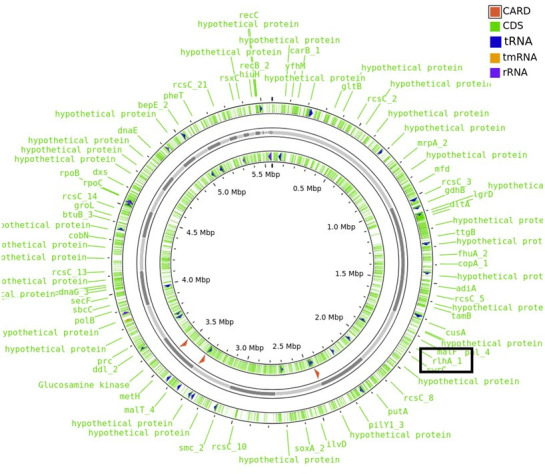 Fig 1
Fig 1- —Ministry of Earth Scienceshttp://dx.doi.org/10.13039/501100001851
- —Founder-Chancellor Shri N.P.V. Ramasamy Udayar Research Fellowship 2019
Peer Reviews
No public reviews on file for this paper yet. If you reviewed it on a platform where reviews are public (OpenReview, ICLR, NeurIPS, ICML), you can paste yours below so the community can read it here.
Videos
No videos yet. Explain this paper in a talk, walkthrough, or lecture? Add one.
Taxonomy
TopicsGenomics and Phylogenetic Studies · Glycosylation and Glycoproteins Research · Bacteriophages and microbial interactions
ANNOUNCEMENT
Hydrocarbon-degrading organisms were screened at Chennai harbor waters (13.0815°N, 80.2921°E) by serial dilution method, and a bacterium grew well in 2.5% hexadecane-enriched Bushnell-and-Haas medium. It produced a high-molecular-weight monorhamnolipid (1,264.52 Da) (PubChem SID 462764885) and emulsified hexadecane (56%) (Indian Patent Grant 548405) (1, 2, 3) and is now acclimatized to grow at higher hydrocarbon concentration. To characterize the bacterium, DNA extraction was performed (Barker) (4). 16S rRNA was amplified (27-F-AGAGTTTGATCCTGGCTCAG, 1492-R-GGTACCTTGTTACGACTT) (5) and sequenced (ABI-3730 DNA analyzer; Thermo Fisher, USA) and compared with the GenBank data set (NCBI BLAST, v.2.2.12) (6). The bacterium was identified as Pseudomonas guguanensis (GenBank accession no. KU302611.1), which was reconfirmed at IMTECH, Chandigarh. Though this bacterium was previously discovered in the Guguan islands, Taiwan (7), there are no reports on hydrocarbon degradation.
It is known that rhamnosyltransferase genes (rhlAB) are involved in the biosynthesis of this high-molecular-weight emulsifier. Location and identification of this gene required WGS information because only gene scaffolds were available (GCF_900104265.1) (8). Thus, genomic DNA was extracted from P. guguanensis (peptone-yeast medium) following protocols listed previously (9), with the following modifications: (i) CTAB without β-mercaptoethanol, (ii) incubation at 95°C (1 h) instead of 65°C (30 mins), (iii) chloroform instead of chloroform-isoamyl alcohol, and (iv) addition of RNase A (10 mg/mL) at the initial steps of chloroform incubation. DNA fragmentation and library construction were carried out per protocols by Nextera DNA Flex Library Prep Kit (Illumina, USA) using on-bead tagmentation chemistry. After library construction, dual index adapters were ligated at the blunt ends and purified. Quality and quantity of the fragment library were estimated using Agilent (G2964AA) automated electrophoresis (Agilent Technologies, USA) using 2200 TapeStation Software (v.A.01.02) and Qubit dsDNA HS assay kit (Thermo Fisher Scientific, USA), respectively. A good-quality library was sequenced (2 × 250 bp chemistry, Illumina MiSeq platform, USA) at the National Centre for Microbial Resource, Pune. The total number of raw reads was 967,586, with a read length of 250 bp for R1-R2. Raw data quality assessment was done using FastQC Toolkit v0.11.8 (10), and bad-quality data were trimmed using NGS QC Toolkit v2.3.3 (11). Genome assembly was done using SPAdes 3.11.1 assembler (12). The genome contained 60 scaffolds, N50 value of 314,320 bp, size of 5,560,392 bp, and coverage of 120×. Default parameters were used for all software unless specified otherwise. The publicly available genome was annotated (NCBI PGAP, v.6.8) (13) with 5,121 predicted coding genes.
Based on WGS data, the putative rhlA gene was identified (Fig. 1, Proksee CGView, v.1.2.0) (14). Since the homology of P. guguanensis rhlA was 72.2% with Pseudomonas aeruginosa PAO1 (NC_002516.2) and 98.5% with P. guguanensis JCM 18416 scaffolds (NZ_FNJJ01000001.1) (NCBI BLAST, v.2.13.0) (6), the following putative rhlAB arrangement was deciphered: a 500-bp promoter, an 888-bp putative rhlA (as in the WGS datum), a 64-bp short sequence, and a 1,300-bp putative rhlB, which is based on the P. aeruginosa rhl layout. To ensure that the coding sequences were not omitted, a few nucleotides were flanked to the target gene and thus the total sequence length of P. guguanensis rhlAB is 2,752 bp. Thus, the locus and gene sequence of rhlAB were identified for the first time in Pseudomonas guguanensis, which will be useful for researchers who work on rhamnosyltransferases in this strain.
Circular map of P. guguanensis genome showing the antibiotic resistance genes (CARD), coding sequences (CDS), transfer RNA (tRNA), transfer messenger RNA (tmRNA), ribosomal RNA (rRNA), and rhlA gene highlighted.
The reference list from the paper itself. Each links out to its DOI / PubMed record.
- 1Mary Elizabeth GK, Ramya Devi KC, Sundaram RL. 2024. A process of extraction of bioemulsifiers from Pseudomonas guguanensis. 548405, issued
- 2Ramya Devi KC, Sundaram RL, Vajiravelu S, Vasudevan V, Mary Elizabeth GK. 2019. Structure elucidation and proposed de novo synthesis of an unusual mono-rhamnolipid by Pseudomonas guguanensis from Chennai Port area. Sci Rep 9:5992. doi:10.1038/s 41598-019-42045-930979908 PMC 6461634 · doi ↗ · pubmed ↗
- 3Ramya Devi KC, Sundaram RL, Asha D, Vajiravelu S, Vasudevan V, Mary Elizabeth GK. 2018. Demonstration of bioprocess factors optimization for enhanced mono-rhamnolipid production by a marine Pseudomonas guguanensis. Int J Biol Macromol 108:531–540. doi:10.1016/j.ijbiomac.2017.10.18629208557 · doi ↗ · pubmed ↗
- 4Barker 1998. Phenol-chloroform isoamyl alcohol (PCI) DNA extraction
- 5Abulencia CB, Wyborski DL, Garcia JA, Podar M, Chen W, Chang SH, Chang HW, Watson D, Brodie EL, Hazen TC, Keller M. 2006. Environmental whole-genome amplification to access microbial populations in contaminated sediments. Appl Environ Microbiol 72:3291–3301. doi:10.1128/AEM.72.5.3291-3301.200616672469 PMC 1472342 · doi ↗ · pubmed ↗
- 6Sayers EW, Beck J, Bolton EE, Brister JR, Chan J, Connor R, Feldgarden M, Fine AM, Funk K, Hoffman J, et al.. 2025. Database resources of the National Center for Biotechnology Information in 2025. Nucleic Acids Res 53:D 20–D 29. doi:10.1093/nar/gkae 97939526373 PMC 11701734 · doi ↗ · pubmed ↗
- 7Liu YC, Young LS, Lin SY, Hameed A, Hsu YH, Lai WA, Shen FT, Young CC. 2013. Pseudomonas guguanensis sp. nov., a gammaproteobacterium isolated from a hot spring. Int J Syst Evol Microbiol 63:4591–4598. doi:10.1099/ijs.0.047712-023918786 · doi ↗ · pubmed ↗
- 8Varghese N, Submissions S, NCBI Ref Seq assembly. 2016. Pseudomonas guguanensis JCM 18416, whole genome shotgun sequencing project. DOE - Joint Genome Institute